

Maddy summaryThis bill would require all states to recognize valid concealed carry permits issued by other states, allowing permit holders to carry concealed handguns (excluding machine guns) in any state that either issues such permits or doesn't prohibit concealed carry. It directly affects law-abiding gun owners with valid permits from their home state, ensuring they can carry in states with similar permit systems or no prohibitions. Key provisions include treating valid permit documents as proof of legal carry (reducing officer stops), shifting the burden of proof to prosecutors if challenged, and allowing civil lawsuits for violations with attorney's fee awards. The bill does not override state laws restricting firearms on private property or government land, nor does it affect federal gun restrictions like those in section 922(q).
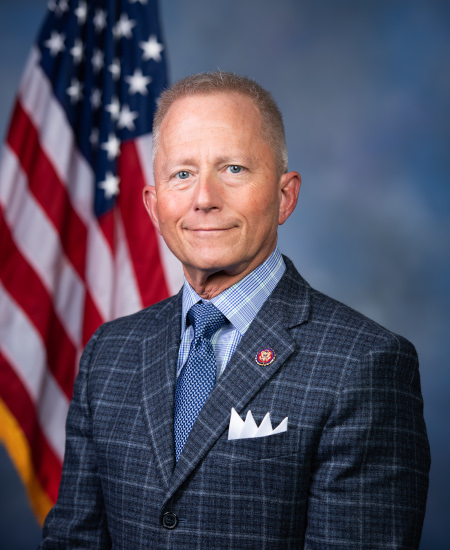
Rep. Jefferson Van Drew
Sponsored bills
Maddy summaryH.J.Res. 128 proposes a constitutional amendment to withhold salaries from members of Congress during government shutdowns. A government shutdown is defined as a period when federal agencies lack funding due to Congress failing to pass an appropriations bill or continuing resolution. The amendment would require Congress to pass implementing legislation to enforce this pay suspension. This policy would directly affect all current House and Senate members by stopping their regular salaries during any shutdown period.
Maddy summaryHR 5668, the Stronger Schools Act, requires elementary and secondary schools to implement specific security measures using federal grants. It directs the Secretary of Education to provide competitive grants to local school districts to fund two key security upgrades: hiring armed school resource officers and creating secure entry points with locked anterooms and metal detectors for all visitors. These measures apply directly to all schools served by participating local educational agencies. The bill mandates that grant funds be used exclusively for these security provisions, with a report to Congress due within one year of enactment.
Maddy summaryThis bill amends the Internal Revenue Code to expand the definition of "surviving spouse" for tax purposes. It changes the eligibility period from two to five taxable years after a spouse's death, allowing more time for widows or widowers to file taxes as a surviving spouse. This directly affects individuals who lost a spouse and need to claim spousal tax benefits. The change applies to tax returns filed for years beginning after December 31, 2024.
Maddy summaryThis bill prevents a Coast Guard shutdown during a federal funding gap. If Congress fails to pass a new budget, it automatically provides funds to keep the Coast Guard operating for up to 30 days or until funding is restored - whichever comes first. The bill directly affects the Coast Guard's ability to maintain operations like maritime safety, search and rescue, and port security during budget delays. It does not create new policies but ensures continuity of existing services during funding transitions.
Maddy summaryHR 5667 provides temporary funding to maintain Federal Aviation Administration (FAA) operations during a government funding lapse. It appropriates necessary funds for up to 30 days or until the funding gap ends, whichever occurs first. This ensures uninterrupted air traffic control, safety inspections, and airport operations during budget shortfalls.
Maddy summaryThis bill expands U.S. law enforcement cooperation with Canada by creating new legal mechanisms for joint cross-border operations. It allows U.S. agencies to grant foreign officers (like Canadian customs agents) the same legal privileges during joint work, cover liability claims arising from overseas operations, and formally station U.S. and Canadian officers in each other's countries for border security. The law directly affects U.S. Customs and Border Protection, Homeland Security, and Canadian law enforcement through these expanded partnership tools. It modifies existing laws (Tariff Act, Homeland Security Act) to streamline international collaboration without changing border policies.
Maddy summaryHRES 719 is a House resolution honoring Charles "Charlie" James Kirk, the founder of Turning Point USA who was assassinated on September 10, 2025. The resolution condemns his assassination and all political violence, extends condolences to his family, and calls on Americans to reject violence while promoting civil discourse. It specifically recognizes Kirk's legacy as a defender of constitutional principles and his role in inspiring youth through free speech and faith-based civic engagement. As a commemorative resolution, it does not enact policy changes but formally expresses the House's stance on honoring his life and legacy.
Maddy summaryHR 5455, the Aviation Funding Stability Act of 2025, ensures continued operation of the Federal Aviation Administration (FAA) during government funding gaps. If Congress fails to pass regular appropriations or a continuing resolution before the new fiscal year begins, the bill allows the FAA to use existing funds from the Airport and Airway Trust Fund to maintain essential programs and airport infrastructure at the previous year’s funding level. This prevents shutdowns for FAA operations like air traffic control, airport grants, and safety programs for up to 30 days or until regular funding is enacted. The bill directly affects all FAA programs funded through the trust fund, including airport improvements and aviation safety initiatives, without creating new policies or altering funding levels.
Maddy summaryHRES 744 is a non-binding House resolution supporting the designation of September 21-27, 2025, as "Gold Star Families Remembrance Week." It honors families who lost members in military service (Gold Star Families) and families of veterans, recognizing their sacrifices. The resolution encourages Americans to observe the week through community service and by celebrating the lives of those who died defending the U.S. It does not create new laws or policies but formally recognizes these families annually. This is a commemorative measure, not a legislative change.