

Maddy summaryHRES 742 is a ceremonial resolution recognizing the 250th anniversary of the U.S. Navy's founding on October 13, 1775, when the Continental Congress established the first U.S. naval force. It formally acknowledges the Navy's historical role in protecting American interests and its current global presence (over 290 ships, 3,700 aircraft, and 500,000 personnel). The resolution expresses appreciation for Navy personnel past and present and reaffirms congressional support for the Navy as a key element of national defense and global stability. As a commemorative resolution, it has no policy or funding impact - it serves only to honor the Navy's legacy.
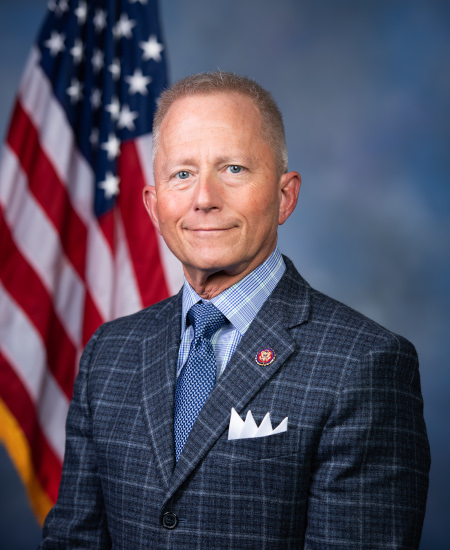
Rep. Jefferson Van Drew
Sponsored bills
Maddy summaryThe DAMS Act amends the National Dam Safety Program to improve how high-risk dams are identified and managed. It requires states to adopt a risk-based priority system for assessing dams that pose significant threats to public safety, ensuring resources focus on the most critical infrastructure. The bill also extends federal funding authorization for dam safety programs through 2031, instead of ending in 2026. These changes directly affect state dam safety agencies and federal programs responsible for overseeing dam rehabilitation efforts.
Maddy summaryThe PIPES Act of 2025 authorizes significant funding for pipeline safety programs and updates regulatory requirements for pipeline operators and the Pipeline and Hazardous Materials Safety Administration. It establishes a voluntary information-sharing system for pipeline safety data, requires new reporting on pipeline inspections, and includes specific provisions for carbon dioxide pipeline safety. The bill mandates several studies on emerging pipeline safety issues, including composite materials for pipelines and hydrogen-blended natural gas transportation. Additionally, it includes provisions for workforce development at the safety administration and updates definitions to include carbon dioxide pipelines.
Maddy summaryHR 5401, the Pay Our Troops Act of 2026, ensures military personnel, civilian Defense workers, and supporting contractors receive pay during government funding gaps in fiscal year 2026. It appropriates emergency funds for active-duty service members, reserves, and their supporting personnel (including Coast Guard staff under DHS) if regular appropriations aren't enacted by the end of the fiscal year. The bill provides necessary pay and allowances during any period when full-year funding is unavailable, covering both active service and support roles. Funding expires when regular appropriations are passed, a funding resolution is enacted, or January 1, 2027, whichever comes first. This is a procedural measure to prevent pay delays for military and support staff during fiscal year 2026 funding lapses.
Maddy summaryHR 1107, the *Protecting Veteran Access to Telemedicine Services Act of 2025*, allows Department of Veterans Affairs (VA) health professionals to prescribe and dispense medications regulated under federal law (like opioids or stimulants) via telemedicine without requiring an in-person medical exam first. This directly affects veterans receiving VA care and VA-employed health professionals who provide telemedicine services. The bill requires providers to hold a valid state license, act within their professional scope, and ensure prescriptions serve a legitimate medical purpose. It does not change existing federal drug laws but streamlines access to controlled medications for veterans through telehealth, particularly benefiting those in rural or remote areas.
Maddy summaryThis symbolic resolution (HRES 700) condemns the assassination of Charlie Kirk, a conservative campus advocate and founder of Turning Point USA, who was killed on September 10, 2025, at Utah Valley University. It expresses the House's deepest condolences to Kirk’s family, including his wife and children, and honors his work promoting civil discourse among college students. The resolution does not create new laws or policies but serves as a formal expression of the House’s stance on the incident. It directly affects no individuals or groups through legislative action, as it is purely a ceremonial statement.
Maddy summaryThis bill would establish September 11 as a permanent legal public holiday for federal employees and agencies. It amends Title 5 of the U.S. Code to add "September 11 Day of Remembrance" to the list of designated federal holidays, following Labor Day. The change would require federal offices to close on September 11 each year, directly affecting federal workers and government operations.
Maddy summaryThis bill (HR 5332) mandates a federal review of liquid cooling technologies for data centers, requiring the Government Accountability Office (GAO) to assess their research needs, costs, benefits, and market adoption within 90 days. The study will evaluate how liquid cooling compares to air cooling for efficiency, safety, and heat reuse, including waste heat capture for secondary uses. It directly affects federal agencies operating data centers (like the Department of Energy) by informing future infrastructure decisions. The GAO report and subsequent Department of Energy assessment will guide potential policy but do not fund or require adoption of liquid cooling.
Maddy summaryThis bill ensures U.S. Border Patrol Agents and Customs and Border Protection officers who continue working during a government shutdown receive their salaries. It authorizes funding from the Treasury for fiscal year 2026 to cover their salaries and expenses during any lapse in discretionary appropriations. The measure specifically applies to employees "excepted from furlough," meaning those required to work during shutdowns. It does not change eligibility for pay but guarantees funding for these personnel during funding gaps.
Maddy summaryThe FIREARM Act (HR 3770) changes how federal firearm licensees (like dealers) handle violations of firearms laws. It requires the Attorney General to give licensees 30 business days to correct minor, self-reported violations - such as clerical errors - with assistance and training, instead of automatically revoking licenses. The bill also adds a 15-day window for licensees to challenge revocations in federal court, where courts must review the case anew and only uphold revocations if the licensee willfully violated the law. Additionally, it applies retroactively to licensees whose licenses were revoked under a 2021 enforcement policy, allowing them to reapply if they meet compliance requirements.