

Maddy summaryThe EGG SAVE Act of 2025 creates a federal tax credit for U.S. commercial egg hatcheries that install equipment to identify the sex of chicken embryos before hatching. The credit covers 50% of qualified equipment costs in 2026, 40% in 2027, and 30% in 2028, provided the equipment achieves at least 95% accuracy. It applies only to equipment purchased, installed, or used in U.S. hatcheries for commercial egg production. The credit expires for property placed in service after December 31, 2028.
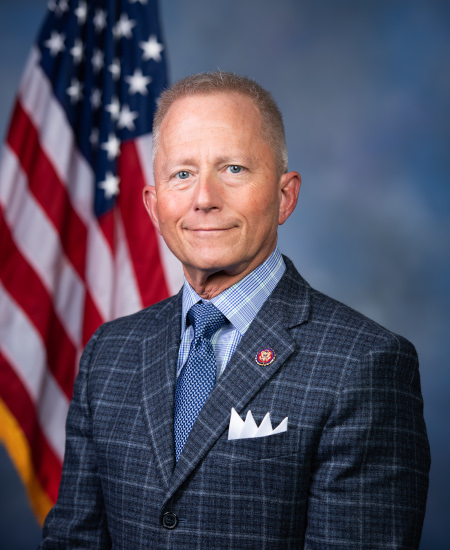
Rep. Jefferson Van Drew
Sponsored bills
Maddy summaryHR 5772, the "Remembering American Hostages Act of 2025," amends federal law to require the display of a special flag on designated dates at specific locations. It adds key dates to the existing flag display protocol, including November 4 and January 20 (Iranian hostage crisis), August 19 (James Foley's death), and October 7 (Hamas attack with American hostages). The bill mandates this flag be flown at all U.S. federal buildings, embassies, consulates, Department of Justice offices, and passport offices on these dates. It also encourages state/local governments and airports to fly the flag on these dates through a non-binding Congressional sense of the matter.
Maddy summaryHR 5755, the No Budget, No Pay Act, requires Congress to pass a budget resolution and all regular appropriations bills by October 1 each fiscal year, or members of Congress (excluding the Vice President) will not receive pay starting October 2. The bill mandates that pay is withheld for each day after October 1 until both chambers approve the budget resolution and all appropriations bills. It explicitly prohibits retroactive payment for any withheld pay period and establishes procedures for Senate and House committees to certify compliance with the deadlines. The law takes effect February 1, 2027, and directly affects congressional members' salaries based on budget process deadlines.
Maddy summaryThis bill establishes the New York-New Jersey Watershed Restoration Program to coordinate and fund habitat restoration and water quality improvements across the shared watershed region. It creates a competitive grant program providing federal matching funds (up to 90% for small/rural/disadvantaged communities) to state/local governments, nonprofits, and tribes for projects advancing habitat restoration, climate resilience, and public access. The program prioritizes communities facing environmental injustice and requires coordination with existing regional conservation plans like the Hudson River Estuary Program. Funding of $20 million annually (2026-2031) will support these activities, with 75% dedicated to the grant program and all projects supplementing existing conservation efforts.
Maddy summaryHRES 799 is a symbolic resolution (not a law) introduced by House members recognizing former President Donald J. Trump for his claimed diplomatic achievements. It states that Trump brokered a "historic peace agreement" ending Hamas-led hostilities in Gaza, securing hostage releases and disarming Hamas, and resolved other conflicts like Israel-Iran and India-Pakistan. The resolution urges the Norwegian Nobel Committee to award Trump the Nobel Peace Prize for these actions. It has no legal effect and serves solely as a ceremonial tribute to Trump's foreign policy record.
Maddy summaryHR 5742 (BOPEN Act of 2025) ensures continuous funding for Bureau of Prisons (BOP) staff salaries during gaps in annual appropriations, specifically covering periods before fiscal year 2026 or 2027 budgets are finalized. It directly affects BOP employees by guaranteeing pay through temporary appropriations, excluding senior officials requiring presidential appointment with Senate confirmation. The bill’s key mechanism is authorizing funds from general Treasury reserves to prevent payment disruptions during federal budget transitions. This is a procedural funding measure with no direct impact on inmates or public policy.
Maddy summaryThis resolution (HRES 789) expresses the U.S. House of Representatives' support for observing the second Monday in October as "Columbus Day," recognizing Christopher Columbus's historical role and his significance to the Italian-American community. It does not create new law or policy but affirms the existing national observance of the holiday. The resolution was introduced by Rep. Garbarino and 10 co-sponsors in October 2025. It honors Columbus's legacy as connected to Italian-American contributions, without altering current federal holiday status.
Maddy summaryHR 5691 prohibits federal funding to public elementary and secondary schools that require students to be vaccinated against COVID-19 for enrollment. It directly affects local school districts (referred to as "local educational agencies" under federal law) that enforce such student vaccine mandates. The bill's key mechanism is withholding all federal education funds from any district that imposes or enforces a student COVID-19 vaccine requirement. This policy change would prevent federal financial support for schools mandating vaccines for student enrollment, based on the definitions in the Elementary and Secondary Education Act.
Maddy summaryThis bill amends the National Instant Criminal Background Check System (NICS) process to strengthen due process for individuals denied firearm purchases. It requires courts to hold hearings on challenges within 30 days, places the burden on the government to prove ineligibility by "clear and convincing evidence," and mandates courts to award attorney fees to successful challengers. The bill also requires the FBI to submit annual reports to Congress detailing NICS challenge volumes, reversal rates, and processing times. These provisions directly affect people wrongly flagged in the NICS database who seek to correct their records. The law focuses on procedural fairness, not altering firearm eligibility criteria.
Maddy summaryThis bill adds Medicare coverage for multi-cancer early detection screening tests (blood or biological tests analyzing cell-free DNA) starting January 1, 2028. It directly affects Medicare beneficiaries aged 68 and older (starting in 2028, with the age limit increasing by 1 year annually), requiring tests to be FDA-cleared and deemed reasonable/necessary by the Secretary for early cancer detection across multiple organ sites. Payment will initially match current stool DNA test rates before 2031, then shift to a lower rate or new payment system after 2031, with limits preventing more than one test per year. The bill explicitly states it does not alter coverage for existing cancer screenings like breast, colorectal, or prostate cancer tests.