

Maddy summaryThis bill requires adding the names of 74 crew members of the USS Frank E. Evans (killed in a 1969 incident) to the Vietnam Veterans Memorial Wall within one year of enactment. It directly affects the memorial's inscription and honors the families of those lost. The Secretary of Defense must consult on placement due to space limits and is exempt from standard memorial rules under the Commemorative Works Act.
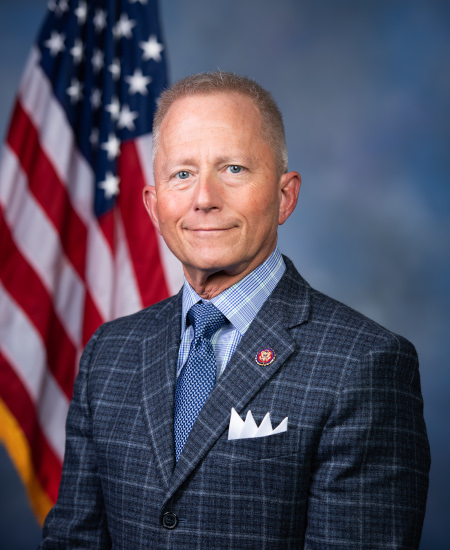
Rep. Jefferson Van Drew
Sponsored bills
Maddy summaryThis is a procedural resolution (HRES 860), not a bill with legislative effect. It expresses the U.S. House of Representatives' support for former President Trump's 2020 decision to redesignate Nigeria as a "Country of Particular Concern" (CPC) under religious freedom laws. The resolution commends this action due to documented religious persecution in Nigeria, including violence against Christians and minority religious groups. It does not create new policy or alter U.S. assistance; it solely states congressional support for holding Nigeria accountable for religious freedom violations.
Maddy summaryThis bill requires federal transportation grants to fund the purchase and placement of automated external defibrillators (AEDs) at major transit hubs like bus terminals, train stations, ferry terminals, and highway rest areas on the Interstate System. It mandates that facility operators develop written emergency plans for medical emergencies, including AED use, with guidance from the Transportation Department. The law directs the Transportation Secretary to issue deployment recommendations and technical assistance to help facilities comply. This directly affects interstate transportation facilities and their operators, aiming to improve rapid response to cardiac emergencies in high-traffic public locations.
Maddy summaryThis bill requires states receiving certain federal law enforcement funds to submit quarterly, anonymous reports to the Attorney General about pregnant individuals and births in custody. It mandates data on pregnancy testing, prenatal care, birth outcomes, restraint use (including during labor), postpartum care, and restrictive housing for incarcerated pregnant people. States failing to comply face up to a 10% reduction in allocated federal funds. The reports will be publicly published, and the Attorney General must conduct a study to analyze the data and improve care standards. The bill affects all states with correctional facilities (including jails, prisons, and boot camps) that receive funding under the specified federal program.
Maddy summaryHR 5898, the Lejeune Untaxed Compensation and Settlements Act of 2025, ensures that compensation received under the Camp Lejeune Justice Act of 2022 is not subject to federal income tax. It directly affects individuals who filed lawsuits related to water contamination at Camp Lejeune, excluding their settlement amounts from taxable income. The bill amends the Internal Revenue Code to add a specific exclusion for these damages under Section 104(a). This change applies to settlements received after the bill’s enactment, providing tax relief for affected victims.
Maddy summaryThe GRID Act repeals federal requirements that would have mandated electric utilities to implement EV charging programs. It removes specific provisions from the 1978 Public Utility Regulatory Policies Act related to electric vehicle infrastructure, including standards for utility EV charging mandates. This directly affects electric utilities by eliminating federal directives about EV charging and ratepayers who might have faced potential cost increases from such requirements. The bill effectively prevents federal imposition of EV charging mandates on utilities.
Maddy summaryHR 5863, the "No CDLs for Illegals Act," requires states to deny commercial driver's license (CDL) applications to individuals without proof of U.S. citizenship, lawful permanent residency, or valid work authorization, plus proof of state domicile. It mandates states to use the federal SAVE system to verify immigration status for non-citizen applicants and prohibits issuing CDLs to non-domiciles. States violating these rules risk losing federal transportation funds, with the Secretary of Transportation required to annually review compliance and suspend funds until corrections are made. The bill directly affects CDL applicants and state licensing agencies, creating concrete policy changes for CDL issuance and enforcement.
Maddy summaryThis bill establishes federal standards for trauma kits purchased with grant funds by law enforcement agencies. It requires all such kits to include specific components like tourniquets, bleeding control bandages, and instructional materials, and mandates that the Bureau of Justice Assistance develop these performance standards within 180 days. The bill also requires agencies to follow optional best practices for officer training, kit maintenance in vehicles, and kit placement at facilities. It directly affects police departments receiving federal grants under the Omnibus Crime Control Act by dictating the required contents and quality of trauma kits used for emergency response.
Maddy summaryThe Thalidomide Survivors Compensation Act of 2025 would establish a federal program to provide $150,000 in compensation to U.S. citizens or permanent residents who suffered birth defects from thalidomide exposure in utero during the 1950s-1960s. To qualify, individuals must submit documentation of exposure and injury by May 31, 2034, and the compensation would be tax-exempt and not count toward income calculations for means-tested welfare programs. The Department of Health and Human Services would administer the program, with an annual review process to evaluate its effectiveness and make adjustments as needed. The bill acknowledges approximately 100 U.S. thalidomide survivors remain alive today, facing ongoing medical needs without formal compensation, while 46 countries already provide such support to affected individuals.
Maddy summaryThis bill ensures SNAP (food stamp) benefits continue uninterrupted during government funding gaps in fiscal year 2026. It directs the USDA to use existing Treasury funds to pay SNAP benefits if Congress fails to pass a full-year budget for the Department of Agriculture by September 30, 2025. The bill also covers retroactive payments for missed benefits starting September 30, 2025, through the bill's enactment date. Benefits funded this way stop once Congress enacts a full FY2026 budget for the USDA. It directly affects SNAP recipients who rely on these benefits during budget delays.