

Maddy summaryHCONRES 64 is a congressional resolution directing the President to withdraw U.S. military forces from any hostilities against Venezuela that lack explicit congressional authorization. It applies to ongoing military operations in Venezuela not approved by Congress through a declaration of war or specific law authorizing force. The resolution invokes the War Powers Resolution (50 U.S.C. 1544(c)), requiring the removal of troops within the timeframe specified by that law. This bill does not affect military actions already authorized by Congress but mandates the end of unapproved operations.
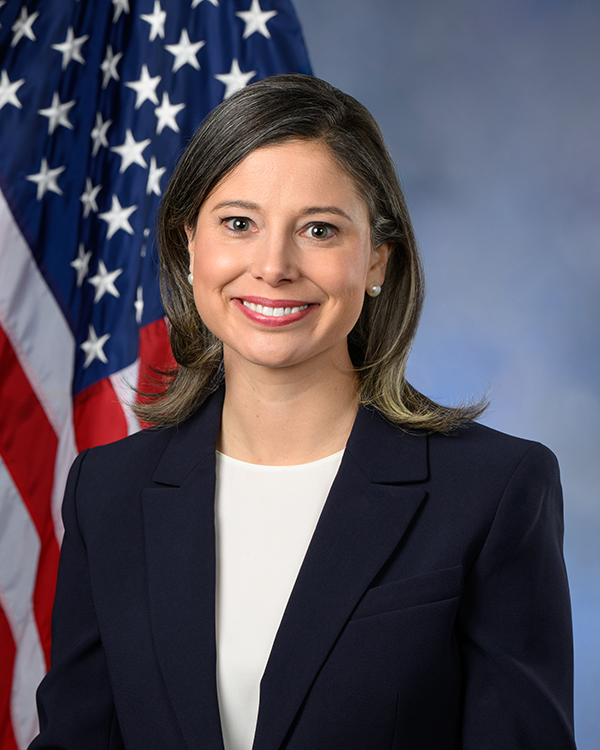
Rep. Maggie Goodlander
Sponsored bills
Maddy summaryHCONRES 61 directs the President to withdraw U.S. military forces from hostilities against any terrorist organization designated by the president in the Western Hemisphere. This bill specifically applies to military operations involving U.S. armed forces in the region targeting such groups. The key provision requires the withdrawal unless Congress has passed a formal declaration of war or specific authorization for that military action. The resolution invokes Section 5(c) of the War Powers Resolution to compel this change in military deployment.
Maddy summaryThis bill prohibits using fiscal year 2026 Department of Defense funds to implement hiring freezes, layoffs, or unnecessary delays in filling vacant positions at public shipyards. It directly affects public shipyards and their Federal civilian employees by preventing workforce reductions without justification. The key provision blocks specific personnel actions - hiring freezes, layoffs, and unfounded hiring delays - using Defense Department funding. This is a procedural measure focused on preserving existing workforce stability at these facilities.
Maddy summaryThis bill establishes a digital system for TRICARE members to electronically file and track complaints about access to care at military medical facilities. It requires the Defense Department to create a system where beneficiaries can submit complaints online, view their status in real time, and have complaints automatically aggregated quarterly for review. The system mandates annual reports to Congress comparing complaint types (e.g., specialty vs. primary care, pediatric vs. non-pediatric, administrative hurdles) and detailing facility-level actions taken to address issues. The goal is to improve transparency and accountability in military healthcare access.
Maddy summaryHR 5778 requires the Small Business Administration (SBA) to participate in federal interagency meetings about employee ownership and cooperatives. Specifically, the SBA Administrator (or a designee) must attend such meetings when invited or if there's a prior relationship with the host agency. The bill also updates outreach language for Small Business Investment Companies to include investors and mandates the SBA to implement existing outreach through its Employee Ownership Program within 180 days of enactment. This directly affects the SBA's operational procedures and indirectly supports employee-owned businesses by improving federal coordination on these models.
Maddy summaryHR 6745, the TRANSFER Act, allows Army and Air Force National Guard officers to be transferred between active and inactive duty status when filling vacancies in federally recognized units. Specifically, it authorizes the Secretaries of the Army and Air Force to establish regulations enabling officers to move from active to inactive status when filling a vacancy, or from inactive to active status to fill the same vacancy. This change aims to improve personnel flexibility and readiness by better matching officers' status to unit needs. The bill directly affects National Guard officers managing active duty positions, without creating new benefits or funding.
Maddy summaryThis bill extends the open enrollment period for 2026 health insurance plans from November 2025 to May 2026, giving more time for individuals to enroll. It creates a monthly special enrollment period for people with household income under 150% of the federal poverty line who qualify for premium tax credits. The bill also requires health insurance marketplaces to fund navigators (enrollment assistance organizations) with a physical presence in each state, and allocates $100 million annually for federal exchanges to support these services. These changes directly affect millions of Americans seeking affordable health coverage through the Affordable Care Act marketplaces.
Maddy summaryHR 3962, the ESTUARIES Act, extends a deadline within the National Estuary Program. It amends Section 320(i)(1) of the Federal Water Pollution Control Act by changing the year "2026" to "2031" in a requirement related to program management. This change directly affects the National Estuary Program, which oversees coastal water quality protection and restoration efforts. The bill makes a specific procedural adjustment to the program's timeline without altering its core policies or funding.
Maddy summaryHR 6718, the Professional Student Degree Act, amends the Higher Education Act to clarify the definition of a "professional degree" for federal education purposes. It replaces the previous definition with a new section listing specific degrees that meet the criteria, including Pharmacy (Pharm.D.), Law (J.D.), Medicine (M.D.), Dentistry (D.D.S.), Veterinary Medicine (D.V.M.), and others like Nursing (D.N.P.) and Business Administration (M.B.A.). This definition requires degrees to signify both completion of academic requirements for professional practice (often requiring licensure) and skills beyond a bachelor's level. The bill directly affects students pursuing these designated degrees by formally recognizing them under federal education law, without creating new programs or changing funding.
Maddy summaryThe Protect America's Workforce Act cancels an executive order issued on March 27, 2025, that excluded certain groups from federal labor-management relations programs, making it legally unenforceable. It also ensures that all collective bargaining agreements between federal agencies and labor unions, which were active as of March 26, 2025, remain fully effective until their agreed terms expire. This directly affects federal agencies, labor unions, and the employees covered by these agreements. The bill prevents federal funds from being used to implement the canceled executive order while preserving existing labor agreements.