

Maddy summaryThe Preventing the Financing of Illegal Synthetic Drugs Act (HR 1076) requires the Government Accountability Office (GAO) to study how criminal groups finance synthetic drug trafficking into the U.S., including the use of social media platforms and payment apps like CashApp. The study will examine business models, money laundering tactics, government efforts to disrupt these networks, and overlaps with human trafficking. It must be completed within one year of enactment, with findings reported to Congress. This bill does not change existing laws but aims to provide data to inform future policy decisions on combating illicit drug finance.
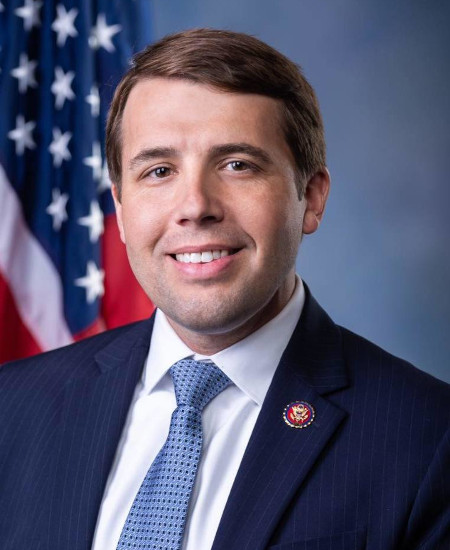
Rep. Chris Pappas
Sponsored bills
Maddy summaryHRES 1436 is a symbolic resolution (not a law) introduced in the U.S. House of Representatives. It recognizes suicide as a preventable public health crisis by citing statistics from the CDC, VA, and SAMHSA showing rising suicide rates across age groups, including veterans and adolescents. The resolution formally supports designating September as "National Suicide Prevention Month" and September 10, 2024, as "World Suicide Prevention Day." It does not create new policies, allocate funding, or directly affect any individuals - its purpose is solely to express congressional support for suicide prevention awareness and efforts.
Maddy summaryThis bill increases the tax credit for railroad track maintenance from $3,500 to $6,100 per mile of track. It adds an inflation adjustment starting in 2026, linking future credit amounts to the cost-of-living index. The bill also extends the qualifying period for maintenance expenditures from January 1, 2015, to January 1, 2024. These changes apply to tax years beginning after December 31, 2024, directly affecting railroad companies that maintain tracks.
Maddy summaryHR 554, the Taiwan Conflict Deterrence Act of 2023, requires the U.S. Treasury to report annually for three years on financial assets held by specific Chinese Communist Party officials involved with Taiwan, including Politburo members and certain Central Committee members. It mandates that U.S. financial institutions cannot engage in significant transactions with these officials or their immediate family (spouses, children, parents) if the Treasury finds they benefit from funds detailed in the reports. The prohibition on financial transactions expires either 30 days after the President certifies the threat to U.S. interests has ended or 25 years after the final report is submitted. The law aims to deter actions by China that threaten Taiwan by targeting financial ties of high-level officials.
Maddy summaryHRES 1423 expresses the U.S. House of Representatives' support for designating the week of September 21-28, 2024, as "National Estuaries Week." The resolution highlights estuaries' economic and ecological importance, noting they support over 3.5 million jobs, contribute $476 billion to the U.S. GDP, and provide critical services like flood control and water filtration. It does not create new laws or funding but aims to raise public awareness about protecting estuaries, which face threats like pollution and habitat loss. The resolution acknowledges ongoing restoration efforts by federal, state, tribal, and community partners.
Maddy summaryHR 9481 establishes a Northern Border Coordination Center within the Department of Homeland Security to improve coordination among federal, state, tribal, and international partners for border operations along the U.S.-Canada border. The center will coordinate strategy implementation, provide training for personnel, and serve as a hub for sharing information and intelligence related to border security. It must be located near existing Border Patrol, Air and Marine Operations, and Coast Guard facilities, operating separately from existing DHS authorities under the Homeland Security Act.
Maddy summaryHRES 1419 is a symbolic resolution recognizing Overdose Awareness Day and committing the House to strengthen efforts against the opioid crisis. It does not create new law but formally: (1) recognizes Overdose Awareness Day, (2) pledges to advance bipartisan policies reducing stigma around substance use disorders, and (3) commits to collaborating with states, communities, and organizations to support prevention, treatment, harm reduction, and recovery services. The resolution highlights the crisis' severity - including 932,000 overdose deaths since 1999 and a $1 trillion annual economic burden - but focuses on shared goals rather than specific policy changes. It directly affects congressional action and public messaging, not individual citizens or programs.
Maddy summaryHR 7667, the MAPLE Act, amends the seniors farmers' market nutrition program to include maple syrup as an eligible product. This change directly affects seniors who receive nutrition benefits through participating farmers' markets, allowing them to purchase maple syrup with their benefits. The bill adds "maple syrup" to the list of qualifying items previously limited to herbs. It makes a specific, narrow adjustment to the program's eligibility rules without altering other program requirements. This is a procedural amendment focused solely on expanding the range of agricultural products covered.
Maddy summaryHR 6880, the Hardwood Products Access and Development Program Act, authorizes the Secretary of Agriculture to award competitive grants to eligible entities - including states, industry nonprofits, universities, and research institutions - to boost the domestic hardwood industry. The grants fund specific activities like research on hardwood’s carbon benefits, market promotion, consumer education, and demonstration projects showcasing hardwood’s sustainability. It allocates $5 million annually from 2024 to 2029 for these efforts, with grants requiring clear goals and expected outcomes like increased production or consumer awareness. The bill defines "domestically produced hardwood products" as those containing 90% domestic hardwood material and ensures it does not override state or tribal laws.
Maddy summaryThis bill enacts House Resolution 895 into permanent law, modifying the House ethics procedures. It makes the Office of Congressional Ethics a standing committee, updates committee references, allows extended terms for ethics board members, guarantees individuals under review the right to legal counsel, and explicitly prohibits actions that would deny constitutional rights. The changes directly affect House members, ethics board staff, and individuals undergoing ethics investigations. The bill focuses on procedural updates to ethics oversight without introducing new policy measures.