

Student Veterans Counseling Centers Eligibility Act This bill requires the Department of Veterans Affairs (VA) to furnish counseling, including counseling through a Vet Center, to veterans or members of the Armed Forces who are pursuing a course of education using specified Department of Defense or VA educational assistance benefits. Specifically, such counseling must be provided to veterans or members of the Armed Forces who are utilizing educational assistance benefits under the Montgomery GI Bill (Active Duty), Montgomery GI Bill (Selected Reserve), Veteran Readiness and Employment program, Post-Vietnam Era Veterans Educational Assistance Program, Post-9/11 GI Bill, Reserve Educational Assistance Program, VA High Technology Pilot Program, or Veteran Rapid Retraining Assistance Program.
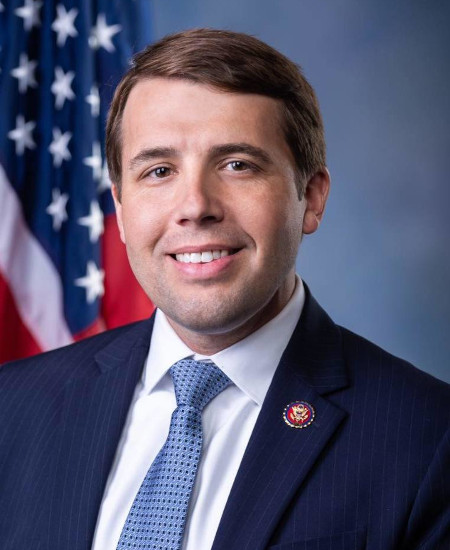
Rep. Chris Pappas
Sponsored bills
Protect Older Job Applicants Act of 2021 or the POJA Act of 2021 This bill prohibits employers from limiting, segregating, or classifying job applicants based on an applicant's age. It also requires the Equal Employment Opportunity Commission to study and report on claims received from job applicants involving age discrimination.
This concurrent resolution declares that Congress should not impose any new performance fee, tax, royalty, or other charge relating to the public performance of sound recordings on a local radio station for broadcasting sound recordings over the air, or on any business for such public performance of sound recordings.
Greyhound Protection Act of 2021 This bill modifies the federal criminal statute commonly known as the Wire Act. Currently, the Wire Act contains four prohibitions on the use of a wire transmission facility (e.g., the telephone or internet) for certain gambling activities. All four prohibitions apply to sports gambling. However, there have been conflicting interpretations of the applicability of the prohibitions to nonsports gambling (e.g., state lotteries). This bill amends the Wire Act to expressly state that the statute does not authorize the use of wire communications to gamble on commercial greyhound racing or permit the transport of animals for commercial dog racing or related activities.
Federal Initiative to Guarantee Health by Targeting Fentanyl Act This bill places fentanyl-related substances as a class into schedule I of the Controlled Substances Act. A schedule I controlled substance is a drug, substance, or chemical that has a high potential for abuse; has no currently accepted medical value; and is subject to regulatory controls and administrative, civil, and criminal penalties under the Controlled Substances Act. Additionally, the bill prohibits the application of a mandatory minimum prison term for certain drug offenses involving fentanyl-related substances.
Sgt. Isaac Woodard, Jr. and Sgt. Joseph H. Maddox GI Bill Restoration Act of 2021 This bill expands eligibility for Post-9/11 GI bill educational assistance benefits and the Department of Veterans Affairs (VA) home loan program. Specifically, the bill explicitly includes the following persons as eligible veterans: Black veterans who served on active duty during World War II who can certify they were denied a specific benefit on the basis of race; and the living surviving spouses, children, grandchildren, or other direct descendants of such veterans described above who can certify the veteran was denied a specific benefit on the basis of race. Such veterans described above must apply for educational or home loan benefits within the five-year period after the passage of this bill to be eligible for benefits. The Government Accountability Office must report on the number of individuals who received educational or housing loan benefits and the total value of such benefits administered by the VA due to the amendments made by the bill. Finally, the VA must appoint a panel of independent experts to develop recommendations regarding additional benefits and assistance for female and minority members of the Armed Forces.
Fiscal State of the Nation Resolution This concurrent resolution requires the congressional budget committees to conduct an annual joint hearing to receive a presentation from the Comptroller General regarding (1) the Government Accountability Office's audit of the financial statement of the executive branch, and (2) the financial position and condition of the federal government.
Justice for ALS Veterans Act of 2021 This bill extends increased dependency and indemnity compensation to the surviving spouse of a veteran who dies from amyotrophic lateral sclerosis (ALS or Lou Gehrig's disease) regardless of how long the veteran had such disease prior to death. Under current law, such compensation is paid for a service-connected disability that was rated totally disabling for a continuous period of at least eight years immediately preceding death. For purposes of this bill, a surviving spouse is a person who was married to the veteran for a continuous period of eight years or longer prior to the veteran's death.
This bill expands eligibility for Department of Veterans Affairs hospital care, medical services, and nursing home care to include veterans of World War II who are not already covered.
Veterans Justice Outreach Improvement Act This bill updates the Department of Veterans Affairs (VA) Veterans Justice Outreach Program, which is a program through which the VA identifies justice-involved veterans and provides them with access to VA services. Justice-involved veterans are those with active, ongoing, or recent contact with some component of a local criminal justice system. Specifically, the bill requires the VA to conduct program outreach to justice-involved veterans, military and veterans service organizations, and relevant stakeholders in the criminal justice community (e.g., local law enforcement). The VA must increase the number of program specialists responsible for supporting justice-involved veterans in rural, remote, or underserved areas. Additionally, the VA must establish performance goals, measures, and implementation time lines for the program, specialists, and providing support for research regarding justice-involved veterans. Program specialists must receive training, at least annually, on (1) veteran eligibility for the program, and (2) best practices for identifying and conducting outreach to justice-involved veterans and relevant stakeholders in the criminal justice community.