

Radiation Exposure Compensation Act Amendments of 2021 This bill expands two programs that compensate individuals who were exposed to radiation during certain nuclear testing or uranium mining and subsequently developed medical conditions, including cancers. First, the bill expands and extends a program that compensates individuals who were exposed to radiation from atmospheric nuclear testing or other sources and subsequently developed specified cancers. Under current law, this program compensates individuals who were present in a designated geographic area during a period of nuclear testing and certain individuals employed in uranium mining. The bill expands the designated areas to include Colorado, Idaho, Montana, New Mexico, and Guam and additional areas in Arizona, Nevada, and Utah; makes more individuals who worked in uranium mining eligible for the program; increases the amount of compensation awarded to and provides medical benefits for eligible claimants; and extends for 19 years following the bill's enactment the fund that supports this program and the statute of limitations for filing claims (currently, the program terminates on July 10, 2022). Second, the bill makes certain individuals employed in uranium mines or mills eligible for a program that compensates workers, including Department of Energy employees and contractors, for illnesses caused by occupational exposure to radiation and hazardous substances during development and testing of the nation's nuclear weapons stockpile. The bill also establishes a grant program in the National Institute of Environmental Health Sciences for institutions of higher education to study the epidemiological impacts of uranium mining and milling among individuals without occupational exposure.
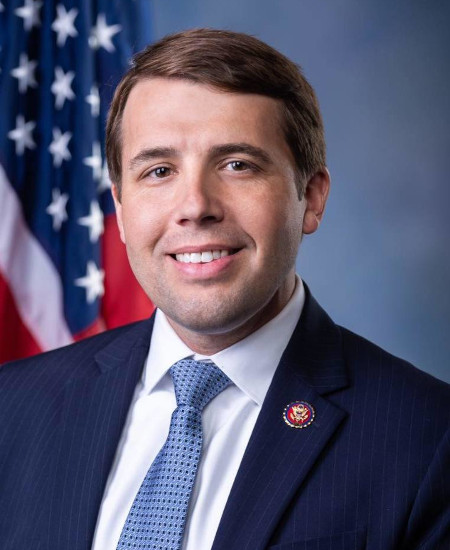
Rep. Chris Pappas
Sponsored bills
Allied Health Workforce Diversity Act of 2021 This bill allows the Department of Health and Human Services to provide grants to accredited education programs to increase diversity in the physical therapy, occupational therapy, respiratory therapy, audiology, and speech-language pathology professions. Grants may be used to provide scholarships or to support recruitment and retention of students from underrepresented groups.
Reaching Every Homeless Veteran Act of 2021 This bill requires the Department of Labor, in administering homeless veterans reintegration programs, to (1) consider grant applications from entities in all states (to the extent practicable), and (2) conduct an outreach and education program in states where no entity has been awarded a grant to ensure communities are aware of homeless veterans reintegration programs.
Strengthening the Office of Personnel Management Act This bill provides statutory authority for the mission of the Office of Personnel Management (OPM), establishes the Chief Management Officer and the OPM Advisory Committee on Human Capital Management, and specifies additional requirements for the appointment of the OPM Director and the removal of the OPM Director or Deputy Director.
Expanding Access to Fertility Care for Servicemembers and Dependents Act This bill entitles members of the armed forces and their dependents (including the reserve components) who are performing active service and are entitled to medical care under TRICARE to assisted reproductive technology services (e.g., in vitro fertilization). Such services must be provided, regardless of (1) whether the assisted reproductive technology service is related to the treatment of a service-connected disability; (2) whether the member has a serious illness or injury resulting from a service-connected disability; (3) the ability of the member or dependent to conceive a pregnancy or carry a pregnancy to term; or (4) the sex, gender, sexual orientation, or marital status of the member or dependent.
VA Transparency & Trust Act of 2021 This bill requires the Department of Veterans Affairs (VA) to submit a plan for obligating and expending covered funds, which are funds made available to the VA for response to the COVID-19 pandemic. The bill requires the VA to submit biweekly reports regarding obligations, expenditures, and planned uses of the funds until seven days after the VA has expended all covered funds. The Inspector General of the VA must submit reports examining the obligations and expenditures made using covered funds during the specified reporting period. Finally, the Government Accountability Office must submit an interim report and final report containing a review of obligations and expenditures made using covered funds.
Maddy summaryHRES 815 is a symbolic resolution introduced in the U.S. House of Representatives on November 18, 2021. It expresses congressional support for National Rural Health Day, which recognizes the importance of rural health care and celebrates providers serving rural communities. The resolution highlights challenges like hospital closures and access barriers faced by rural health facilities but does not create new laws or funding. It simply affirms commitment to improving rural health care accessibility through policy, without specifying concrete changes. As a procedural resolution, it has no binding effect on legislation or funding.
This bill requires the Department of Veterans Affairs (VA) to establish the Advisory Committee on United States Outlying Areas and Freely Associated States to provide advice and guidance to the VA on matters relating to veterans residing in American Samoa, Guam, Puerto Rico, the Commonwealth of the Northern Mariana Islands, the U.S. Virgin Islands, the Federated States of Micronesia, the Republic of the Marshall Islands, and the Republic of Palau. Among other duties, the committee must advise the VA on how to improve its programs and services to better serve veterans living in the listed areas.
Access to Birth Control Act This bill requires pharmacies to comply with certain rules related to ensuring access to contraceptives. Specifically, pharmacies must provide without delay a customer with any contraceptive or related medication that is in stock. If the contraceptive is not in stock, the pharmacy must immediately inform the customer and either order the contraceptive or refer the customer to a pharmacy that has it in stock. Laws in some states provide pharmacists with the right to refuse to dispense contraceptive-related drugs on religious or conscience grounds. Pharmacies may refuse to provide a contraceptive to a customer (1) if the customer lacks a valid prescription for a prescription contraceptive or is unable to pay for the contraceptive, or (2) based on a pharmacy employee's professional clinical judgment. The bill also establishes a private cause of action and civil monetary penalties for violations of the bill.
Restoring Brand USA Act This bill requires the Department of the Treasury to make $250 million available (out of unobligated balances remaining from certain fees collected by Treasury) for the Corporation for Travel Promotion, also known as Brand USA.