

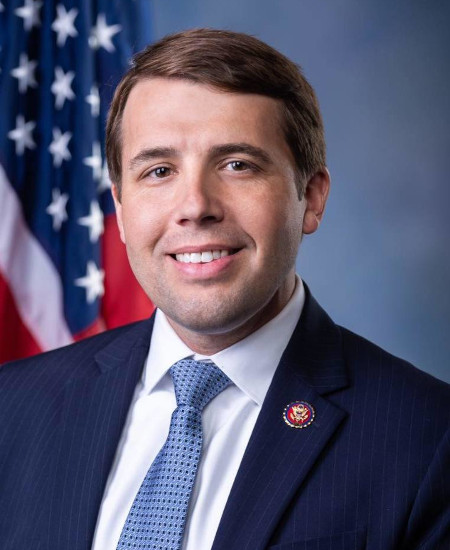
Photo of Chris Pappas
D United States House · District 1 · New Hampshire

Rep. Chris Pappas

Compare
Total votes
2,837
all sessions
Attendance
99%
15 missed
Higher than 96% of chamber peers
With party
93%
of cast votes
Lower than 88% of chamber peers
Bipartisan score
3%
crosses aisle rarely
Higher than 87% of chamber peers
Sponsored
1,655
bills & resolutions
Near the chamber average
Committees
7
assignments
1,655 bills and resolutions

Sponsored bills

Total
1,655
Primary
140
Co-sponsor
1,515
This page
1,655
matching current filters
Co-sponsor HR 3544
Passed · Indiana House · Co-sponsor
COVS Act

Computers for Veterans and Students Act of 2022 or the COVS Act This bill requires the General Services Administration (GSA) to transfer certain surplus computers and technology equipment to nonprofit computer refurbishers for repair and eventual distribution to schools (including home schools), veterans, seniors, and other specified populations in need. Specifically, not later than 30 days after the GSA provides state agencies for surplus property an opportunity to review surplus computer or technology equipment that has been determined to be repairable, the GSA must transfer such equipment to participating nonprofit computer refurbishers for repair, distribution, and subsequent transfer to eligible recipients.

Passed Dec 5, 2022 1 co-sponsor
Co-sponsor HR 2915
Passed · Indiana House · Co-sponsor
HOPR Act

Homeland Procurement Reform Act or the HOPR Act This bill directs the Department of Homeland Security (DHS) to ensure that procurement of certain items, such as body armor and other protective gear, meets specified requirements, including that a fraction of procurement funds be used for items manufactured by U.S. small businesses. The bill sets forth requirements for waivers based on a national emergency. DHS shall (1) ensure that covered items are purchased at a fair and reasonable price, and (2) study the adequacy of uniform allowances provided to employees of frontline operational components (i.e., Customs and Border Protection and other listed agencies and entities). DHS must report to Congress with recommendations on how it could procure additional items from domestic sources and bolster the domestic supply chain for specified national security-related items, including personal protective equipment and other items necessary to respond to a pandemic such as that caused by COVID-19.

Passed Dec 5, 2022 1 co-sponsor
Co-sponsor HR 8454
Signed into law · Indiana House · Co-sponsor
Medical Marijuana and Cannabidiol Research Expansion Act

Medical Marijuana and Cannabidiol Research Expansion Act This act establishes a new, separate registration process to facilitate research on marijuana. Specifically, the act directs the Drug Enforcement Administration (DEA) to follow procedures specified in the act to register (1) practitioners to conduct marijuana research, and (2) manufacturers to supply marijuana for the research. The act allows certain registered entities (including institutions of higher education, practitioners, and manufacturers) to manufacture, distribute, dispense, or possess marijuana or cannabidiol (CBD) for the purposes of medical research. Additionally, the act directs the DEA to register manufacturers and distributors of CBD or marijuana for the purpose of commercial production of an approved drug that contains marijuana or its derivative. Finally, the act includes various other provisions, including provisions that require the DEA to assess whether there is an adequate and uninterrupted supply of marijuana for research purposes; prohibit the Department of Health and Human Services (HHS) from reinstating the interdisciplinary review process for marijuana research; allow physicians to discuss the potential harms and benefits of marijuana and its derivatives (including CBD) with patients; and require HHS, in coordination with the National Institutes of Health and relevant federal agencies, to report on the therapeutic potential of marijuana for various conditions such as epilepsy, as well as the impact on adolescent brains and on the ability to operate a motor vehicle.

Signed into law Dec 2, 2022 1 co-sponsor
Co-sponsor HRES 1504
In committee · Indiana House · Co-sponsor
Supporting the goals of World AIDS Day.

This resolution encourages people around the world to work to achieve the goal of zero new HIV transmissions, zero discrimination, and zero AIDS-related deaths, in order to end the HIV epidemic in the United States and around the world by 2030. The resolution supports continued funding for prevention, care and treatment services, and research programs for communities impacted by HIV and people living with HIV in the United States and globally. The resolution supports continued leadership by the United States in domestic, bilateral, multilateral, and private sector efforts to fight HIV. Finally, the resolution urges other members of the international community to sustain and scale up their support for and financial contributions to efforts around the world to combat HIV.

In committee Dec 1, 2022 1 co-sponsor
Co-sponsor HRES 744
Passed · Indiana House · Co-sponsor
Condemning the Government of Iran's state-sponsored persecution of its Baha'i minority and its continued violation of the Universal Declaration of Human Rights and the International Covenant on Civil and Political Rights.

This resolution condemns Iran's state-sponsored persecution of its Baha'i minority and its continued violation of the international covenants on human rights. Further, it calls on Iran to immediately release all imprisoned or detained Baha'is, and it urges the President and the Department of State to impose sanctions on Iranian officials and others who are responsible for serious human rights abuses, including abuses against Iran's Baha'i community.

Passed Dec 1, 2022 1 co-sponsor
Co-sponsor HRES 1483
In committee · Indiana House · Co-sponsor
Supporting the goals and ideals of National Rural Health Day.

Maddy summaryHRES 1483 is a symbolic House resolution supporting National Rural Health Day, introduced in November 2022. It recognizes the challenges rural health care faces - including hospital closures, workforce shortages, and barriers to services - impacting approximately 60 million rural residents. The resolution expresses support for the day's goals, celebrates rural health care providers, and affirms a commitment to improving rural health care accessibility and affordability. As a non-binding resolution, it does not create new policies or funding but serves as a formal acknowledgment of rural health care needs.

In committee Nov 18, 2022 1 co-sponsor
Primary HR 7277
Passed · Indiana House · Lead sponsor
Improving Oversight of the Veterans Community Care Providers Act of 2022

Improving Oversight of the Veterans Community Care Providers Act of 2022 This bill requires the Veterans Health Administration to carry out a plan to improve the methods by which the Department of Veterans Affairs (VA) identifies health care providers that are not eligible to participate in the Veterans Community Care Program. The VA must certify to Congress it has implemented the plan not later than 270 days after the enactment of this bill.

Passed Nov 17, 2022 0 co-sponsors
Co-sponsor HR 3630
Passed · Indiana House · Co-sponsor
Lymphedema Treatment Act

Lymphedema Treatment Act This bill provides for Medicare coverage of lymphedema compression treatment items. Specifically, the bill provides for coverage of standard and custom fitted gradient compression garments and other approved items that are prescribed by a physician or other specified health care professional to treat lymphedema.

Passed Nov 17, 2022 1 co-sponsor
Co-sponsor HR 1283
In committee · Indiana House · Co-sponsor
CONTRACT Act of 2021

Continuity for Operators with Necessary Training Required for ATC Contract Towers Act of 2021 or the CONTRACT Act of 2021 This bill exempts certain air traffic controllers from a required reduction in their retirement annuity payment on account of earnings from certain work performed while entitled to such annuity. Under current law, retired Federal Aviation Administration air traffic controllers receive an annuity payment during the period between the mandatory retirement age of 56 and the Social Security minimum age of 62. Such annuity payment is required to be reduced by a certain percentage of any excess earnings during this period. The bill exempts from such reduction in annuity payments an air traffic controller who participates in the Air Traffic Control Contract Program (a public-private partnership for air traffic control services) following mandatory retirement.

In committee Nov 17, 2022 1 co-sponsor
Showing 1,041 to 1,050 of 1,655 bills