VA Employee Fairness Act of 2021 This bill repeals provisions excluding any matter or question concerning professional conduct or competence; peer review; or the establishment, determination, or adjustment of employee compensation from the applicability of collective bargaining rights for Veterans Health Administration employees.
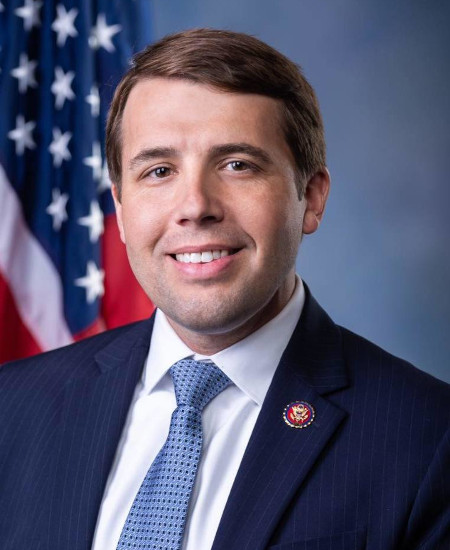
Rep. Chris Pappas
Sponsored bills
Maddy summaryHRES 1522 is a symbolic resolution condemning the November 19, 2022, mass shooting at Club Q, an LGBTQ+ nightclub in Colorado Springs that killed five people and injured 22. It honors the victims, offers condolences to their families, and expresses support for those impacted by the attack. The resolution also highlights the broader context of anti-LGBTQ+ violence and hate, including the Pulse nightclub tragedy, and calls for an end to anti-LGBTQ+ hate and violence. As a ceremonial resolution, it contains no new laws or funding but serves as a formal statement of solidarity with the LGBTQ+ community.
Right to Private Conduct Act of 2022 This bill provides statutory authority for the right of adults to engage in private, consensual sexual conduct with other adults.
Small State and Rural Rescue Act This bill addresses requests for, and other matters pertaining to, disaster assistance provided through the Federal Emergency Management Agency (FEMA), with a focus on small states and rural communities. The bill expands the duties of FEMA's Small State and Rural Advocate to include assistance for states in the collection and presentation of material in the disaster or emergency declaration request relevant to demonstrate severe localized impacts within the state for a specific incident. Additionally, the Government Accountability Office must review FEMA's implementation of its final rule regarding factors considered when evaluating a governor's request for a major disaster declaration. In particular, the review must focus on requests for a major disaster declaration authorizing individual assistance.
Ski Hill Resources for Economic Development Act or the SHRED Act This bill establishes the Ski Area Fee Retention Account. A specified portion of rental charges for ski area permits on a Forest Service unit shall be deposited in such account. Amounts in the fund shall be available to the unit for expenditure without further appropriation for ski area administration, improvements, visitor services, and wildfire preparedness. Funds may be reallocated only if the amounts collected exceed the reasonable needs of the unit.
Equal Access to Green cards for Legal Employment Act of 2022 or the EAGLE Act of 2022 This bill modifies requirements related to employment-based visas and addresses related issues. The bill increases the per-country cap on family-based immigrant visas from 7% of the total number of such visas available that year to 15% and eliminates the per-country cap for employment-based immigrant visas. The bill establishes transition rules for employment-based visas such as (1) reserving a percentage of EB-2 (workers with advanced degrees or exceptional ability) and EB-3 (skilled and other workers) visas for individuals not from the two countries with the largest number of recipients of such visas, and (2) allotting a number of visas for professional nurses and physical therapists. The bill imposes additional requirements on an employer seeking an H-1B visa, such as prohibiting (1) an employer from advertising that a position is only open to H-1B applicants or that H-1B applicants are preferred, and (2) certain employers from having more than half of their employees as nonimmigrant visa workers. The Department of Labor shall create a publicly available website where an employer seeking an H-1B visa must post certain information about the open position. The bill also expands Labor's authority to review and investigate H-1B applications for fraud or misrepresentations. The bill also allows certain aliens to obtain lawful permanent resident status if the alien (1) is in the United States as a nonimmigrant, (2) has an approved immigrant visa petition, and (3) has waited at least two years for a visa.
Respect for Marriage Act This act provides statutory authority for same-sex and interracial marriages. Specifically, the act replaces provisions that define, for purposes of federal law, marriage as between a man and a woman and spouse as a person of the opposite sex with provisions that recognize any marriage between two individuals that is valid under state law. (The Supreme Court held that the current provisions were unconstitutional in United States v. Windsor in 2013.) The act also replaces provisions that do not require states to recognize same-sex marriages from other states with provisions that prohibit the denial of full faith and credit or any right or claim relating to out-of-state marriages on the basis of sex, race, ethnicity, or national origin. (The Supreme Court held that state laws barring same-sex marriages were unconstitutional in Obergefell v. Hodges in 2015; the Court held that state laws barring interracial marriages were unconstitutional in Loving v. Virginia in 1967.) The act allows the Department of Justice to bring a civil action and establishes a private right of action for violations. The act does not (1) affect religious liberties or conscience protections that are available under the Constitution or federal law, (2) require religious organizations to provide goods or services to formally recognize or celebrate a marriage, (3) affect any benefits or rights that do not arise from a marriage, or (4) recognize under federal law any marriage between more than two individuals.

Truck Parking Safety Improvement Act This bill authorizes appropriations through FY2026 to the Department of Transportation (DOT) to provide parking for commercial motor vehicles on the federal-aid highway system. DOT must provide competitive grants to states, metropolitan planning organizations, local governments, and tribal governments for projects that improve the safety of commercial motor vehicle operators and provide parking for commercial motor vehicles on federal-aid highways or on a facility with reasonable access to such a highway or a freight facility. The federal share for a project carried out in accordance with the bill shall be up to 100%.
Long-Term Care Veterans Choice Act This bill authorizes the Department of Veterans Affairs (VA) to enter into contracts to pay for specified veterans (i.e., certain veterans who have service-connected disabilities and require nursing home care) to be placed in medical foster homes at their request. A medical foster home is a home designed to provide non-institutional, long-term, supportive care for veterans who are unable to live independently and prefer a family setting. Veterans receiving such care must agree, as a condition of payment for their care, to accept home health services furnished by the VA. Under the bill, no more than a daily average of 900 veterans may have their care in a medical foster home covered by the VA. The VA must create a monitoring system to assess its workload in carrying out the medical foster home payments. Additionally, the Government Accountability Office must submit to Congress reports that assess the implementation of this program and provide recommendations for improvements. The bill also extends certain loan fee rates through February 15, 2031, under the VA's home loan program.
Uyghur Policy Act of 2021 This bill addresses human rights issues concerning the Uyghurs and other minority groups in the Xinjiang Uyghur Autonomous Region in China. The bill authorizes the establishment of a Special Coordinator for Uyghur Issues position within the Department of State. The State Department's Bureau of Educational and Cultural Affairs may, subject to appropriations, make certain funds available to human rights advocates working on behalf of Uyghurs and members of other ethnic and religious minority groups persecuted in China. The funds, if made available, shall be used to facilitate the presence of such human rights advocates at public diplomacy forums to speak on issues related to the human rights and religious freedoms of minority groups persecuted in China. The State Department must ensure that Uyghur language training is available to Foreign Service officers. It must also ensure that a Uyghur-speaking member of the Foreign Service is assigned to U.S. diplomatic and consular missions in China.