

Maddy summaryHRES 1513 is a symbolic House resolution affirming that the term "woke" originates from Black history and liberation movements, not modern political discourse. It highlights historical roots, including Marcus Garvey’s "Wake up Ethiopia!" and 1940s labor activism, while condemning media and right-wing groups for misusing and distorting the term (e.g., the Stop W.O.K.E. Act). The resolution encourages accurate historical use of "woke" and opposes efforts to erase its connection to social justice. It does not create new laws but directly addresses Black educators and movements targeted by legislation seeking to limit inclusive history teaching.
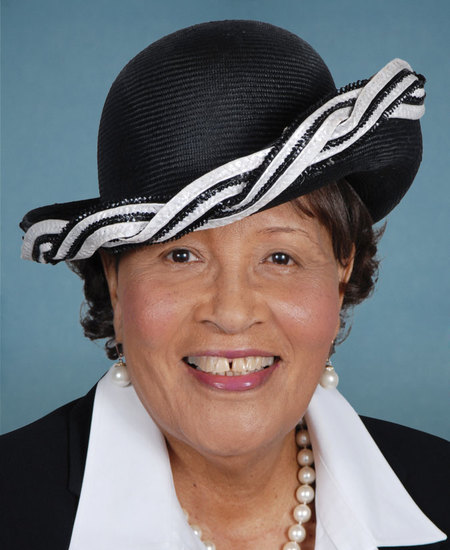
Rep. Alma S. Adams
Sponsored bills
Maddy summaryHR 9824, the College Thriving Act, creates a federal grant program to fund skills-for-success courses for all first-year college students at eligible institutions. The bill directly affects first-year students at participating colleges, requiring institutions to develop non-graded courses covering mental wellness, time management, conflict resolution, and campus resource connections. Grants of $1 million over five years (with adjustments based on funding) are awarded competitively, prioritizing historically Black colleges and universities, and mandate phased implementation: course development in year one, a pilot in year two, and full rollout by year three. Institutions must report annually on course implementation and submit a final evaluation after five years. The bill authorizes $50 million to support this initiative, with no new tax or regulatory requirements.
Maddy summaryThe Industrial Agriculture Conversion Act of 2024 creates federal grants to help medium and large livestock operations convert to climate-smart farming. It targets producers operating defined "medium" (e.g., 200-699 dairy cows) or "large" (e.g., 10,000 swine) concentrated animal feeding operations (CAFOs), funding up to 90% of costs for projects like adding pasture access, switching to specialty crops, or installing irrigation. The bill explicitly excludes manure lagoons and methane digesters from funding and prohibits packers from refusing to buy livestock from farms using these grants. Socially disadvantaged farmers may qualify for reduced cost-sharing requirements when working with community or minority-serving organizations.
Maddy summaryHCONRES 130 is a symbolic concurrent resolution commending state and local governments that treat reproductive rights as human rights following the *Dobbs* decision. It recognizes efforts by cities like Austin, Texas, and Montgomery County, Maryland, to expand abortion access and condemn criminalization of pregnancy outcomes. The resolution affirms that reproductive rights are human rights, urges states to repeal restrictive laws, and references U.S. obligations under international human rights treaties. As a non-binding resolution, it does not create new laws or alter existing policies.
Maddy summaryHRES 1495 designates September 2024 as "Sickle Cell Disease Awareness Month" to raise public education about sickle cell disease (SCD), which affects approximately 100,000 people in the U.S., predominantly in African American communities. The resolution urges the Department of Health and Human Services to address access barriers for SCD treatments in Medicare and Medicaid, calls for increased National Institutes of Health research funding, and proposes forming a federal interagency cabinet to coordinate SCD policy. It also encourages public events during September to highlight early detection, treatments, and preventative care for SCD complications. As a symbolic resolution, it does not create new laws but directs federal agencies to prioritize equitable access and research for SCD.
Maddy summaryHR 9782, the Uterine Cancer Study Act of 2024, directs the U.S. Department of Health and Human Services (HHS) to study whether hair straighteners - specifically chemical products - may be linked to uterine cancer, with a focus on higher rates among women of color. The study will review existing research, examine impacts across racial and ethnic groups, and break down results by product type (e.g., dyed, bleached, or permed straighteners). HHS must submit a study methodology within 45 days of the bill’s enactment and complete the study, reporting findings to Congress within two years. The bill does not impose new regulations but may inform future FDA safety requirements for hair straightening products. This affects women of color disproportionately impacted by uterine cancer and the broader population using such products.
Maddy summaryThis bill removes barriers for parents who borrowed under Federal Direct PLUS loans for their children's education. It expands access to income-driven repayment plans (including Pay as You Earn and Saving on a Valuable Education plans) starting July 1, 2024, and adds eligibility for disability discharge if the student becomes disabled. It also extends public service loan forgiveness and automatic discharge provisions to Parent PLUS loans, which were previously excluded. These changes directly affect parents with PLUS loans made on behalf of dependent students, removing prior restrictions that limited their access to relief options.
Maddy summaryThe Student Food Security Act of 2024 would expand eligibility for the Supplemental Nutrition Assistance Program (SNAP) to include college students at institutions of higher education who meet specific financial criteria, such as having a student aid index of 0 or being eligible for a Federal Pell Grant. It requires the USDA to develop a strategy to increase awareness of SNAP eligibility among students and creates a demonstration program testing new ways for students to use SNAP benefits on campus, including purchasing prepared food at campus dining facilities. The bill authorizes $1 billion in grants over seven years to colleges to develop programs addressing students' basic needs like food and housing insecurity, with priority given to community colleges and institutions with high numbers of Pell Grant recipients. This legislation would directly affect college students, particularly those from low-income backgrounds, and institutions of higher education that would receive funding to support student basic needs.
Maddy summaryThis bill establishes a Diversity and Inclusion Administrator at the Department of Labor to increase African American participation in apprenticeship programs. It requires all new and renewing registered apprenticeship programs to submit plans for boosting African American enrollment, and authorizes competitive grants for programs targeting underrepresented groups in industries like construction, tech, and healthcare. Grant recipients must report on metrics including participant demographics, program completion rates, and job placement in related fields. The law directly affects African American youth and other underrepresented groups by mandating systemic changes to apprenticeship programs nationwide.
Maddy summaryThis bill requires a government audit to study how federal agencies manage disaster recovery funds for Puerto Rico after hurricanes, earthquakes, and the pandemic. The audit will catalog all relevant grants, assess data tools used in the grant process, and identify gaps hindering effective aid delivery. Agencies managing these funds must provide timely information to complete the report within one year of the bill's passage. The study aims to improve data systems specifically for Puerto Rico's recovery efforts.