

Maddy summaryHRES 1588 is a House resolution supporting Transgender Day of Remembrance (TDoR) by recognizing the epidemic of violence against transgender people and memorializing those killed between October 1, 2023, and September 30, 2024. It specifically honors 38 transgender or gender-nonconforming individuals whose lives were lost to violence during that period, highlighting that transgender women of color face disproportionate risks. The resolution acknowledges systemic issues like underreporting, barriers to healthcare, and higher rates of homelessness and suicide within the community. It calls for the U.S. government to prioritize solutions to this violence while affirming transgender people's right to dignity and safety. As a symbolic resolution, it does not create new laws or policies but formally recognizes these issues for congressional record.
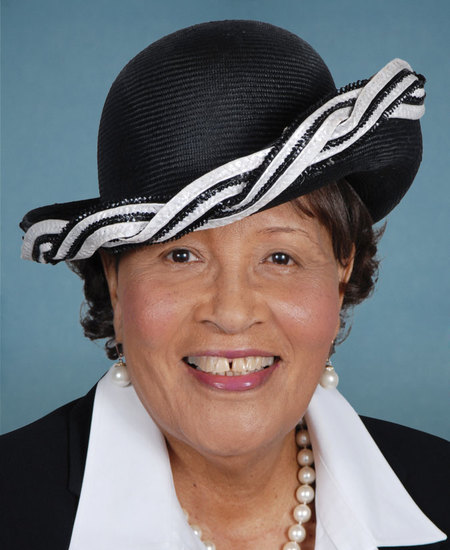
Rep. Alma S. Adams
Sponsored bills
Maddy summaryHR 9981, the "Ban Atrazine Toxicants Act," would immediately cancel all U.S. registrations for atrazine, the second-most widely used herbicide (80 million pounds annually), banning its use on crops and prohibiting sales of existing stock. The bill requires the EPA to revoke all food safety limits for atrazine within six months and prohibits future registrations or emergency uses of the chemical. It directly affects farmers, agricultural producers, and food suppliers who currently use or handle atrazine, while aiming to address documented environmental persistence and health risks linked to atrazine, including reproductive harm and impacts on endangered species. The bill cites USDA data indicating a minimal 1.19% potential decrease in corn yields from the ban, referencing Germany and Italy’s experience with no significant yield drops after similar bans.
Maddy summaryThis resolution (HRES 1558) is a symbolic House of Representatives measure supporting October as "National Domestic Violence Awareness Month." It does not create new laws or allocate funding but formally expresses the House's support for raising awareness about domestic violence and its impacts, and urges continued backing for existing programs that address domestic violence. The resolution cites statistics on domestic violence prevalence (e.g., 24 people per minute affected by intimate partner violence) to underscore the importance of the observance. It directly affects public awareness efforts but does not change policies or directly impact individuals.
Maddy summaryHR 10099 would establish the first national domestic violence prevention action plan for the United States, creating a federal steering committee of agency officials to coordinate prevention efforts across government levels. The plan must include specific goals for primary, secondary, and tertiary prevention strategies, a $25 million public awareness media campaign, and requirements for data collection and evaluation. It would directly affect federal agencies, state domestic violence coalitions, and community organizations working on prevention, addressing the current lack of a coordinated national plan which the U.S. lacks compared to other countries like Canada and the UK. The bill requires the plan to address disproportionate impacts on marginalized communities and be based on evidence-based prevention strategies.
Maddy summaryThis bill modifies how disability benefits are treated for homeless disabled veterans seeking housing assistance. It excludes certain disability payments (under Chapter 11 or 15 of Title 38, U.S. Code) from income calculations when determining eligibility for HUD-assisted housing programs, including the supported housing program under Section 8(o)(19) and housing on Department property. Specifically, it ensures these benefits are not counted toward income for housing eligibility, though they still count for "adjusted income" definitions. The bill directly affects disabled veterans applying for HUD housing assistance who receive these specific disability benefits. It makes a concrete change to income calculation rules without altering benefit amounts or creating new funding.
Maddy summaryThe VA Employee Fairness Act of 2024 modifies collective bargaining rules for employees of the Veterans Health Administration (VHA). It removes existing subsections (b), (c), and (d) from the law governing VHA employee bargaining and renumbers the remaining provision. This change streamlines the collective bargaining framework but does not alter the Secretary of Veterans Affairs' existing authorities over incentive pay and expedited hiring. The bill directly affects VHA employees by changing how their collective bargaining rights are structured under federal law. The law remains neutral, focusing solely on procedural adjustments to the existing bargaining framework.
Maddy summaryThis bill amends the Heirs' Property Relending Program to allow community organizations administering the program to use up to 30% of loan funds for administrative costs, rather than strictly requiring all funds to be relented to landowners. It increases annual funding authorization from $10 million to $60 million and extends the program's funding period through 2029. The changes directly benefit heirs with undivided ownership interests in farmland (often inherited family land), helping them resolve ownership disputes and succession issues through relending. A report on program outcomes must be submitted to Congress within one year of enactment.
Maddy summaryHR 9878, the No Shame at School Act of 2024, requires schools to automatically certify students from households with unpaid meal fees for free or reduced-price meals (instead of allowing discretion), and mandates retroactive reimbursement for past unpaid meals. It directly affects school districts and students in households owing meal fees by prohibiting stigmatizing practices like special tokens, public lists of names, or withholding grades due to unpaid fees. Key provisions ban schools from physically segregating students, using debt collectors, or taking food away from students who owe fees, while requiring clear communication to households about meal applications. The bill defines "covered child" as any student enrolled in a participating school meal program whose household owes fees or is eligible for free/reduced meals.
Maddy summaryHR 9872, the Sickle Cell Disease Treatment Centers Act of 2024, establishes a federal grant program to create coordinated care networks for sickle cell disease patients. It funds "hub-and-spoke" systems where medical hubs (like hospitals or universities) partner with local spokes (clinics, health centers) and community organizations to provide comprehensive, lifelong care - including pain management, genetic counseling, mental health services, and pediatric-to-adult transition support. The program specifically prioritizes underserved communities, historically Black colleges, rural areas, and regions with high sickle cell disease prevalence, while requiring data collection on patient outcomes and health disparities. Grants allocate 70% to hub-spoke networks, 20% to community organizations, and 5% each to the National Sickle Cell Coordinating Center and CDC data collection efforts.
Maddy summaryHCONRES 131 is a symbolic resolution recognizing the wage gap between Latina women and White, non-Hispanic men in the U.S. workforce. It highlights that Latina women working full-time earn 58 cents for every dollar earned by White, non-Hispanic men, with an average lifetime earnings loss of over $1.2 million. The resolution designates October 3, 2024, as "Latina Equal Pay Day" to draw attention to this disparity, citing Bureau of Census data showing the gap has persisted for decades. It does not create new laws or policies but formally acknowledges the economic impact on Latina women and their families.