

Maddy summaryThe EACH Act of 2023 would require federal health programs - including Medicaid, Medicare, the Indian Health Service, and TRICARE - to cover abortion services without restrictions. It repeals a provision in the Affordable Care Act that allowed states to limit abortion coverage in health insurance plans sold through state marketplaces. The bill also prohibits the federal government from restricting abortion coverage in private health insurance plans. This would directly affect millions of people, particularly low-income individuals and people of color, who are disproportionately enrolled in Medicaid and currently face barriers to abortion care due to coverage restrictions.
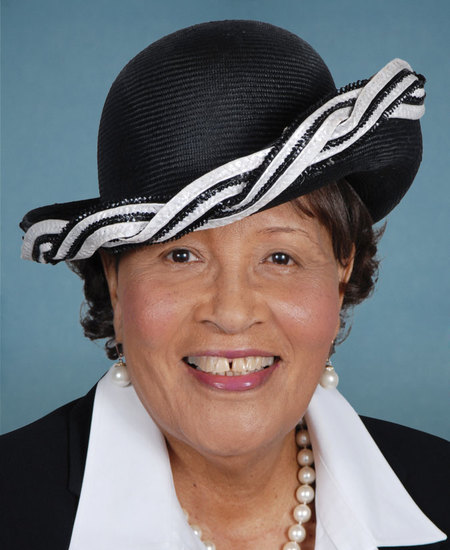
Rep. Alma S. Adams
Sponsored bills
Maddy summaryThe Assuring Medicare’s Promise Act of 2023 directs that taxes collected under the net investment income tax (a tax on investment income for high earners) be added to the Medicare Hospital Insurance Trust Fund, which helps finance Medicare Part A benefits. It modifies the tax code to include certain business income of high-income individuals (with modified adjusted gross income over $400,000 for single filers or $500,000 for joint filers) in the tax base, but includes a phase-in mechanism to limit immediate tax increases. This bill primarily affects high-income taxpayers and aims to strengthen Medicare’s financial stability by increasing trust fund revenue.
Maddy summaryThe SNAP Benefits Fairness Act of 2023 amends a specific provision in the Food and Nutrition Act of 2008 to remove a rule that previously limited eligibility for Supplemental Nutrition Assistance Program (SNAP) benefits. It directly affects individuals applying for or receiving SNAP benefits by eliminating a barrier related to certain income or asset calculations. The key change involves striking a subsection (formerly (B)) and renumbering subsequent sections in the eligibility rules. This amendment will take effect on January 1 following the bill's enactment.
Maddy summaryHR 10383, the Public Archives Resiliency Act, provides $250 million in federal grants to state, local, tribal, and territorial governments, public archives, libraries, museums, and community organizations. The bill funds climate-resilient upgrades to protect vital records (like birth certificates and marriage licenses) and historical collections from climate threats, including infrastructure improvements, digitization, emergency planning, and staffing. At least 50% of funds must support vital records, and 3% is reserved for Native Hawaiian-serving organizations. The Act also requires a study to identify climate-vulnerable records and safe relocation sites, with a report due within one year of enactment.
Maddy summaryHR 8995, the Baby Changing on Board Act, requires Amtrak to install baby changing tables in every accessible restroom on new passenger trains purchased after the law's enactment. The bill defines "baby changing tables" as elevated, freestanding structures supporting children up to 30 pounds and specifies they must be clearly marked with signage. This directly affects parents and caregivers traveling on Amtrak's newly acquired trains, ensuring accessible diaper-changing facilities in designated restrooms. The law applies only to Amtrak-owned trains solicited for purchase after the bill becomes law, not to existing trains.
Maddy summaryHR 7438 directs the U.S. Treasury to mint commemorative coins for the 2026 FIFA World Cup, including 100,000 $5 gold coins, 500,000 $1 silver coins, and 750,000 half-dollar coins. The coins will be sold to the public at face value plus surcharges ($35, $10, and $5 per coin, respectively), with all surcharge revenue paid to FWC2026 US, Inc. for U.S. soccer programs. These funds must support soccer initiatives, particularly in underserved communities and youth development, as specified in the bill. The coins are legal tender but will only be issued during 2026, with no net cost to the U.S. government.
Maddy summaryThis bill requires mortgage lenders to consider consumer-permitted alternative data (like rent or bank transaction history) when evaluating loan applications, specifically for applicants who lack traditional credit history. It directly affects approximately 45 million "credit invisible" consumers - disproportionately low-income, younger, and people of color - who struggle to qualify for mortgages due to thin or nonexistent credit files. Lenders must treat this permissioned data equally with traditional credit reports, provide clear multilingual notices explaining the option, and include it in underwriting decisions. The law mandates these changes within 18 months of enactment, aiming to expand mortgage access through standardized, consumer-controlled data sharing.
Maddy summaryHR 6751 authorizes the U.S. Mint to produce commemorative coins honoring Roberto Clemente, a Hall of Fame baseball player and humanitarian, including 50,000 $5 gold coins, 400,000 $1 silver coins, and 750,000 half-dollar coins. The coins must feature Clemente's image and inscriptions like "Roberto Clemente" and "2027," with all sales including a surcharge ($5-$35 per coin) paid to the Roberto Clemente Foundation. The foundation, which supports youth sports, education, and disaster relief programs, will use these funds for its mission, while the U.S. Treasury must recover all production costs. The coins will be sold exclusively in 2027, with no net cost to the government.
Maddy summaryThe Working Dog Commemorative Coin Act (HR 807) directs the U.S. Treasury to mint three types of commemorative coins honoring working dogs' service: $5 gold coins, $1 silver coins, and half-dollar coins with specific weight and composition requirements. Each coin will carry a surcharge ($35 for $5 coins, $10 for $1 coins, $5 for half-dollars) that will be paid directly to America's VetDogs to support their programs providing service dogs for veterans, the disabled, and others. The coins will be issued in 2027 with designs reflecting working dogs' roles in military, detection, therapy, and assistance work. The legislation specifies that all surcharge revenue must fund America's VetDogs' operations without creating new government programs. This is a commemorative measure focused on honoring working dogs' contributions through coin sales, with all surcharge funds going to a specific nonprofit organization.
Maddy summaryThe Minority Diabetes Initiative Act (HR 10193) creates a federal grant program to improve diabetes care in minority communities. It authorizes the Secretary of Health and Human Services to fund public and nonprofit health providers - including community health centers, tribal health departments, and community organizations - to deliver specific diabetes services. These grants must cover routine care, prevention education, eye/foot care, and treatment for complications like kidney disease, while requiring services to be culturally appropriate and offered in accessible languages. The program is funded through annual appropriations for fiscal years 2025-2030. This bill directly affects minority communities with high diabetes rates by expanding access to comprehensive, culturally responsive care through eligible health providers.