

Maddy summaryHR 2536, the New Producer Economic Security Act, establishes a new program within the Farm Service Agency to help new and small-scale farmers, ranchers, and forest owners access land, capital, and markets. The program provides grants and capital support to eligible community organizations (like tribal governments, cooperatives, or local nonprofits) to directly assist "qualified beneficiaries" - defined as individuals new to farming, operating on rented land, with low income, or facing economic hardship. Key provisions include funding for land acquisition, down payment assistance, succession planning, technical support (including translation services), and conservation practices. The program aims to strengthen food system security by increasing land access and supporting long-term business viability for underserved agricultural producers.
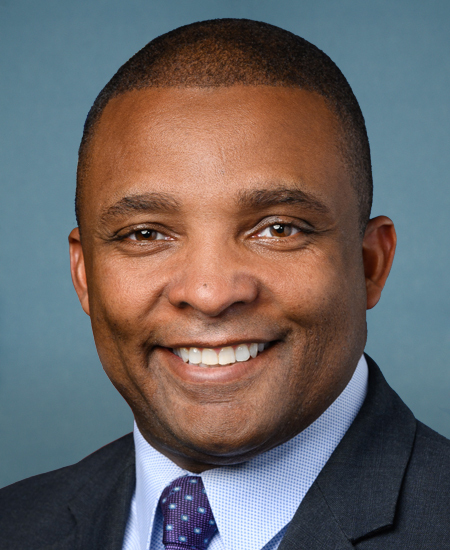
Rep. Donald G. Davis
Sponsored bills
Hot Foods Act of 2025 This bill expands the Supplemental Nutrition Assistance Program (SNAP) to permit the use of SNAP benefits to purchase hot foods or hot food products ready for immediate consumption.
This bill establishes the Commission on National Agricultural Statistics Service (NASS) Modernization to study and provide recommendations on modernizing and streamlining data collection at NASS. As background, NASS conducts the Census of Agriculture and provides official statistics on agricultural production and other farm sector indicators. The 11-member commission must include 4 specified members from the Department of Agriculture, 1 member from the Bureau of Labor Statistics, and 6 members appointed by the House and Senate Agriculture Committees. At the request of the commission chair, federal agencies must provide the commission information related to the study. The commission must submit a report to the President and Congress on the results of the study within two years of the bill's enactment. The report must include (1) an inventory of surveys conducted by NASS and their frequency; and (2) recommendations for administrative, regulatory, and legislative changes.
Maddy summaryHRES 337 is a symbolic House resolution honoring linemen for their critical role in maintaining power infrastructure and responding to emergencies. It recognizes them as first responders who work in dangerous conditions 24/7 to keep electricity flowing, supporting schools and businesses during storms. The resolution formally supports designating April 18, 2025, as "National Lineman Appreciation Day" to publicly acknowledge their contributions. As a non-binding resolution, it has no direct policy impact or effect on affected individuals.
Maddy summaryThe Fight Fentanyl Act increases annual funding for fentanyl-related law enforcement efforts to $333 million from 2025 through 2030. It requires the Office of National Drug Control Policy to report annually on how HIDTA (High Intensity Drug Trafficking Area) funds target fentanyl trafficking, including seizure data and threat assessments. The bill also mandates the Attorney General to prioritize fentanyl prosecutions by temporarily reassigning U.S. attorneys to these cases. These provisions directly affect federal, state, local, and tribal law enforcement agencies working on fentanyl interdiction and prosecution.
Maddy summaryHR 2937, the PROTECT 911 Act, creates federal resources and grants to support the mental health of 911 operators (public safety telecommunicators). It requires the Secretary to develop evidence-based best practices for preventing and treating PTSD and related disorders among these workers, and to create educational materials for mental health professionals about their unique workplace stressors. The bill also authorizes grants for states and local emergency communications centers to establish or enhance evidence-based wellness programs, including peer-support initiatives, to address job-related mental health challenges. These programs aim to improve support for 911 operators who handle emergency calls in 911 centers.
Maddy summaryThis bill would grant the Haliwa Saponi Indian Tribe of North Carolina full federal recognition, extending the same government-to-government relationship and federal services available to other federally recognized tribes. It directly affects the Tribe’s members in Halifax, Warren, Nash, Franklin, Vance, and Granville counties by making them eligible for all federal programs (like education, housing, and healthcare) without requiring a reservation. Key provisions include removing the reservation requirement for service access and formalizing the Tribe’s membership roll for benefit eligibility. The bill does not alter existing tribal governance or land ownership but ensures consistent access to federal resources. This recognition would align the Tribe with other federally recognized tribes under U.S. law.
Maddy summaryThis bill, HR 2936 (the ABC-ED Act), aims to reduce emergency department crowding by requiring real-time tracking of hospital bed capacity and related metrics like patient wait times. It allows federal grants to modernize public health data systems that monitor emergency department boarding rates, bed availability, and ambulance offload times, with results displayed on a public dashboard (while protecting privacy). The bill also adds two new Medicare Innovation Center pilot programs: one focused on improving care for older adults (through staffing, infrastructure, and senior care coordination) and another for psychiatric crisis care (including dedicated units and faster facility transfers). Finally, it mandates a one-year study by the Government Accountability Office to evaluate best practices for these data systems and their impact on emergency department efficiency.
Maddy summaryHR 2939, the Drone Espionage Act, updates existing espionage law to explicitly prohibit taking or transmitting video footage of defense information. It amends Title 18, U.S. Code, Section 793 by inserting "video" after "photographic negative" in the definition of prohibited materials. This change directly affects individuals who capture or share video of classified military or defense-related information, whether using drones or other devices. The bill makes no new criminal penalties but ensures video evidence is covered under current espionage statutes.
Maddy summaryThis bill increases the federal tax credit for rehabilitating historic buildings. It raises the standard credit rate from 20% to 30% for qualifying small projects (with a $3.75 million expenditure cap) and further increases the cap to $5 million for projects in rural areas. The bill also allows taxpayers to transfer all or part of this credit to another taxpayer, creating a new market for the credit. These changes apply to properties placed in service after the bill's enactment date. The bill directly affects developers and owners of historic properties seeking tax incentives for rehabilitation projects.