

Preventing Environmental Hazards Act of 2025 This bill expands National Flood Insurance Program (NFIP) coverage to include the demolition or relocation of certain coastal structures that are facing imminent collapse or subsidence. Specifically, NFIP must pay for demolition or relocation for NFIP-insured structures that are condemned or deemed unsafe by state or local authorities due to the threat of imminent collapse or subsidence from shoreline erosion or that meet other location criteria. The bill sets forth provisions for the valuation of the structure, the maximum claim to be paid, and the terms of coverage termination. This bill applies to structures covered by NFIP (1) for a period of 12 months on or before the date of the bill’s enactment, or (2) for a continuous period of 4 years prior to certification for coverage established by this bill.
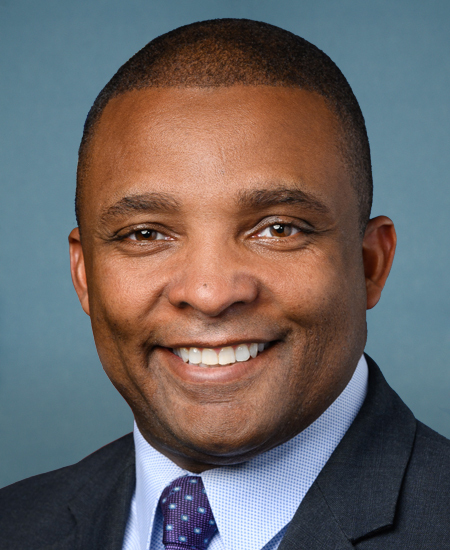
Rep. Donald G. Davis
Sponsored bills
Maddy summaryThis bill creates a new federal program to expand high-speed broadband access in rural areas by providing grants, loans, and combinations of both. It sets minimum standards requiring 100 Mbps downstream and upstream speeds, prioritizes projects in communities where at least 90% of households lack such service, and directs funding toward areas with high poverty, small populations, or strategic community plans. Eligible applicants include tribal organizations, cooperatives, local governments, and rural utilities, with requirements to meet buildout deadlines, participate in federal affordability programs, and provide cost-sharing (up to 25%). The program authorizes $650 million annually from 2026 to 2030 to fund infrastructure construction, improvement, or acquisition in underserved rural communities.
Maddy summaryThe SERVE Act (HR 3107) aims to improve military recruitment by increasing access for recruiters in high schools and expanding Junior Reserve Officers' Training Corps (JROTC) opportunities. It requires military recruiters to visit schools at least four times per academic year during peak hours in common areas (like lunch or athletic events), and creates "Cross-town" JROTC units allowing students at schools without their own program to join nearby units. The bill also establishes a two-year pilot program to recognize "HERO schools" (high schools with military enlistment rates above the state average) and gives priority consideration to graduates of these schools when applying to military service academies. These changes directly affect high school students in grades 9-12 and school districts without JROTC programs, focusing on practical access and recognition to support military recruitment efforts.
Maddy summaryHRES 360 is a symbolic resolution designating the last Tuesday of April each year as "APOL1-Mediated Kidney Disease (AMKD) Awareness Day." It directly addresses health disparities affecting Black Americans, who are disproportionately impacted by AMKD - a rapidly progressive kidney disease linked to APOL1 gene variants (carried by an estimated 13% of Black Americans). The resolution encourages public awareness of AMKD, promotes genetic testing for at-risk individuals (particularly those with Western/Central African ancestry), and urges proactive health measures like regular doctor visits and healthy lifestyles. As a non-binding resolution, it does not create new laws or allocate funds but aims to raise public and medical attention to this specific health disparity.
Maddy summaryHR 3063, the Rural Hospital Stabilization Act of 2025, provides federal grants to help financially struggling rural hospitals in remote areas (defined as at least 15 miles from the nearest hospital and 20 miles from urban areas). The bill authorizes up to $5 million per hospital over five years for facility repairs, equipment upgrades, and operational costs like non-leadership payroll and debt payments, while requiring hospitals to demonstrate how projects address financial needs and ensure continued community access. Grants must supplement - not replace - existing funding, and hospitals must submit sustainability plans. The $500 million total funding authorization covers fiscal years after 2025, with a report to Congress on program outcomes within 18 months.
Maddy summaryThis bill temporarily allows doctors to prescribe and dispense certain Medicare-covered medications directly to seniors in their offices from 2026 to 2030, under specific conditions. It requires prior in-person visits, limits dispensing to group practices, and mandates billing through the physician’s practice. The bill also directs the GAO to study whether physician-owned pharmacies are becoming common and how such arrangements might affect prescribing. It directly affects seniors receiving Medicare Part D drugs and physician practices participating in these arrangements. The exception expires in 2030, with no changes to Medicare Part D program rules.
Maddy summaryThis bill requires most private health insurance plans to cover diagnostic and supplemental breast exams with no out-of-pocket costs (like deductibles or copays) for enrolled patients. It specifically covers exams used to evaluate abnormalities found in screenings (diagnostic) or for high-risk screening without abnormalities (supplemental), based on medical guidelines. Plans can still require prior authorization for these exams, and state laws offering stronger protections remain in effect. The rule takes effect for plan years starting January 1, 2026.
Maddy summaryHR 3043 prohibits U.S. federal funding for biomedical research involving vertebrate animals conducted in or by entities located in China (including Hong Kong), Iran, North Korea, or Russia. It directly affects research institutions receiving grants or contracts from the Department of Health and Human Services (HHS) that would conduct such animal testing in those four countries. The bill bans HHS from directly conducting this research or funding it through grants, contracts, or other federal support. It also requires HHS to submit detailed reports to Congress within 60 days when adding new countries to the restricted list, as determined with input from State and Defense departments. This is a funding restriction, not a ban on all international research.
Maddy summaryHRES 340 is a ceremonial resolution recognizing April 2025 as "Community College Month" to celebrate the role of over 1,000 U.S. community colleges. It highlights these institutions' work in providing affordable higher education, workforce training, and economic support - serving 10.2 million students annually and contributing significantly to national economic growth (e.g., generating $898 billion in alumni income in 2020). The resolution emphasizes community colleges' accessibility (average $3,990 tuition for in-district students, 10-mile average student commute) and their role in workforce development across sectors like healthcare and manufacturing. As a non-binding recognition, it does not create new laws or funding.
Maddy summaryHR 2973 amends the Combat-Injured Veterans Tax Fairness Act to ensure Coast Guard veterans with combat-related injuries receive tax refunds for improperly withheld severance payments, regardless of whether the Coast Guard operates under the Department of the Navy, Homeland Security, or Transportation. It updates the law to include the Secretary of Homeland Security and Secretary of Transportation as responsible officials for processing these refunds during periods when the Coast Guard is not part of the Navy. The bill requires these secretaries to identify and refund improperly withheld amounts within one year of enactment and to prevent future withholding errors immediately. This directly affects Coast Guard veterans injured in combat during service periods managed by Homeland Security or Transportation, not just those under the Navy.