

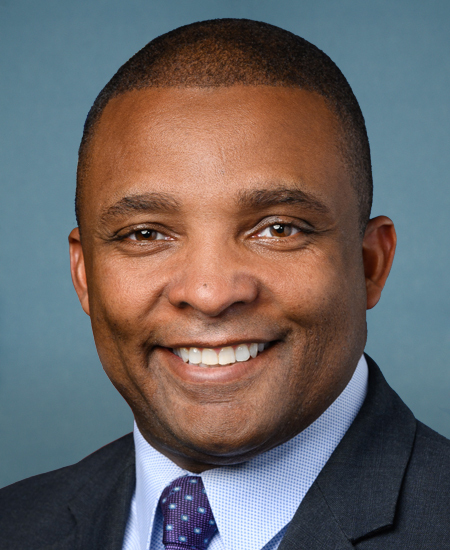
Women in Aviation Advisory Board Act This bill establishes a Federal Advisory Committee on Women in Aviation. The committee must advise the Department of Transportation and the Federal Aviation Administration on matters related to the education, training, mentorship, outreach, recruitment, and retention of women in the aviation industry. Membership in the committee must include representatives from aviation-related manufacturers, commercial air carriers, general aviation operators, unmanned aircraft systems operators, airports, aviation training and maintenance providers, labor organizations, educational institutions, and nonprofit organizations within the aviation industry.
Rep. Donald G. Davis
Sponsored bills
Maddy summaryHR 2728, the Young Farmer Success Act, expands student loan forgiveness eligibility under the Higher Education Act to include full-time farm and ranch workers. It directly affects young agricultural workers employed as employees or managers at farms meeting specific revenue thresholds. The key provision adds "full-time job engaged in farm work" as a qualifying employment type for loan forgiveness, requiring farms to earn at least $35,000 in gross revenue from agricultural sales in 2023 (with annual inflation adjustments based on the Consumer Price Index). This amendment modifies existing loan forgiveness rules without creating new programs, applying to workers meeting the farm revenue criteria.
Maddy summaryThe Latonya Reeves Freedom Act of 2023 strengthens the Americans with Disabilities Act's requirement that individuals with disabilities receive long-term services and supports in community settings rather than institutions. It defines "community-based" services to include specific housing options where individuals with disabilities can live independently with maximum control over their lives, including access to integrated housing, employment, and community participation. The bill requires states to develop transition plans to move people from institutional settings to community-based services within 12 years, with measurable annual targets for reducing institutionalization. It establishes enforcement mechanisms through the Department of Justice and Department of Health and Human Services to ensure compliance with these requirements.
Maddy summaryThis bill establishes a federal grant program to help states fund child care for the minor children of police officers during their irregular work schedules. It provides competitive grants to states, with 20% reserved for jurisdictions employing fewer than 200 officers, to support law enforcement agencies in creating or expanding child care services. States must match federal funds (10-33% over three years) and use grant money for startup costs, provider training, sick child care, extended hours, or facility construction. The program runs through 2028, requiring annual audits and two federal studies to assess its effectiveness.
Maddy summaryHR 2726, the Small Business Payment for Performance Act of 2023, requires U.S. government agencies to provide small businesses with interim partial payments when they unilaterally change construction contract terms. Specifically, it mandates that agencies pay at least 50% of the estimated additional costs requested by small businesses within the timeframe specified by the contract. The bill also requires small businesses to pass these interim payments to first-tier subcontractors and any lower-tier subcontractors who incurred increased costs due to the contract change. This law applies directly to small business concerns awarded federal construction contracts and takes effect by October 1, 2025, or the start of the next full fiscal year after enactment.
Maddy summaryHR 2711, the SAYFE Act, requires annual sexual abuse prevention training for all students enrolled in Junior Reserve Officers' Training Corps (JROTC) programs. The training, delivered by an external entity (not JROTC instructors), must be age-appropriate, evidence-based, and cover topics like grooming, cyberbullying, appropriate adult-student interactions, and digital abuse. It also mandates providing students with local resource contacts for reporting abuse or accessing support. The Secretary of Defense must establish metrics to evaluate the training's effectiveness. This bill directly affects JROTC students in all participating schools.
Maddy summaryHR 2693, the Pay Our Coast Guard Parity Act of 2023, ensures Coast Guard members, civilian staff, and qualifying contractors receive pay and benefits during specific funding gaps. It requires Congress to appropriate funds for Coast Guard personnel pay, allowances, and key benefits (like death gratuities and housing allowances) if a Coast Guard-specific funding lapse occurs - when Coast Guard funding isn’t approved before a fiscal year starts but Department of Defense funding is. The bill mandates these payments continue until a full appropriation is enacted or for up to two weeks after the lapse begins, with costs charged to future appropriations. This addresses a gap in funding continuity for Coast Guard personnel during government shutdowns affecting only the Coast Guard.
Maddy summaryHR 1645 establishes a national biochar research network with up to 20 research sites to study how biochar (a charcoal-like soil additive) affects soil health, carbon storage, and crop production across different conditions. The network will test various biochar types, production methods, and applications to provide region-specific guidance for farmers, ranchers, foresters, and urban land managers on sustainable use. It authorizes $50 million annually (2023-2028) for USDA-administered research, focusing on soil carbon sequestration, climate mitigation, and practical farming applications. The research aims to develop science-based recommendations for improving soil health, reducing emissions, and supporting farm profitability through biochar integration.
Maddy summaryHR 2665 delays Medicaid payment reductions for safety net hospitals by two years, changing the effective date from 2024 to 2026 under Section 1923(f)(7)(A) of the Social Security Act. This bill directly affects hospitals that serve high numbers of low-income and uninsured patients, providing them with additional time before facing reduced federal Medicaid payments. The key mechanism is a technical amendment to existing law, postponing an already scheduled payment adjustment without altering funding levels or eligibility. As a procedural bill, it does not create new programs or change hospital requirements.
Maddy summaryThe VA Same-Day Scheduling Act of 2023 requires the Department of Veterans Affairs to schedule appointments for enrolled veterans during the same phone call when they request care. This applies to veterans enrolled in the VA healthcare system who contact the VA by phone to request appointments. The law mandates that the VA must complete the scheduling during the call - without delay or future scheduling - regardless of the appointment date. The requirement takes effect 120 days after the bill is enacted.