

Permanent CFC Look-Through Act of 2023 This rule makes permanent the look-through rule for related controlled foreign corporations (CFCs). That rule provides that dividends, interest, rents and royalties one CFC receives from a related CFC are not treated as foreign personal holding company income (thus permitting the deferral of tax on such income).
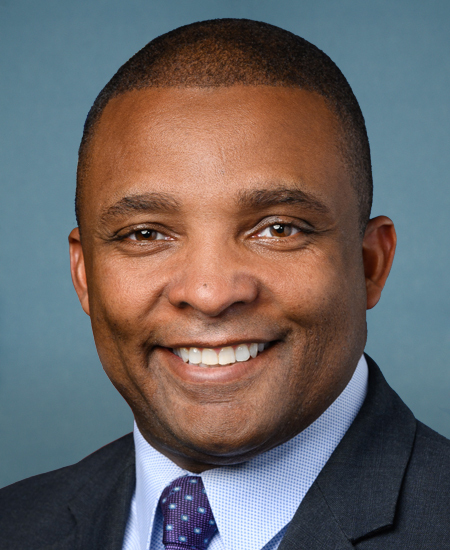
Rep. Donald G. Davis
Sponsored bills
Healthcare Equality and Rights for Our Heroes Act or the HERO Act This bill allows claims to be brought against the United States for damages relating to the personal injury or death of a member of the Armed Forces arising out of a negligent or wrongful act or omission in providing medical, dental, or related health care functions at a military medical treatment facility. However, the bill does not apply to care provided at a medical treatment location deployed in an area of armed combat.
Maddy summaryHR 4335, the VA Loan Informed Disclosure Act of 2023, requires mortgage lenders to include specific information about VA home loan programs in standard mortgage disclosures. The bill amends the National Housing Act to mandate that lenders provide details on VA loans (guaranteed under Title 38) alongside other loan options, including assumptions about prevailing interest rates. This change directly affects lenders processing VA-guaranteed mortgages, ensuring borrowers receive clearer comparisons between VA loans and other financing. The law does not require lenders to verify borrower eligibility for VA loans, only to include the specified disclosure language.
Maddy summaryHR 3698, the Feed Hungry Veterans Act of 2023, amends the Food and Nutrition Act of 2008 to expand eligibility for SNAP (Supplemental Nutrition Assistance Program) benefits to more veterans. It adds four new categories of veterans who can qualify: those with a "catastrophically disabled" status under military disability law, veterans under 65 receiving a pension under specific veteran benefits law, and those meeting existing high-disability rating thresholds. This change directly affects veterans who previously did not meet the program’s eligibility criteria but now qualify under these expanded definitions. The bill takes effect on October 1, 2023, making these eligibility changes operational for SNAP enrollment.
Maddy summaryHR 3519, the Hot Foods Act of 2023, amends the Food and Nutrition Act of 2008 to allow Supplemental Nutrition Assistance Program (SNAP) benefits to be used for hot foods or hot food products ready for immediate consumption at participating retailers. This change directly affects SNAP recipients who purchase such hot foods and retailers that sell them. The key provision removes the previous exclusion of hot foods from SNAP eligibility, while adding a limit that no more than 50% of a retailer's total gross sales from SNAP can come from hot foods. The bill clarifies that hot foods can be purchased for home or immediate consumption, aligning SNAP rules with current retail practices for prepared foods.
Maddy summaryHR 3419 reauthorizes and increases mandatory funding for U.S. animal disease prevention programs through fiscal year 2028. It allocates $233 million annually from the Commodity Credit Corporation for three key areas: $10 million for disease prevention, $70 million for surveillance, and $153 million for rapid response. The bill also raises annual funding for the National Animal Health Laboratory from $30 million to $45 million. These provisions directly affect USDA programs that protect livestock and agricultural industries from foreign animal disease outbreaks. The funding increases extend existing programs through 2028, with reduced annual amounts starting in 2029.
Maddy summaryHR 3425 creates federal grants to community colleges and college consortia with agriculture programs, helping them expand workforce training, education, and research in farming and related fields. The bill prioritizes colleges partnering with local farms for hands-on student training and allows grant funds to cover equipment, faculty development, and apprenticeships. It authorizes $20 million annually from 2024-2029 for these programs and requires a 3-year evaluation report to Congress. The law directly affects community colleges offering agriculture-focused education, aiming to strengthen their capacity to serve students and the agricultural industry.
Maddy summaryHR 4305, the Shelter Act, creates a 25% nonrefundable tax credit for individuals and businesses to offset costs of qualifying disaster mitigation improvements. Individuals can claim up to $2,500 annually for home upgrades like reinforced roofs, flood barriers, fire-resistant materials, or storm shelters, provided the property is in a federally designated disaster area and meets specific safety standards. Businesses may claim up to $5,000 for similar safety upgrades at their locations in disaster-prone zones. The credit phases out for higher-income taxpayers (individuals over $100,000 AGI, businesses over $5 million average gross receipts) and requires documentation proving compliance with building codes. The provisions apply to taxable years beginning after December 31, 2023.
Maddy summaryHJRES 76 proposes renaming the Robert E. Lee Memorial in Arlington National Cemetery to the "Arlington House National Historic Site." This procedural bill would replace all official references to the memorial with the new name and repeal two prior resolutions (1955 and 1972) that established the memorial. The change affects how the site is identified in federal laws, documents, and records but does not alter its management or historical significance. The bill focuses solely on the official designation, not on policy changes or historical interpretation.
Maddy summaryThe Equality Act (HR 15) would amend federal civil rights laws to explicitly prohibit discrimination based on sexual orientation and gender identity in public accommodations, housing, employment, credit, and jury service. It amends the Civil Rights Act of 1964 to include sexual orientation and gender identity as protected characteristics under existing sex discrimination provisions. The bill would require businesses, housing providers, employers, and government entities to provide equal access and services without regard to a person's sexual orientation or gender identity. It includes specific definitions for gender identity and sexual orientation to clarify protections across all covered areas. The law would apply to all entities covered by the Civil Rights Act of 1964, including those receiving federal funding.