

Maddy summaryThe Mink VIRUS Act prohibits U.S. mink farming starting one year after enactment, directly affecting fur farm owners who raise mink for their fur. It requires all mink termination to use humane methods meeting federal and AVMA standards, beginning 90 days after enactment, with civil penalties for noncompliance. The bill establishes a $350 million payment program to compensate affected farmers for transition costs and the market value of their mink farming operations, contingent on using funds only for relocation and securing permanent easements banning future fur farming. This legislation responds to documented risks of SARS-CoV-2 transmission between humans and mink, including mutated virus cases in multiple countries.
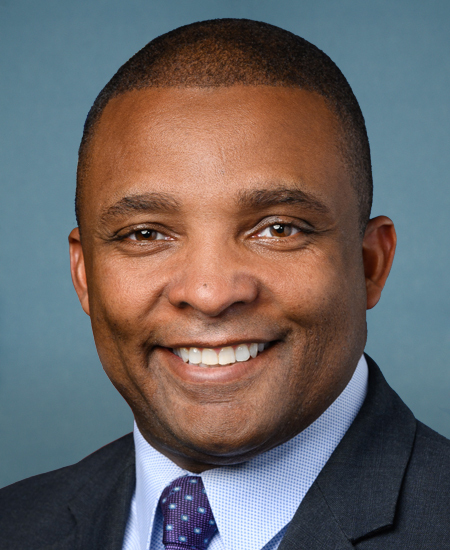
Rep. Donald G. Davis
Sponsored bills
This bill broadens the authority of pharmacies under the Controlled Substances Act to deliver certain controlled substances to health care practitioners for the purpose of administering the substance to a patient. Under current law, pharmacies may deliver controlled substances in schedules III, IV, or V to a practitioner if it is for maintenance or detoxification treatment and is administered via injection or implantation, among other requirements. The bill applies this authority to any controlled substance in schedules III, IV, or V that is approved by the Food and Drug Administration to be administered by, or under the supervision of, a practitioner.
This bill specifies that grants that are awarded under the State and Tribal Opioid Response Grant Program may be used to address health conditions that are associated with opioid misuse and use disorders.
Maddy summaryThis bill prohibits foreign nationals from contributing money or other valuables to state or local ballot initiatives and referendums, directly affecting foreign individuals and organizations attempting to influence these elections. It creates a new federal offense under Title 18, banning contributions, donations, or promises of such contributions in connection with ballot measures. Violations carry penalties of fines up to $10,000 or 300% of the contribution amount, plus up to one year in prison. The law applies to all contributions made after its enactment date and uses the existing definition of "foreign national" from federal election law.
Maddy summaryThis bill requires airlines to clearly inform passengers with disabilities about their right to request on-board wheelchairs on flights with over 60 seats, including details on when wheelchairs are available (even if lavatories aren’t accessible) and how to request them. It mandates annual staff training for airline employees on assisting passengers with disabilities and using on-board wheelchairs. Airlines failing to comply face increased civil penalties, including higher fines for not providing wheelchairs or causing harm related to mobility aids. The law directly affects passengers with disabilities traveling on larger commercial flights, ensuring clearer access to mobility support during air travel.
Maddy summaryThis bill establishes a federal grant program to fund high-impact tutoring in K-12 schools, primarily targeting students in schools with high poverty (Title I schools) and those experiencing significant academic declines since the pandemic. It requires tutoring to meet specific standards: at least 30 minutes per student, three days per week, with a 3:1 student-to-tutor ratio, and alignment with classroom instruction. States receive 80% of funds to award subgrants to local schools, which must submit detailed plans, provide monthly progress reports, and partner with research organizations to evaluate program effectiveness. The program prioritizes schools with the greatest academic need and mandates accountability through annual reviews of student outcomes by state agencies and an independent Advisory Board.
Maddy summaryHR 4343, the Organ Donation Clarification Act of 2023, amends the National Organ Transplant Act to permit limited noncash reimbursements for organ donors, such as medical costs, lost wages, travel expenses, and dependent care. It allows federal or state pilot programs to test these reimbursements under strict ethical oversight, aiming to increase donation rates without enabling financial incentives. The bill directly affects potential organ donors and transplant recipients by addressing financial barriers to donation, such as costs of medical care and lost income, while prohibiting cash payments or tradable benefits. These pilots must measure impacts on donation rates, donor demographics, and fairness in organ distribution, with reports to Congress after three years.
Maddy summaryThis bill authorizes the Department of Homeland Security and Department of Justice to detect, identify, monitor, and mitigate drone threats to specific high-risk facilities including government buildings, airports, critical infrastructure, and locations hosting special events. It establishes a 5-year pilot program allowing state and local law enforcement agencies to use drone detection technology under federal oversight, with strict privacy protections requiring 180-day data retention limits and mandatory training for personnel. The bill requires coordination with the Federal Aviation Administration to minimize impacts on air traffic and mandates regular congressional reporting on how these authorities are being used. It sets an expiration date of 7 years after enactment for these new authorities.
Maddy summaryThe Project Safe Neighborhoods Reauthorization Act of 2023 extends federal funding for the Project Safe Neighborhoods (PSN) program through fiscal years 2024-2028, replacing its previous authorization period. The bill directly affects state, local, tribal, and federal law enforcement agencies, prosecutors, and community groups that receive PSN grants to reduce violent crime. Key provisions allow grantees to use funds for hiring crime analysts, covering overtime for officers and assistants, purchasing technology for crime reduction, and supporting multi-jurisdictional task forces. It also requires annual reports from the Attorney General detailing fund usage, community outreach, and violent crime statistics (including murder, robbery, and assault) in each program area. The program operates across all 94 U.S. federal judicial districts and territories.
Maddy summaryHR 4355, the Rural Veterinary Workforce Act, modifies the Internal Revenue Code to exclude certain loan repayment or forgiveness assistance from taxable income. It specifically adds programs under the National Agricultural Research, Extension, and Teaching Policy Act of 1977 and similar state initiatives - designed to boost veterinary services in rural areas - to the list of tax-exempt benefits. This directly affects veterinary students participating in these state or federal programs who work in underserved rural communities. The change takes effect for assistance received in taxable years beginning after December 31, 2023.