

Maddy summaryHR 4985, the Expanding Medical Education Act, creates federal grants to help medical schools and osteopathic medicine programs open or expand campuses in areas without existing medical education options, especially in medically underserved communities. It prioritizes funding for schools in regions with no current medical schools or for minority-serving institutions in areas lacking such schools. Grants can be used to recruit students from underrepresented groups (including rural, low-income, and first-generation students), develop curricula focused on underserved care, build facilities, and hire faculty. Institutions must report annually on student demographics and program activities, with detailed congressional reports every five years tracking outcomes like workforce diversity and healthcare access in target areas.
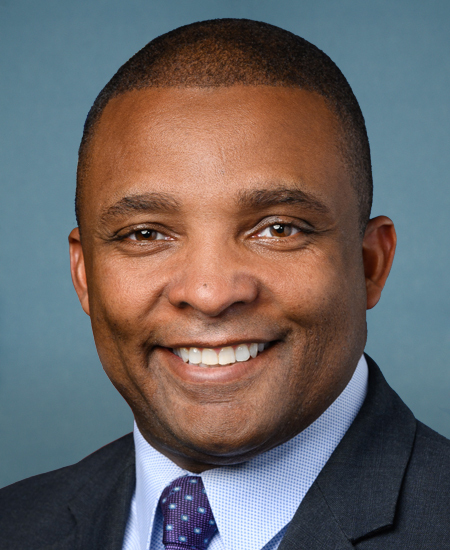
Rep. Donald G. Davis
Sponsored bills
Maddy summaryThe ATTAIN Mental Health Act requires the U.S. Department of Health and Human Services to create an interactive online dashboard within two years of enactment. This dashboard will display current federal grant opportunities for mental health and substance use disorder prevention, treatment, and recovery programs, including program names, application status (open/closed/awarded), deadlines, and links to applications. It must comply with accessibility standards and allow users to search by topic, location, or category, with input from stakeholders like schools, health providers, tribal organizations, and state agencies. The tool aims to simplify access to existing federal grant information for potential applicants, without creating new funding or changing grant eligibility.
Maddy summaryThis bill increases funding for research centers at 1890 institutions (historically Black colleges and universities with agriculture programs) from $10 million to $50 million annually for fiscal years 2024-2028. It allows up to 10 research centers (previously minimum 3) and adds new focus areas including climate change adaptation, forest resilience, food safety, and integrating social sciences into agricultural research. These centers will directly support underserved farmers and communities through targeted research on issues like soil health, renewable energy, and value-added agriculture. The bill modifies existing provisions under the 1990 Food, Agriculture, Conservation, and Trade Act to expand and fund these initiatives.
Fair Access to Agriculture Disaster Programs Act This bill waives the adjusted gross income limitations for payments or benefits under specific Department of Agriculture (USDA) disaster assistance programs for a person or legal entity that derives a portion of their income from agriculture. (Currently, a person or entity is not eligible to receive certain benefits during a crop, fiscal, or program year if their average gross income exceeds $900,000.) Specifically, in the case of an excepted payment or benefit, the adjusted gross income limitation is waived if 75% or more of the average adjusted gross income for the person or entity is derived from farming, ranching, or silviculture activities. These activities include agritourism, direct-to-consumer marketing of agricultural products, and the sale of agricultural equipment owned by such person or entity. The bill applies to the USDA Livestock Indemnity Program; Livestock Forage Disaster Program; Emergency Assistance for Livestock, Honey Bees, and Farm-Raised Fish Program; Tree Assistance Program; and Noninsured Crop Disaster Assistance Program.
Flood Resiliency and Land Stewardship Act This bill amends the purpose of the Regional Conservation Partnership Program (RCPP) of the Department of Agriculture (USDA) to include the prevention and mitigation of the effects of flooding and drought and the improvement or expansion of flood resiliency. (Under the RCPP, USDA enters into agreements with eligible partners to deliver conservation projects in specific geographical areas. Within an RCPP project, producers enter into contracts and agreements with USDA to carry out eligible conservation activities.)
Increasing Land Access, Security, and Opportunities Act This bill provides statutory authority for and expands the Farm Service Agency's (FSA's) Increasing Land, Capital, and Market Access Program (the Increasing Land Access Program) for farmers, ranchers, and forest owners. Specifically, the FSA must make competitive grants to, enter into cooperative agreements with, or provide other capital support to eligible entities (e.g., state or local governments, Indian tribes, nonprofit organizations, and institutions of higher education) to provide direct assistance to farmers, ranchers, and forest owners who are (1) historically underserved, or (2) operating in high-poverty areas. The bill specifically excludes from assistance any foreign-based or foreign-owned corporation. The direct assistance may include payments to intended beneficiaries to acquire real property (including air rights and water rights), secure clear title on an heirs' property farmland, and improve or remediate land, water, and soil. Eligible entities may also use grants (1) to provide direct assistance to intended beneficiaries in assessing, purchasing, acquiring, or retaining eligible land; (2) for activities designed to support farm establishment and long-term viability; and (3) to provide technical assistance. The FSA must establish a stakeholder committee and, in collaboration with the committee, develop a process for evaluating proposals and distributing funds to eligible entities. In developing this process, the FSA must consider perspectives from diverse stakeholders, diverse geographic distribution, and diverse farming models, practices, and purposes.
Maddy summaryHR 3904, the "Crop Insurance for Future Farmers Act," increases federal crop insurance subsidies for beginning farmers and ranchers. It revises the definition of a "beginning farmer" from 5 to 10 crop years of experience, allowing more new operators to qualify. The bill also establishes a tiered subsidy system: new farmers receive 15 percentage points higher subsidies for their first two years, 13 points for the third year, 11 points for the fourth year, and 10 points for years five through ten. This directly affects new agricultural producers by making crop insurance more affordable during their early years of operation.
Maddy summaryThis bill prohibits federal involvement in commercial greyhound racing, live lure training, and open field coursing by banning interstate activities related to these practices. It makes it unlawful to conduct betting on greyhound races (including remote gambling), use live animals as bait, or transport animals for these purposes. The law specifically targets the declining greyhound racing industry (now operating at only two tracks in West Virginia), banning federal facilitation of betting, live bait use, and interstate transport of animals for racing or training. It does not affect horse racing or state laws already prohibiting these activities in most states.
Maddy summaryThis bill establishes a USDA initiative (2024-2028) to prioritize funding for childcare improvements in rural and agricultural communities. It directs existing USDA programs - like the Essential Community Facilities program and RISE grants - to give priority to projects addressing childcare availability, quality, or cost in farming-dependent counties (using 2015 ERS county codes). Qualified applicants must be licensed childcare providers meeting state health/safety standards. The USDA must evaluate funded projects and report on impacts within three years.
Maddy summaryThe SOS Act of 2023 increases annual funding for school resource officers from $1,047,119,000 (for 2006-2009) to $1,097,119,000 for fiscal years 2024-2033. It also requires that at least $50 million of this funding be allocated through grants to local governments or law enforcement agencies specifically for school safety programs. This bill directly affects schools and local law enforcement by changing federal funding levels and mandating a dedicated portion for school-based safety initiatives. The key change is the increased funding amount and the new requirement for $50 million in targeted grants for school safety applications.