

Maddy summaryHR 6124, the Cybersecurity Skills Integration Act, establishes federal grants to help community colleges and critical infrastructure employers develop cybersecurity-focused career training programs. The bill provides up to $500,000 per grant to partnerships between postsecondary institutions and critical infrastructure employers (like energy or transportation sectors) to integrate cybersecurity education into existing workforce programs. These programs must align with national cybersecurity standards, include hands-on learning, lead to recognized credentials, and prioritize diversity, with applicants required to detail how they address specific workforce needs. The legislation authorizes $10 million total over time to support these initiatives, aiming to better prepare workers for in-demand cybersecurity roles in critical infrastructure.
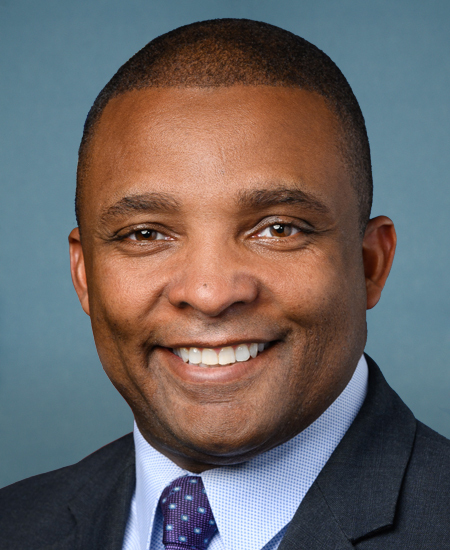
Rep. Donald G. Davis
Sponsored bills
Maddy summaryThe SCEE Act (HR 5899) increases annual funding for the Southeastern Crescent Regional Commission from $5 million to $10 million per year (2024-2028) and expands eligible uses for economic development grants. It adds provisions to fund climate-adaptive infrastructure, housing projects meeting workforce needs, and workforce capacity programs. The bill also raises required matching funds for some grants from 80% to 90% and extends commission funding through 2032 with higher annual allocations ($50 million for 2024-2027, $60 million for 2028-2032). This directly affects designated states in the Southeastern Crescent region (as defined in Title 40, U.S. Code) by providing increased resources for local economic development initiatives.
Maddy summaryThis resolution (HRES 817) formally recognizes four African American legislators - James Lewis, John Willis Menard, Pinckney B.S. Pinchback, and Josiah Thomas Walls - as former Members of the House. It states they duly won election during the Reconstruction Era (1869-1874) but were wrongly denied seats due to contested credentials. The resolution directs the House to recognize them as former Members and display oil portraits of them in a House corridor. This is a symbolic gesture of historical acknowledgment, not a legal change to their status or voting rights.
Maddy summaryThe BAD APPS Act requires the Secretary of Defense to create a risk framework assessing foreign mobile applications (like social media or shopping apps) that could threaten Department of Defense personnel or operations. It mandates defining categories of "foreign mobile applications of concern" based on factors like data collection practices, foreign ownership, malicious software, and ties to countries deemed security threats. The framework must be updated annually, and the Secretary must issue guidance to DoD personnel on mitigating risks from these apps on government devices or during official activities. The bill directly affects DoD personnel, operations, and contractors by establishing standardized security assessments for foreign apps.
Maddy summaryThis resolution (HRES 784) symbolically designates October 15, 2023, as "National Pregnancy and Infant Loss Remembrance Day" to honor individuals and families who have experienced pregnancy loss or infant death. It asks the House to support the day’s goals, recognize the emotional impact of these losses, and request the President issue a proclamation encouraging public observance. The resolution does not create new laws or funding but aims to raise awareness and reduce stigma around pregnancy and infant loss, which affects an estimated 1 million U.S. families annually. It directly acknowledges the experiences of those who have endured such losses without proposing concrete policy changes.
Maddy summaryHRES 771 is a non-binding resolution expressing the U.S. House of Representatives' support for Israel following Hamas' October 7, 2023, attack. It condemns Hamas' actions, affirms Israel's right to self-defense, and calls for the immediate release of hostages. The resolution also urges enforcement of existing laws restricting aid to terrorists and sanctions against Iran for supporting Hamas. It does not create new policies or allocate funds, as it is a symbolic statement of congressional support.
This resolution expresses unwavering support for Israel and a readiness to consider urgent requests for additional assistance to Israel to defend its people and sovereignty. The resolution also states that (1) Israel is entitled to act in self-defense against Hamas, the Palestinian Islamic Jihad, and associated forces, as well as their state sponsors; and (2) the cross-border attacks and kidnappings against Israel constitute acts of international terrorism and aggression.
Maddy summaryHRES 768 is a symbolic House Resolution expressing congressional support for Israel following Hamas' October 7, 2023 attacks. It condemns Hamas' actions, reaffirms Israel's right to self-defense, and calls for the immediate release of hostages. The resolution references the U.S. commitment to Israel's security through existing military aid programs, including the 2016 U.S.-Israel Memorandum of Understanding, and emphasizes enforcement of laws like the Taylor Force Act to prevent U.S. aid from reaching terrorist groups. As a symbolic resolution, it does not create new policy but serves as a statement of congressional support for Israel.
This resolution expresses support for the goals and ideals of National Ostomy Awareness Day. (Ostomy is a type of surgery that creates an opening in the abdomen that allows for the removal of bodily waste when an individual has lost normal functions of the digestive or urinary systems due to birth defects, colorectal cancer, bladder cancer, Crohn's disease, ulcerative colitis, or other medical conditions.)
Maddy summaryThis bill requires the Department of Defense to report on at-home child care programs for military families, including program changes and challenges military spouses face with licensing or relocation. It also mandates a feasibility study to standardize licensing requirements, remove barriers to program expansion, and support military spouse employment in these roles. The report and study must be submitted to congressional committees within 39 months and 180 days after the report, respectively. The bill directly affects military spouses seeking child care employment by addressing systemic hurdles in accessing these jobs.