

This resolution expresses support for the designation of National Vitiligo Awareness Day. (Vitiligo is a chronic condition that results in the loss of pigment in patches on the skin, hair, eyes, and inside of the mouth; the condition may lead to discomfort, itching, and pain.)
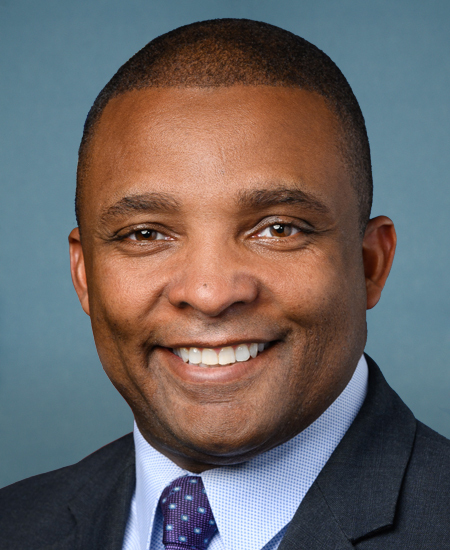
Rep. Donald G. Davis
Sponsored bills
Maddy summaryThe Streamline Emergency Care Act provides $20 million annually (2024-2028) for grants to nonprofit hospitals and clinics already operating emergency rooms. Grants, capped at $500,000 each, fund hiring staff, purchasing modern equipment, or training existing personnel to improve ER capacity and efficiency. The program requires grantees to use funds solely for these operational improvements and mandates a congressional report on the program's effectiveness by 2027. This directly affects eligible nonprofit emergency care providers seeking to enhance their facilities' responsiveness.
Maddy summaryThis bill excludes veterans' disability and dependency payments from income calculations for HUD housing assistance programs. It directly affects veterans and their families receiving disability compensation under Title 38, U.S. Code, by ensuring these benefits don't reduce their eligibility or housing assistance amounts. Specifically, it prevents HUD from counting these payments when determining eligibility, benefit amounts, or rent calculations for assisted housing. The policy change applies solely to HUD-administered housing programs, not other federal benefits.
Maddy summaryHR 6201, the Iranian Sanctions Enforcement Act of 2023, creates the Iran Sanctions Enforcement Fund to cover costs related to seizing and forfeiting property from Iran or its designated proxies (like Hezbollah or the Revolutionary Guard Corps) that violate U.S. sanctions. The fund, initially $150 million, pays for investigative costs, property management, informant rewards, and equipment for federal, state, and local agencies involved in enforcement. It also establishes an Export Enforcement Coordination Center within Homeland Security to improve interagency cooperation on enforcing export controls targeting Iran. The bill requires annual reports on fund usage and mandates repayment of the initial $150 million by 2034, unless waived for national security reasons.
Maddy summaryHR 3816, the Veterans’ Entry to Apprenticeship Act, allows veterans using GI Bill benefits (under chapters 30, 32, 33, 34, or 35) to enroll in approved pre-apprenticeship programs and receive the same educational assistance and housing allowances as if they were in a registered apprenticeship program. The bill requires pre-apprenticeship programs to have sponsor certification (e.g., from a community college, employer, or government agency) confirming they prepare veterans for registered apprenticeships and meet industry skill standards. It treats these programs as equivalent to apprenticeships for benefit purposes, including charging entitlement at the same rate and providing housing allowances based on the location of the program. This directly affects veterans seeking career training through pre-apprenticeship pathways.
Maddy summaryThe REPAIR Act requires car manufacturers to provide vehicle owners and independent repair shops with free, unrestricted access to vehicle data and repair information. It bans manufacturers from using technological or legal barriers to block access to diagnostics, tools, or aftermarket parts, and prohibits mandating specific brands for repairs or restricting customers’ choice of repair facility. The law also prevents manufacturers from requiring waivers of these rights as a condition of purchase, lease, or warranty service. The Federal Trade Commission will enforce these provisions to ensure fair competition in vehicle repair.
Maddy summaryHRES 831 is a symbolic congressional resolution supporting October as "National Domestic Violence Awareness Month." It does not create new laws or allocate funding, but formally expresses the House of Representatives' support for the goals of raising awareness about domestic violence. The resolution urges Congress to continue highlighting domestic violence's impact and backing programs that prevent and address it. It directly affects public awareness efforts and serves as a non-binding statement of congressional support for victims and advocacy organizations.
Maddy summaryHRES 599 is a non-binding resolution urging the European Union to fully designate Hizballah (Hezbollah) as a terrorist organization, rather than just its military wing as the EU did in 2013. It recommends the EU implement sanctions, freeze assets, issue arrest warrants, and prohibit fundraising for Hizballah, aligning with actions taken by the U.S. and other nations. The resolution cites Hizballah’s history of attacks, its criminal activities in Europe (including drug trafficking and money laundering), and its ties to Iran as justification. It directly addresses EU decision-makers, calling for coordinated action to disrupt Hizballah’s operations across the continent. The resolution follows prior House efforts, including H.Res. 359 (2017) and H.Res. 558 (2022), which made similar requests.
Maddy summaryHRES 559 is a non-binding House resolution declaring U.S. policy that a nuclear-armed Iran is unacceptable. It states the U.S. must prevent Iran from obtaining nuclear weapons under any circumstances, use all means necessary to stop this, and support allies like Israel in doing so. The resolution does not create new laws or programs but formally expresses congressional position on Iran's nuclear program. It directly affects U.S. foreign policy direction and diplomatic messaging, not specific individuals or groups.
Maddy summaryThe American Security Drone Act of 2023 prohibits U.S. federal agencies from procuring or operating unmanned aircraft systems (drones) manufactured by "covered foreign entities," which includes companies from China or under Chinese government control, beginning two years after enactment. The bill establishes exemptions for national security purposes (like counterterrorism, intelligence operations, and research), for the Department of Transportation to maintain air safety, and for NOAA to meet scientific objectives. Federal agencies must also account for existing drones from these foreign entities within one year of enactment, and the bill mandates new security standards for all government drone procurement. The restrictions will expire five years after the law takes effect, and the bill requires a study on drone supply chains.