

Maddy summaryHR 7255, the GRANT Act, requires federal agencies that award discretionary or competitive grants to post specific information on their websites within one year of enactment. Agencies must provide clear details about each grant, including application deadlines, required documents, contact information, and technical assistance resources like webinars. The bill also mandates annual reports to Congress on grant recipients, values, and numbers, with agencies able to request a six-month extension for compliance if unforeseen issues arise. This law directly affects federal agencies managing grant programs and aims to improve transparency and accessibility for applicants seeking federal funding.
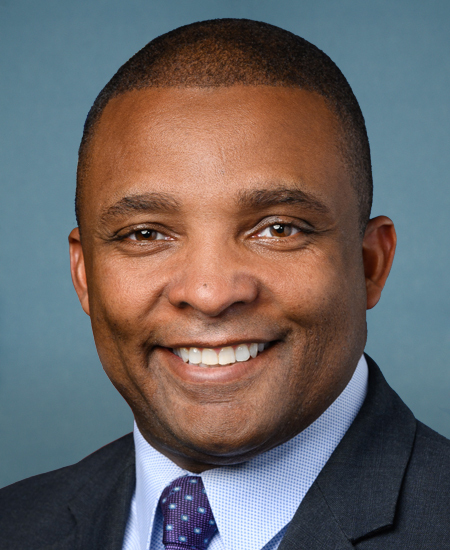
Rep. Donald G. Davis
Sponsored bills
Maddy summaryHR 7250, the Strengthening Educator Workforce Data Act, requires the U.S. Department of Education to collect and publish detailed data about public school teachers and principals. It mandates school districts to report specific metrics, including years of teaching/principal experience (broken into categories like "less than 1 year" or "15+ years"), certification status, subject-area expertise (e.g., math, special education), and demographic breakdowns by race, ethnicity, and gender. The data must be published in an accessible report with visualizations like graphs and made publicly available online. This law applies to all public elementary and secondary schools and aims to provide transparency on educator workforce composition without changing existing certification requirements.
Maddy summaryHRES 979 is a non-binding resolution urging the FDA to streamline approval of less harmful tobacco alternatives (like e-cigarettes or heated tobacco products) for adult smokers who continue using tobacco. It calls on public health agencies, including the CDC, to educate consumers about harm reduction and promote science-based approaches to tobacco control. The resolution also directs U.S. agencies to encourage the World Health Organization to recognize harm reduction as a key strategy in global tobacco control efforts. It does not create new laws but seeks to shift policy toward prioritizing safer alternatives over solely focusing on smoking cessation. The resolution directly affects FDA regulatory processes, public health messaging, and international tobacco control policy coordination.
Maddy summaryHR 7196, the Federal Parity for CASH Research Act (correctly defined as "Communities with Above Average Seasonal Homeownership"), mandates a study by the government auditor (Comptroller General) on how seasonal and nonpermanent homeownership affects census data accuracy and federal funding distribution to communities. The study specifically focuses on rural Appalachia and coastal communities, examining if high seasonal residency negatively impacts funding. If negative effects are found, the study would recommend solutions, but the bill itself creates no new policies or funding - only requires this research to be completed within one year of enactment.
Maddy summaryHR 7155 establishes the Abraham Accords Bureau within the FDA to strengthen U.S. healthcare supply chains. The bureau, headquartered at the FDA, will create lists of essential medical products primarily made in "covered countries" (nations with documented religious freedom violations or human rights issues) and identify facilities in Abraham Accords countries (like the UAE and Bahrain) that could support U.S. medical needs. It will facilitate FDA consultations with these countries on manufacturing standards, share regulatory information, and provide technical assistance to help shift production away from covered countries. The bureau must report to Congress within three years on progress in diversifying supply chains and improving FDA coordination with Abraham Accords nations.
Maddy summaryThe Credit for Caring Act of 2024 creates a new federal tax credit for family caregivers. It allows eligible caregivers to claim a credit equal to 30% of qualified caregiving expenses (like home modifications, medical supplies, or respite care) exceeding $2,000 per year, capped at $5,000 annually. To qualify, caregivers must earn over $7,500 in income and provide care for a relative (like a spouse or parent) certified by a healthcare provider as needing long-term care for at least 180 days. The credit phases out for higher earners, with a $75,000 income threshold for single filers and $150,000 for joint returns.
Maddy summaryHR 7171, the Distribution Transformer Efficiency and Supply Chain Reliability Act of 2024, prevents the Department of Energy from finalizing rules requiring liquid-immersed or dry-type distribution transformers to meet efficiency standards stricter than "trial standard level 2" (as outlined in a 2023 proposed rule). The bill also mandates that any finalized rule implementing "trial standard level 1" or "level 2" efficiency standards cannot take effect for at least 10 years after the rule's finalization date. This directly affects transformer manufacturers and utilities by delaying stricter efficiency requirements and providing extended compliance timelines. The bill aims to stabilize the supply chain for these critical grid components by limiting near-term regulatory changes.
Maddy summaryHR 7170, the Victims' VOICES Act, amends federal restitution law to require courts to reimburse specific expenses for individuals who assume a victim's legal rights (such as family members or advocates). It mandates that defendants pay for lost income, childcare, transportation, and related costs directly tied to attending court proceedings, participating in investigations, or accompanying victims to necessary medical care, therapy, or rehabilitation. The bill focuses on concrete reimbursement for out-of-pocket expenses incurred during legal and medical processes, rather than creating new programs. This change directly affects those stepping into a victim's role during criminal cases, ensuring they are financially supported for essential participation.
Maddy summaryHR 7127, the FAIR Act, establishes pay adjustments for federal employees in 2025. It increases base pay by 4% for most federal workers under statutory pay systems and for "prevailing rate" employees (like those in specific geographic areas), while raising locality pay rates by 3.4%. The bill directly affects all federal employees receiving pay under these systems, as it modifies their 2025 salary calculations. These changes are based on statutory formulas under Title 5 of the U.S. Code, with no new policy mechanisms beyond the specified percentage increases. The adjustments apply to pay rates in effect as of the end of fiscal year 2024.
Maddy summaryThe AFIDA Improvements Act of 2024 updates the Agricultural Foreign Investment Disclosure Act to require foreign individuals or entities owning at least 1% of U.S. agricultural land (directly or through multiple ownership tiers) to report their holdings. It creates new enforcement duties for the Farm Production and Conservation Business Center (FPAC-BC) to validate data, ensure compliance, and identify violators. The bill mandates the Secretary of Agriculture to share foreign ownership reports with the Committee on Foreign Investment in the United States (CFIUS) and update agency handbooks using recommendations from a 2024 Government Accountability Office report. These changes apply directly to foreign landowners and agricultural agencies like the Farm Service Agency, aiming to improve transparency around foreign ownership of U.S. farmland.