

Maddy summaryHR 758 aims to improve financial access in communities affected by bank branch closures, primarily targeting rural and underserved urban areas. It establishes a 3-year phase-in period for new financial institutions to meet federal capital requirements and reduces the leverage ratio for qualifying rural community banks (under $10 billion in assets) to 8% during this period. The bill also allows banks to request temporary deviations from approved business plans and expands agricultural loan authority for savings associations. Additionally, it mandates a federal study on barriers to new bank formation in underserved areas, with a report due to Congress within one year. The law directly affects community banks, their regulators, and residents in counties identified as "deeply affected" by branch closures.
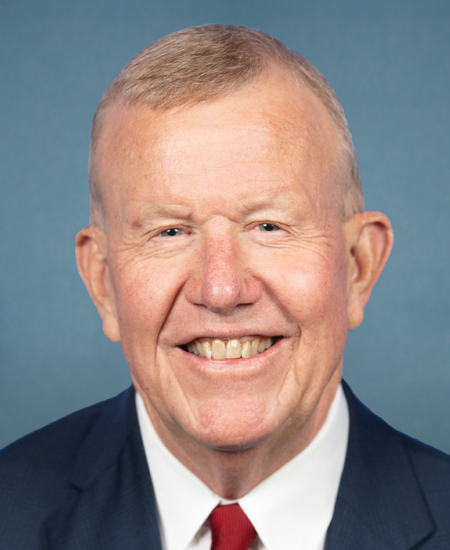
Rep. Mike Ezell
Sponsored bills
Maddy summaryHR 6140, the FAST PASS Act, directs the Secretary of Transportation to study how to expedite the movement of critical cargo (like medical supplies or emergency aid) during declared emergencies. The study examines current practices at ports and terminals, identifies critical cargo faster, and explores ways to move it efficiently without disrupting regular shipments. It requires consultation with agencies like Health and Human Services, a public comment period, and a report to Congress within two years with recommendations for improved systems. The bill does not create new rules but sets up a study to develop better protocols for emergency cargo logistics, affecting shippers, transporters, and ports during crises.
Maddy summaryThe Working Dog Commemorative Coin Act (HR 807) directs the U.S. Treasury to mint three types of commemorative coins honoring working dogs' service: $5 gold coins, $1 silver coins, and half-dollar coins with specific weight and composition requirements. Each coin will carry a surcharge ($35 for $5 coins, $10 for $1 coins, $5 for half-dollars) that will be paid directly to America's VetDogs to support their programs providing service dogs for veterans, the disabled, and others. The coins will be issued in 2027 with designs reflecting working dogs' roles in military, detection, therapy, and assistance work. The legislation specifies that all surcharge revenue must fund America's VetDogs' operations without creating new government programs. This is a commemorative measure focused on honoring working dogs' contributions through coin sales, with all surcharge funds going to a specific nonprofit organization.
Maddy summaryHRES 1594 is a symbolic House resolution supporting the designation of "National Rural Health Day," observed annually on the third Thursday of November. It recognizes rural health care providers and the communities they serve, highlighting challenges like hospital closures, workforce shortages, and access barriers in rural areas. The resolution expresses the House's commitment to improving rural health care accessibility and affordability but does not create new laws or allocate funding. It is a non-binding gesture aligning with an existing observance since 2011, organized by the National Rural Health Association.
Maddy summaryHRES 1577 is a resolution expressing congressional support for National Adoption Day (November 23, 2024) and National Adoption Month (November 2024). It highlights that over 108,000 children in U.S. foster care are waiting for adoption and encourages Americans to consider adoption to help provide safety, permanency, and well-being for children. The resolution does not create new laws but formally recognizes the importance of adoption and urges the public to support efforts to place children in permanent families. It directly affects public awareness and encourages citizen engagement during these designated observances.
Maddy summaryThe COMETS Act allows NASA to enter agreements with private companies and state governments to provide them with supplies, support, and services related to their space activities at NASA-owned or operated facilities. It also permits NASA to include such supplies or services in its own procurement requirements, provided the Administrator confirms it benefits the government, doesn’t interfere with NASA’s operations, and avoids competing with other commercial space activities. Before committing to any agreement, NASA must secure full payment from the requesting entity or state government upfront. This bill directly affects NASA, commercial space entities, and state governments operating at NASA sites by streamlining collaborative arrangements for space-related services.
Maddy summaryThis bill clarifies the federal legal definition of "firearm silencer" and "firearm muffler" under Title 18, U.S. Code. It specifically defines these terms to include: (1) devices designed to silence firearms and attach to them, and (2) the outer housing components that contain sound-reduction parts. The bill does not create new restrictions or requirements; it only refines existing terminology for regulatory clarity. This definition affects all manufacturers, sellers, and users of silencers/mufflers under federal law.
Maddy summaryHR 3334, the STOP CCP Act, imposes U.S. sanctions on members of China's Communist Party Central Committee and their adult family members. It requires blocking their U.S. assets and denying visas or entry to the U.S., effective within 30 days of enactment. The bill allows the President to temporarily waive sanctions if China verifiably ends specific actions: ending Uyghur forced labor/sterilization, ceasing military threats against Taiwan, restoring Hong Kong autonomy, and stopping intellectual property theft. These sanctions would expire after two years unless renewed by the President with congressional notification.
Maddy summaryHRES 1566 is a symbolic House resolution honoring all U.S. veterans on Veterans Day 2024. It recognizes the service and sacrifice of the estimated 15.8 million veterans living in the U.S. as of 2023, including those who served in conflicts from World War II to post-9/11. The resolution calls on the American public to observe Veterans Day to acknowledge veterans' role in preserving national freedom. As a non-binding resolution, it has no direct policy impact but formally expresses congressional recognition of veterans' contributions.
Maddy summaryThis bill provides one-time financial assistance to U.S. farmers growing specific crops (like corn, soybeans, wheat, cotton, and rice) during the 2024 crop year if their expected costs exceed expected returns. Payments equal 60% of the difference between the expected cost of production per acre (based on USDA cost forecasts) and the expected gross return per acre (based on projected farm prices and yields). Payments are calculated using actual planted acreage plus 50% of acreage prevented from planting due to natural disasters, with annual caps of $175,000 or $350,000 depending on the farm’s primary income source. The program uses existing USDA data sources and applies standard farm payment limits.