

Maddy summaryThis bill establishes a pilot program to provide grants for technical assistance and capacity building to local business districts in underserved communities. It directs the Economic Development Administration to award competitive grants to intermediary organizations (called "specified recipients"), which then distribute funds to local business district organizations ("eligible subrecipients") in low-income, rural, minority, and Native communities. The program requires grantees to report annually on job creation, fund usage, and geographic impact, with priority given to distressed communities and organizations serving multiple regions. The pilot will run for at least two years, focusing on revitalizing commercial corridors and supporting small businesses through targeted technical support.
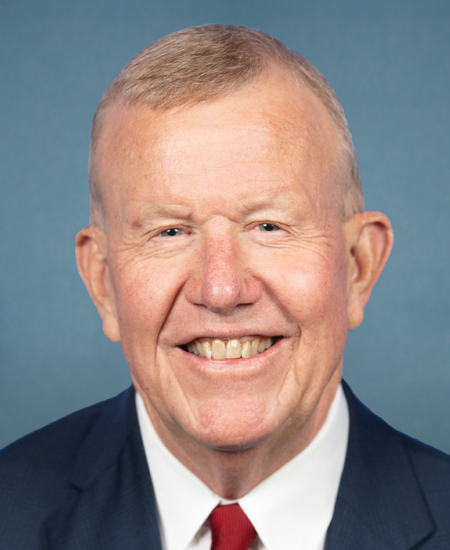
Rep. Mike Ezell
Sponsored bills
Maddy summaryHR 5799, the James R. Dominguez Memorial Act of 2023, designates a U.S. Border Patrol checkpoint on U.S. Highway 90 West in Uvalde County, Texas, as the "James R. Dominguez Border Patrol Checkpoint" to honor Agent James R. Dominguez, who died in 2012 while clearing road debris. The bill updates all federal references - such as laws, maps, and documents - to use this new name for the checkpoint. It does not change border patrol operations or policies, only the official designation of the location. This memorial act directly affects the checkpoint's identity and all federal records referencing it.
Maddy summaryThe Grant Transparency Act of 2023 requires federal agencies to clearly disclose how they evaluate competitive grant applications in their funding notices. Specifically, agencies must describe their rating systems, explain any weighted scoring methods (including how much each criterion is weighted), and detail other merit-based evaluation approaches. The law also mandates standardized reporting of basic application data, including the number of applications received and the city/state locations of all submitting organizations. This applies only to future notices of funding opportunity issued after the law takes effect (120 days post-enactment), does not create new funding, and does not override existing legal requirements for specific grant programs.
Maddy summaryThe POWER Act of 2024 amends the Stafford Act to help electric utilities better prepare for and recover from disasters. It allows utilities to combine hazard mitigation (like strengthening infrastructure) with emergency power restoration efforts using disaster relief funds, rather than treating them as separate activities. It also ensures that utilities receiving emergency power restoration aid under Section 403 remain eligible for separate hazard mitigation funding under Section 406. This change directly affects electric utilities receiving federal disaster assistance for power restoration. The bill applies only to funds appropriated after its enactment date.
Maddy summaryHR 7671, the Disaster Management Costs Modernization Act, allows local governments and organizations receiving federal disaster funds to redirect unused management costs toward disaster preparedness and mitigation. It defines "excess funds" as the difference between authorized management costs and actual spending, making these funds available for activities like building disaster recovery capacity or managing ongoing disaster operations. These redirected funds must be used within five years of availability and cannot create new spending, as the bill specifies "no additional funds" are authorized. The act also requires a GAO study to assess historical management costs for future funding decisions.
Maddy summaryThe FEMA Loan Interest Payment Relief Act requires FEMA to reimburse local governments and electric cooperatives for interest paid on qualifying disaster recovery loans. A qualifying loan must be used for FEMA-covered activities with at least 90% of proceeds dedicated to those purposes. Reimbursement covers the lesser of actual interest paid or what would have been paid at the prime interest rate, as defined by the Federal Reserve. This relief applies to interest accrued in the seven years preceding the bill's enactment.
Maddy summaryThis bill reinstates a pre-American Rescue Plan Act (ARP) tax reporting rule for gig economy platforms. It requires third-party payment platforms (like Uber or DoorDash) to report transactions to the IRS only if a gig worker earns over $20,000 in total or completes more than 200 transactions in a year. This directly affects gig workers whose income falls below these thresholds, exempting them from the reporting requirement. The provision effectively reverses a change made by the ARP, reducing administrative burden for both platforms and lower-earning gig workers. The bill amends IRS Code Section 6050W to restore these specific de minimis payment thresholds.
Maddy summaryThis bill requires the Department of Homeland Security (DHS) to procure ballistic body armor specifically designed for female agents and officers, ensuring proper fit and coverage to prevent bullets from redirecting toward the throat or spine. Key provisions mandate armor meeting ASTM standards, passing NIJ tests using female-shaped molds, and including angled shot testing to address fit risks unique to women. DHS components must report annually on armor issuance to female personnel, including compliance rates by location, with full implementation required within three years. The law directly affects all female DHS agents and officers requiring body armor for duty, aiming to improve safety through tailored equipment standards.
Maddy summaryHR 9037 requires the Federal Emergency Management Agency (FEMA) to create and regularly update a detailed workforce plan focused on addressing staffing gaps, critical skills shortages, and cost efficiency. The plan must include analysis of current and projected workforce needs, recruitment/retention strategies for key roles, and data on attrition, training, and deployment during disasters, all submitted to specific congressional committees. FEMA must also report on progress toward workforce goals, including barriers to meeting them, and provide data on employee tenure, diversity efforts, and hiring timelines. The bill mandates this planning process without authorizing new funding, requiring FEMA to improve its internal workforce management to better support emergency response missions.
Maddy summaryHR 8530, the Improving Federal Building Security Act of 2024, requires federal agencies managing buildings protected by the Federal Protective Service to form Facility Security Committees (FSCs). These committees must respond to security recommendations within 90 days, either accepting them or providing justification and cost-benefit analysis for rejection. The bill mandates annual reports to Congress tracking FSC compliance, justification for rejected recommendations, financial impacts, and risk mitigation efforts, with a separate report on surveillance technology use. The law expires after 5 years and requires a GAO effectiveness review at that time, with no new funding authorized. It applies to all federal buildings covered by the Federal Protective Service.