

Maddy summaryThe Community First Act provides federal grants to local governments and community partnerships to reduce jail populations and shorten pretrial stays. It funds planning grants ($100,000 for 1 year) and implementation grants ($500,000-$3 million over 6 years) for evidence-based strategies like expanding pretrial services, reducing cash bail, and creating non-incarceration diversion programs. Grantees must achieve specific annual jail reduction targets (5% in year one, 50% by year six) while addressing racial/ethnic equity disparities in incarceration data. The bill directly affects communities with high local jail rates, particularly those disproportionately impacted by the justice system, by requiring data-driven reforms and community collaboration.
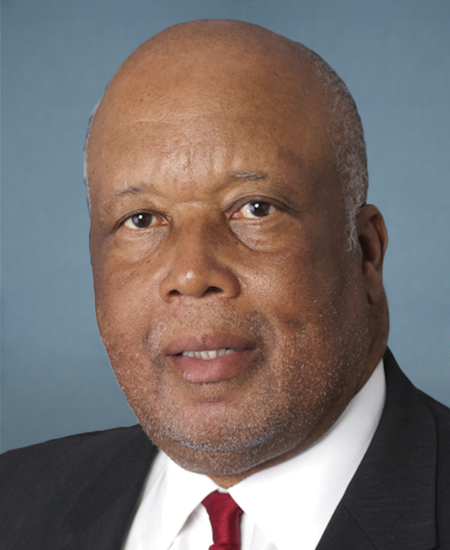
Rep. Bennie G. Thompson
Sponsored bills
Maddy summaryThe American Family Act (HR 2763) establishes a new refundable child tax credit that provides monthly payments to eligible families with children. It would pay $300 per month for each child under age 6 and $360 per month (120% of $300) for each child age 6 or older, with income limits of $150,000 for joint filers and $112,500 for other filers. The bill creates a "period of presumptive eligibility" to determine eligibility for monthly payments, allowing families to receive advance payments based on information from previous tax returns. This would directly affect millions of families with children who meet the income requirements, providing more consistent financial support throughout the year rather than an annual tax credit.
Maddy summaryThis bill prohibits federal funding for military parades in Washington D.C. primarily intended to celebrate a person's birthday, specifically referencing President Trump's 79th birthday on June 14, 2025 (coinciding with Army Day). It cites concerns about excessive costs ($92 million to military, $21 million in public safety expenses), potential damage to city infrastructure, and the lack of reimbursement for local costs. The bill encourages alternative birthday celebrations (like cake or golf) and humorously notes Congress extends birthday wishes via USPS, while affirming public funds should serve national well-being, not personal glorification.
Maddy summaryThis resolution (HRES 307) is a formal House of Representatives expression of honor for baseball legend Hank Aaron. It recognizes his historic career, including breaking Babe Ruth's home run record, and his lifelong impact as a civil rights symbol who faced racism while achieving athletic excellence. The resolution specifically praises Aaron for embodying perseverance, dignity, and the spirit of equality during his career and beyond. It does not create new laws or affect any specific group, but formally commemorates his legacy as both a sports icon and a civil rights figure.
Maddy summaryThe Raise the Wage Act of 2025 gradually increases the federal minimum wage from $9.50 to $17.00 per hour over six years, with annual adjustments based on median wage growth. It raises the base wage for tipped workers from $6.00 to $17.00 per hour, phasing out their separate minimum wage structure by 2029. The bill also eliminates special minimum wage certificates for disabled workers after 2029, requiring employers to pay the standard minimum wage. These changes apply to most covered workers, including tipped employees and those under 20, with specific transition timelines for each group.
Maddy summaryThis bill establishes federal minimum standards for collective bargaining rights for public employees and supervisors. The Federal Labor Relations Authority would determine if state laws provide these rights, and if not, would establish them for affected employees. The bill guarantees public employees the right to form unions, bargain collectively, and engage in concerted activities, while requiring public employers to recognize unions and put agreements in writing. It also prohibits strikes or lockouts that would disrupt emergency services. This would apply to public employees in states that don't meet the federal standards for collective bargaining rights.
Maddy summaryHR 2698, the Bolstering Security Against Ghost Guns Act, mandates federal agencies to develop coordinated strategies addressing threats from "ghost guns" (privately made firearms). It requires the Department of Homeland Security to create a department-wide strategy within one year, including cross-agency collaboration and partner coordination. The bill also directs the Transportation Security Administration to report annually on ghost gun violations at checkpoints, U.S. Immigration and Customs Enforcement to analyze cross-border firearm smuggling patterns, and the Office of Intelligence and Analysis to produce threat assessments on terrorism-linked ghost gun use. These provisions apply directly to DHS components, the Secret Service, TSA, and ICE, focusing on data sharing, threat reporting, and prevention efforts without imposing new restrictions on firearm ownership.
Maddy summaryHR 2674, the Department of Homeland Security Climate Change Research Act, requires the DHS Under Secretary for Science and Technology to evaluate how climate change impacts homeland security operations, including preparedness for natural disasters and federal disaster response systems. The bill mandates DHS to conduct research on mitigating these climate-related security risks, prioritize impacts on DHS operations, and coordinate with other agencies, state/local governments, and critical infrastructure owners. DHS must submit annual reports to Congress detailing this research for four years after enactment. This bill does not create new programs or allocate funding but establishes a formal research requirement within DHS to better understand climate change effects on national security.
Maddy summaryHR 2672, the Religious Workforce Protection Act, extends temporary nonimmigrant status for religious workers whose applications for permanent residency (green cards) are delayed due to visa backlogs. It directly affects religious workers (such as pastors or missionaries) who are principal or derivative beneficiaries of pending immigrant petitions under specific visa categories, allowing them to maintain their work status beyond the usual 5-year limit while their green card applications are processed. Key provisions include granting extensions until a final decision is made on their adjustment of status application, modifying rules to allow limited job flexibility for these workers, and exempting them from a 1-year foreign residence requirement if they left the U.S. due to the prior 5-year cap. The bill aims to prevent religious workers from losing their legal status during lengthy immigration processing.
Maddy summaryHR 2678, "Ellie’s Law," authorizes $20 million annually from fiscal years 2026 through 2030 for the National Institute of Neurological Disorders and Stroke to conduct new research on unruptured brain aneurysms. The funding specifically aims to study diverse patient populations by age, sex, and race, addressing gaps in current research. This bill directly affects the estimated 6.8 million Americans with unruptured brain aneurysms - particularly women and people of color, who face higher rupture risks - by advancing medical understanding of the condition. The law requires the funds to supplement, not replace, existing research budgets.