

Maddy summaryThe Tenants' Right to Organize Act gives tenants receiving housing assistance the right to form and operate tenant organizations without fear of retaliation. It requires public housing agencies and property owners to recognize these organizations, provide meeting spaces, and seriously consider tenant concerns. The bill prohibits adverse actions like lease termination, rent increases, or service reductions for participating in organizing activities. It applies to tenants in housing choice voucher programs and low-income housing tax credit properties, with enforcement through administrative complaints and potential legal action.
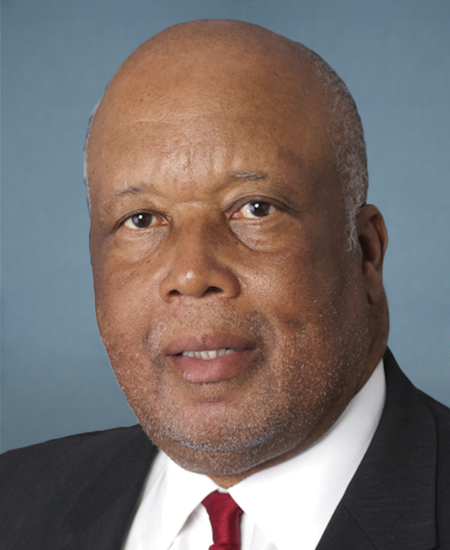
Rep. Bennie G. Thompson
Sponsored bills
Maddy summaryHR 3045, the West Bank Violence Prevention Act of 2025, imposes U.S. sanctions on foreign individuals and entities responsible for violence, displacement, or property destruction in the West Bank. It targets those directly involved in attacks on civilians, forced displacement, or property seizures, including settler leaders or officials of groups engaged in such activities. Key provisions require freezing assets of sanctioned individuals within U.S. jurisdiction and blocking their entry into the United States via visa restrictions. The law applies to foreign nationals meeting specific criteria outlined in the bill, not U.S. citizens or entities.
Maddy summaryHR 3002, the Homeland Security Climate Change Coordination Act, creates a new Climate Coordinating Council within the Department of Homeland Security (DHS). The council, composed of at least 20 senior DHS officials from offices like FEMA, Customs, Coast Guard, and Cybersecurity, must identify climate impacts across DHS operations and develop risk-based strategies to address them. It will also report annually to Congress for ten years on actions taken, ensuring DHS aligns its efforts with Executive Order 14008 on climate. The bill directly affects DHS programs, assets, and personnel by mandating coordinated climate adaptation planning.
Maddy summaryThe Hunger-Free Future Act of 2025 amends the SNAP program to require that any update to the thrifty food plan must not increase food insecurity. It mandates that adjustments to the diet cost must continue following existing rules while explicitly ensuring updates do not worsen food insecurity, defined as households lacking adequate food due to insufficient money or resources. This directly affects SNAP beneficiaries by setting a new standard for how the program's cost calculations are reviewed. The bill changes the procedural requirement for SNAP re-evaluations without altering benefit amounts or eligibility rules.
Maddy summaryHR 2357, the Food Secure Strikers Act of 2025, removes a restriction that previously barred workers on strike from receiving Supplemental Nutrition Assistance Program (SNAP) benefits. The bill amends the Food and Nutrition Act of 2008 to eliminate language making workers ineligible for SNAP "as a result of being on strike," ensuring striking workers are not automatically denied food assistance during labor disputes. This change directly affects workers participating in strikes who would otherwise lose access to SNAP benefits. The key mechanism updates the eligibility rules to prevent SNAP ineligibility solely due to strike participation.
Maddy summaryHRES 332 is a resolution designating April 11-17, 2025, as "Black Maternal Health Week" to raise awareness about maternal health disparities affecting Black women and birthing people in the U.S. It references CDC data showing Black women are 2-3 times more likely to die from pregnancy-related causes than White women and that the U.S. has the highest maternal mortality rate among developed nations. The resolution emphasizes the need to address systemic inequities contributing to these outcomes without creating new laws or funding. It serves as a symbolic recognition to amplify community-led efforts, such as those by the Black Mamas Matter Alliance, rather than implementing policy changes.
Maddy summaryHR 2884 establishes a National Center on Antiracism and Health within the CDC to address structural racism as a public health crisis. The center will research how racism impacts health outcomes, collect disaggregated data by race, ethnicity, and other factors, and develop antiracist interventions for public health systems. It requires CDC to create regional centers in minority communities, build a public data clearinghouse, and train health professionals on racism's health effects. The bill also directs the CDC to research police violence's public health impacts and develop prevention strategies, requiring annual reports to Congress on these efforts.
Maddy summaryThis bill amends the Homeland Security Act of 2002 to strengthen the role of the Department of Homeland Security (DHS) Officer for Civil Rights and Civil Liberties. It requires the DHS Secretary to assign permanent staff and dedicated resources to support the officer's duties, ensuring they have consistent capacity to address civil rights concerns. The bill directly affects DHS agencies and the public interacting with them, as it mandates structural support for the officer's oversight role. The key change is the requirement for permanent staffing and resources, moving beyond temporary arrangements to provide ongoing civil rights oversight within DHS.
Maddy summaryThe Pursuing Equity in Mental Health Act (HR 2904) aims to reduce mental health disparities affecting racial and ethnic minority groups by modifying federal grant programs, requiring research on disparities, and funding targeted initiatives. It directs the Health and Human Services Secretary to prioritize grants for community health organizations serving minority populations, mandates a National Institutes of Health study on mental health research gaps in these groups, and establishes training programs for health professionals to address cultural competency in mental health care. The bill also requires a public outreach strategy developed with community input to reduce stigma and improve access to culturally appropriate care, alongside $20 million annually (2026-2031) for this effort. Additional funding includes $150 million yearly for NIH mental health research and $750 million yearly for the National Institute on Minority Health.
Maddy summaryHR 2843 establishes an Advisory Committee to review and recommend renaming Federal land units (such as national parks, forests, and wildlife refuges) with names containing racial slurs, honoring individuals who held racist views or committed atrocities against minorities, or perpetuating stereotypes. The Committee will gather public input, propose new names, and submit recommendations to the Board on Geographic Names, which must act on these proposals within three years. This process aims to replace offensive names with equitable alternatives across all federal lands, following defined criteria for "offensive place names." The bill creates a structured, public review mechanism to address historically insensitive geographic names without altering existing federal land management authority.