

Maddy summaryHR 8066, the Ammunition Supply Chain Act, requires the Secretary of the Army to submit a report to Congress within 180 days of enactment. The report must assess the U.S. supply chain for ammunition components like nitrocellulose and smokeless gunpowder, focusing on improving sourcing, avoiding single points of failure, managing global demand risks, and leveraging private sector capacity. This bill directly affects the Department of Defense and ammunition manufacturers by mandating a review of supply chain vulnerabilities. It is procedural in nature, establishing a reporting requirement without creating new regulations or funding.
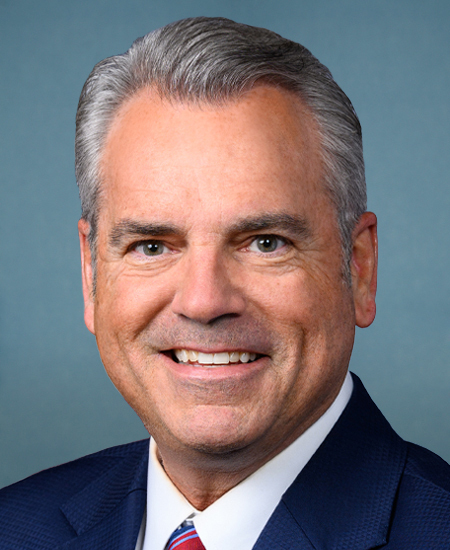
Rep. Mark Alford
Sponsored bills
Maddy summaryHR 8061, the Crime Victims Fund Stabilization Act of 2024, ensures stable funding for the Crime Victims Fund by directing certain False Claims Act collections into it from 2024 through 2029. Specifically, it adds a provision requiring that amounts collected under the False Claims Act (excluding whistleblower rewards and government reimbursement for damages) be deposited into the fund during this period. This directly affects crime victims who rely on the fund for services like counseling and emergency aid, as it prevents potential shortfalls in funding. The bill makes a concrete policy change by redirecting specific federal civil penalties into the fund, rather than altering the fund's existing purposes or eligibility rules.
Maddy summaryHR 5947 terminates specific U.S. waivers and licenses related to Iran, ending a 2023 waiver that allowed funds transfer from South Korea to Qatar. It prohibits the Treasury Department from reissuing similar waivers or licenses for the same purpose and blocks the President from granting Iran access to certain designated financial accounts established under prior laws. The bill directly affects U.S. foreign policy implementation by restricting how Treasury handles Iran-related financial transactions. It enacts concrete policy changes by ending existing authorizations and preventing future approvals for Iran to access specific accounts.
Maddy summaryHCONRES 104 authorizes the use of the U.S. Capitol rotunda for a lying in state ceremony of Ralph Puckett, Jr.'s remains on April 29, 2024. The resolution recognizes Puckett as the last Medal of Honor recipient for actions during the Korean War (1950-1953) and honors over 5.7 million service members who served in that conflict, often called the "Forgotten War." The Architect of the Capitol will implement the arrangements under the direction of the House Speaker and Senate President pro tempore.
Maddy summaryThis bill requires the Secretary of Agriculture to annually assess U.S. reliance on critical farm inputs - such as fertilizers, seeds, veterinary drugs, and agricultural equipment - that could be disrupted if China exploits supply chains. It mandates identifying domestic production capacity, supply chain vulnerabilities, and recommending ways to reduce dependency through onshore or nearshore production. The assessment must protect private company data, prohibiting disclosure of identifiable information and ensuring only anonymized aggregate data is used or shared. The law focuses on supply chain security for American agriculture without compelling businesses to provide sensitive information.
Maddy summaryHR 8011, the Iranian Terror Prevention Act, requires the U.S. Secretary of State to designate 12 Iranian-affiliated military groups and any entity controlled by Iran's Revolutionary Guard Corps as Foreign Terrorist Organizations within 90 days. It mandates the President to decide within 60 days whether to impose sanctions under existing law (Executive Order 13224) on these groups, which would block their U.S. assets and restrict transactions. The bill also requires the Secretary of State to submit regular reports to Congress on new entities meeting designation criteria and the President to explain any decisions not to impose sanctions. This law directly affects the listed Iranian military groups and any new entities linked to Iran's Revolutionary Guard Corps.
Maddy summaryHCONRES 103 authorizes the use of the U.S. Capitol rotunda for a "lying in honor" ceremony for the remains of Army Colonel Ralph Puckett, Jr., the last Medal of Honor recipient for actions during the Korean War (1950-1953). The resolution directs the Architect of the Capitol to arrange this ceremony on April 29, 2024, to honor Puckett and recognize the service of over 5.7 million U.S. military personnel who served in the Korean conflict, often called the "Forgotten War." This is a ceremonial resolution with no policy changes, solely granting permission for a specific honorific event.
Maddy summaryThis bill would terminate 39 federal diversity, equity, and inclusion offices across multiple departments, including the State Department, Treasury, Health and Human Services, and Agriculture. It specifically prohibits cabinet-level agencies from developing or maintaining any diversity-related initiatives or plans. The law would take effect immediately upon enactment, eliminating these offices without requiring new funding or implementation steps. This is a structural change to federal agency operations, directly affecting how government departments manage workforce diversity programs.
Maddy summaryHR 7770, the Rosie the Riveter Commemorative Coin Act, authorizes the U.S. Mint to produce and sell three commemorative coins honoring women who worked on the U.S. home front during World War II. It specifies $5 gold coins (max 50,000), $1 silver coins (max 400,000), and half-dollar coins (max 750,000), all to be issued between January 1, 2025, and December 31, 2025. Each coin sale includes a surcharge ($35 for gold, $10 for silver, $5 for half-dollar), with all surcharge funds directed to the Rosie the Riveter Trust for maintaining the Rosie the Riveter WWII Home Front National Historical Park and educational programs. The coins will feature designs reflecting the legacy of diverse women workers and must meet specific weight, diameter, and composition standards.
Maddy summaryThe GO Ag Act (HR 7731) creates a federal grant program to fund new agricultural education programs in secondary schools. It provides competitive grants of up to $100,000 per applicant for 5 years, requiring schools to demonstrate how programs will serve all students - including special populations - and align with existing career education standards. Grants cover curriculum development, equipment, and materials but cannot fund programs already operating or prepare students exclusively for one employer. The bill authorizes $5 million through fiscal year 2027 to support these new initiatives.