

Maddy summaryThis bill rescinds unspent funds from specific federal programs. It targets leftover money from pandemic relief (like the CARES Act and American Rescue Plan) and certain infrastructure initiatives (including education stabilization funds and transportation programs like the Congestion Mitigation Program). The rescission is limited to amounts already allocated for Israel, Ukraine, and Indo-Pacific security supplements under recent appropriations. Unspent funds must be returned to the Treasury, with no new spending created.
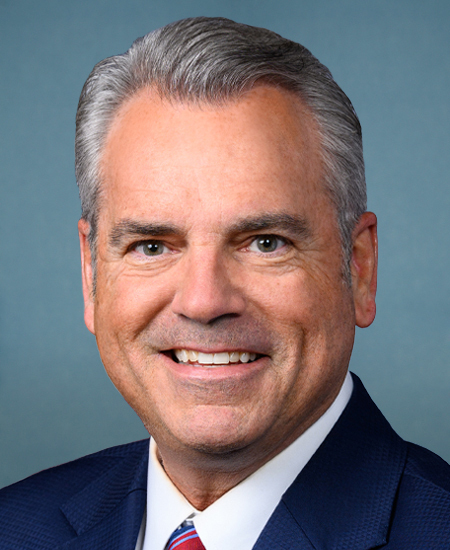
Rep. Mark Alford
Sponsored bills
Maddy summaryHR 8014, the *Transparency and Predictability in Small Business Opportunities Act*, requires the Small Business Administration to create rules within 180 days of enactment. These rules mandate federal agencies to publicly disclose the reason for canceling solicitations (where at least two small businesses could have bid), any plans to reissue them, and alternative contracting opportunities. Small businesses that prepared bids for canceled solicitations they were eligible for will receive assistance from agency directors to identify similar opportunities if the solicitation won’t be reissued. All required information must be posted on the government’s central procurement website. The bill does not authorize new funding for implementation.
Maddy summaryHR 5403, the CBDC Anti-Surveillance State Act, prohibits the Federal Reserve from issuing or facilitating central bank digital currency (CBDC) directly or indirectly to individuals through financial institutions. It specifically bans Federal Reserve banks from offering digital products to individuals, maintaining individual accounts, or using CBDC for monetary policy implementation. The bill also clarifies that its restrictions do not apply to existing physical cash or private, permissionless digital payment systems. This bill directly affects the Federal Reserve's ability to develop or deploy a government-run digital dollar. The law aims to prevent the Federal Reserve from creating a digital currency that could enable transaction tracking or government oversight of personal financial activity.
Maddy summaryHR 895, the Combating Organized Retail Crime Act of 2023, expands federal law to better prosecute organized retail theft by amending sections 2314 and 2315 of Title 18. It clarifies that crimes involving stolen goods valued at $5,000 or more over 12 months - including retail theft - can be prosecuted under existing federal statutes, and broadens definitions to include goods taken via "any facility of interstate or foreign commerce." The bill also creates a new Organized Retail Crime Coordination Center within Homeland Security, requiring it to coordinate federal, state, and local law enforcement efforts, share threat information with retailers, and produce annual public reports on trends. This directly affects law enforcement agencies, retailers, and criminal justice systems by standardizing prosecution thresholds and enhancing interagency collaboration.
Maddy summaryThe Hands Off Our Home Appliances Act amends federal energy efficiency standards for home appliances, requiring the Department of Energy to set or update standards only if they are technologically feasible, economically justified (meaning they don’t increase net consumer costs and provide significant energy savings), and maintain product performance. It creates a new petition process allowing stakeholders to request changes to standards if evidence shows they cause excessive costs, fail to save energy, or make products unavailable. The bill also mandates a 2-year review of each new standard to confirm its feasibility and justification, with the option to revise or remove it if criteria aren’t met. These changes directly affect appliance manufacturers, the Department of Energy, and consumers purchasing energy-efficient products.
Maddy summaryHRES 1197 is a non-binding House resolution recognizing the contributions of elementary and secondary school teachers. It formally thanks teachers for their role in building civic, cultural, and economic well-being, aligning with National Teacher Appreciation Week (May 6-10, 2024). The resolution encourages students, parents, school leaders, and officials to acknowledge teachers during this week. It does not create new programs, allocate funding, or impose obligations on schools or educators. As a symbolic gesture, it directly addresses the teaching profession without altering any laws or policies.
Maddy summaryHR 8231, the James Earl Jones Congressional Gold Medal Act, authorizes a Congressional Gold Medal to be awarded to actor James Earl Jones in recognition of his distinguished career in theater and film, and his role in advancing inclusion and equal opportunities for people of all backgrounds in the entertainment industry. The Treasury will strike the medal with an image and inscription of Jones, and may produce and sell bronze duplicates to cover costs, with proceeds deposited into the U.S. Mint's public enterprise fund. This bill serves as a ceremonial honor with no new legal requirements or policy changes.
Maddy summaryThe Investing in All of America Act of 2023 amends the Small Business Investment Act to expand eligibility for a leverage exclusion, allowing Small Business Investment Companies (SBICs) to count more investments toward their leverage limits when funding businesses in low-income or rural areas, or in critical technology sectors vital to national security. It requires the Small Business Administration to adjust exclusion limits annually using the Consumer Price Index to account for inflation and to submit annual reports to Congress on economic activity and jobs generated by these investments. This bill directly affects SBICs and the businesses they support in designated underserved communities and strategic technology industries.
Maddy summaryHRES 1170 prohibits U.S. House Members, Delegates, and Resident Commissioners from bringing or displaying any foreign nation's flag on the House floor during sessions, except for lapel pins or flags shown during speeches under House rules. The resolution applies to all flag sizes and is enforced by the House Sergeant-at-Arms. It directly affects House members' conduct during floor proceedings but allows limited exceptions for personal accessories and official speeches. This is a procedural rule change, not a substantive policy.
Maddy summaryThe EARN IT Act of 2023 clarifies that Section 230 of the Communications Act does not shield online service providers from liability for child sexual abuse material, while specifically protecting providers who use encryption technologies from liability for using those technologies. The bill amends over 50 federal statutes to replace "child pornography" with "child sexual abuse material" to ensure consistent terminology across legal contexts. It updates the CyberTipline (operated by the National Center for Missing & Exploited Children) to improve reporting of child sexual abuse material, extending the preservation period for reports from 90 days to one year. The law affects internet service providers, law enforcement, and child protection programs by clarifying legal responsibilities around child sexual abuse material.