

Maddy summaryThis bill reauthorizes the Debbie Smith DNA Backlog Grant Program, which provides federal funding to state and local law enforcement agencies to reduce backlogs in processing DNA evidence from crime scenes. It extends the program's funding period from fiscal years 2024 through 2029 (previously ending in 2024). The bill also updates audit requirements to ensure grant funds are used properly through 2029. This directly affects law enforcement agencies that receive these grants to accelerate DNA analysis for criminal investigations.
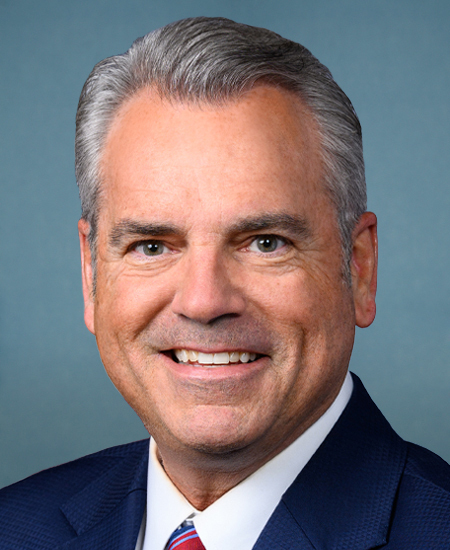
Rep. Mark Alford
Sponsored bills
Maddy summaryHR 9176, the LIONs Act of 2024, increases the maximum loan amount available through the Small Business Administration's 7(a) loan program. It amends the Small Business Act to raise the cap from $3.75 million (or $5 million if exceeding) to $7.5 million (or $10 million if exceeding) for eligible small business loans. This change directly affects small businesses seeking SBA 7(a) loans by allowing them to access larger funding for operations, equipment, or expansion. The key mechanism is updating the statutory loan limit to support more significant business financing needs within the existing program framework.
Maddy summaryThis is a commemorative resolution (HRES 1369) honoring Corey Comperatore, a volunteer firefighter, U.S. Army Reserves veteran, and community leader from Sarver, Pennsylvania, who died on July 13, 2024. The resolution formally mourns his passing and celebrates his life, noting he left behind his wife, Helen, and two daughters, Allyson and Kaylee. It recognizes his service to the Buffalo Township Volunteer Fire Department, his military service, and his role as a devoted member of Cabot Methodist Church. As a ceremonial resolution, it has no policy impact or direct effect on legislation or constituents beyond this formal acknowledgment.
Maddy summaryHJRES 164 is a congressional resolution seeking to block a rule issued by the Department of Commerce regarding firearms license requirements. It directly targets the rule published in the Federal Register (89 Fed. Reg. 34680), which would have revised licensing procedures for firearms dealers. If passed, the resolution would prevent this rule from taking effect by invoking the congressional disapproval process under federal law. The bill does not create new regulations but aims to halt an existing rule affecting gun license applicants and dealers.
Maddy summaryThis resolution (HRES 1344) formally declares Attorney General Merrick Garland in contempt of the House of Representatives for failing to produce subpoenaed materials related to the Special Counsel's investigation of President Biden's handling of classified documents. It specifically cites his refusal to turn over "audio tapes" requested by the House Judiciary and Oversight committees on February 27, 2024. The resolution mandates that the Speaker impose a daily $10,000 fine on Garland (payable from his personal funds, not taxpayer money) until he complies with the subpoena. As a procedural resolution - not a law - it addresses a specific dispute over congressional oversight authority, not policy changes.
Maddy summaryThis bill increases military pay rates for all service members across pay grades and years of service, effective January 1, 2025, with specific rate adjustments detailed in the legislation. It expands eligibility for the basic needs allowance to 200% of current rates and authorizes $1.2 billion for housing allowances in fiscal year 2025. The bill also improves child care access by requiring competitive pay for military child care staff, reducing fees for children of child care employees, and mandating regular reports on child care services. Additionally, it enhances health care access by waiving referral requirements for certain services in military medical facilities and establishes a permanent program to support military spouses' employment.
Maddy summaryThis bill prohibits federal funding for elementary and secondary schools that partner with Chinese government-funded programs, including Confucius Institutes, Confucius Classrooms, or other entities receiving support from China's government (e.g., through teaching materials, personnel, or funds). It directly affects schools with these specific ties to the People's Republic of China. The prohibition takes effect one year after enactment, with the Education Secretary required to notify schools and provide compliance guidance within 90 days of enactment. The policy change blocks federal education funds for schools meeting the defined criteria, without altering existing educational content or curriculum standards.
Maddy summaryThis bill ends judicial deference to federal agency interpretations of laws (known as "Chevron deference"). It requires agencies to review past interpretations they relied on under Chevron, publish revised positions, and only issue rules when explicitly authorized by Congress. The bill also mandates that courts interpret statutes themselves rather than favoring agency views, requires criminal penalties to include proof of intent ("mens rea"), and ensures agency decisions are based only on publicly accessible materials. These changes directly affect federal agencies, courts, and individuals or businesses subject to agency regulations or penalties.
Maddy summaryThe VA Home Loan Program Reform Act establishes a new "Partial Claim Program" to help veterans avoid foreclosure on VA-guaranteed home loans. Under this program, the VA can purchase up to 20% of a defaulted or at-risk loan, requiring veterans to repay the VA with 0% interest if they agree to monthly payments within a year (0.5% otherwise), while the VA receives a secondary claim on the property. The bill also amends existing law to give the VA more authority to prevent foreclosure, such as paying loan holders to avoid foreclosure and requiring loan holders to place loans in forbearance. The program expires on September 30, 2026, and includes administrative rules for processing payments and conducting audits.
Maddy summaryHRES 1305 is a procedural resolution that formally rescinds subpoenas issued by the January 6th Select Committee to four individuals (Stephen Bannon, Mark Meadows, Daniel Scavino Jr., and Peter Navarro) and withdraws the committee’s recommendations finding them in contempt of Congress. The bill specifically cancels subpoenas from September 2021, October 2021, and February 2022, along with related contempt resolutions adopted in 2021-2022. It does not alter legal proceedings but withdraws the committee’s authority to enforce these actions. The resolution is supported by House members who argue the committee was partisan and illegitimate, though the bill itself only addresses the committee’s procedural actions.