

Maddy summaryThis resolution (HRES 1086) is a symbolic gesture expressing the House's support for designating March 19, 2024, as "National Agriculture Day." It does not create new laws or policies, but instead formally recognizes agriculture as a vital industry in the U.S. economy. The resolution celebrates agriculture's broad economic impact without imposing any requirements or changes on farmers, consumers, or government programs. It is a commemorative statement, not a substantive legislative action.
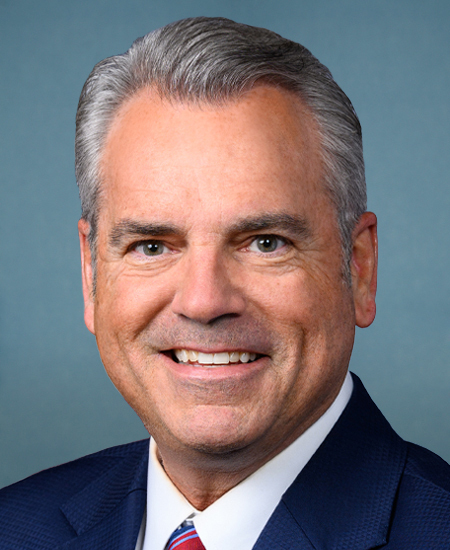
Rep. Mark Alford
Sponsored bills
Maddy summaryThis bill prohibits U.S. app stores, hosting services, and distributors from enabling foreign adversary-controlled applications (like TikTok, owned by ByteDance) to operate within U.S. borders. It requires companies to provide users with their data in a machine-readable format before a ban takes effect, and imposes civil penalties of up to $5,000 per affected user for violations. The law directly affects major app platforms, app stores, and internet hosting services, targeting applications owned by entities controlled by designated "foreign adversary" countries (e.g., China). It includes exemptions for companies that divest U.S. operations to non-adversary entities before the ban date.
Maddy summaryThe Pony Up Act requires the United States Postal Service (USPS) to reimburse individuals who were charged late fees or penalties due to delayed delivery of their bills or payment notices. If USPS delivers a bill notice less than 6 days before the payment due date (or payment after the due date), it must pay the exact amount of fees incurred. Individuals can apply for reimbursement via USPS website, mail, or in-person, with appeals available to a Judicial Officer within 30 days. The bill also mandates annual USPS reports on mail delivery delays by mail class and an audit to assess if certain mail types receive priority treatment.
Maddy summaryThe Laken Riley Act (HR 7511) would require federal authorities to detain non-citizens charged with or convicted of burglary, theft, larceny, or shoplifting offenses. It also creates new legal standing for state attorneys general to sue federal immigration officials in federal court if they believe immigration enforcement decisions (like releasing aliens or granting parole) cause financial harm exceeding $100 to the state or its residents. The bill amends immigration laws to expand detention requirements for certain property crimes and allows states to seek court orders to enforce immigration policies. It does not create new criminal penalties but modifies existing immigration enforcement procedures. The bill’s findings and political language about the Laken Riley case are not part of its policy provisions.
Maddy summaryHRES 1067 is a non-binding resolution recognizing the 175th anniversary of Laclede County, Missouri, and the city of Lebanon, Missouri, which were both organized on February 24, 1849. It acknowledges the historical significance of these communities to Missouri without creating new laws, funding, or obligations. The resolution formally honors the counties' founding dates and their role in Missouri's history. This is a symbolic gesture with no direct impact on residents or policy.
Maddy summaryThis resolution (HRES 1055) is a symbolic gesture by the U.S. House of Representatives to congratulate the Kansas City Chiefs football team for winning Super Bowl LVIII on February 11, 2024. It acknowledges their victory over the San Francisco 49ers, their status as the first NFL repeat champion in 19 years, and key player achievements like Patrick Mahomes' third Super Bowl MVP award. As a ceremonial resolution, it has no legal effect or policy impact - it simply offers formal recognition of the team's athletic accomplishment. The resolution does not affect any individuals, policies, or government actions.
Maddy summaryThe Farm to Fly Act of 2023 amends USDA programs to include sustainable aviation fuel (SAF) as a qualifying product for financial assistance, directly affecting farmers, biorefineries, and agricultural producers. It defines SAF as liquid fuel meeting strict environmental standards - requiring at least a 50% reduction in lifecycle greenhouse gas emissions compared to jet fuel and excluding sources like palm oil or petroleum. The bill mandates the Secretary of Agriculture to lead a cross-agency initiative focused on advancing SAF development, leveraging agricultural resources, and fostering public-private partnerships to expand the domestic SAF market. This aims to support rural economic growth, strengthen U.S. energy security, and align with national clean energy goals in aviation.
Maddy summaryThis bill requires the Small Business Administration's Office of Rural Affairs to submit annual reports on its rural business activities. The initial report must detail how the office promotes financial assistance, tracks statistics, and conducts outreach events, while annual reports must be submitted alongside the SBA's budget justification. It also mandates a separate report on the SBA's collaboration with the Department of Agriculture regarding rural business efforts. All reporting requirements will use existing SBA funding without new appropriations.
Maddy summaryThis bill directs the Secretary of State to actively use U.S. diplomatic resources, including the voice and influence of U.S. diplomats and officials at the International Boundary and Water Commission, to advance efforts ensuring Mexico complies with the 1944 water treaty. It requires U.S. officials to work toward establishing reliable water delivery agreements under the treaty for the Colorado, Tijuana, and Rio Grande rivers. The key mechanism is mandating diplomatic engagement to address Mexico's compliance with treaty obligations, aiming to secure predictable water flows for U.S. users. The bill affects U.S. diplomatic operations and water management coordination with Mexico, focusing on treaty implementation rather than new water infrastructure.
Maddy summaryHR 7455, the Sunset Act of 2024, requires federal agencies to automatically expire significant rules after 10 years unless Congress passes a new law extending them. Agencies must submit reports 180 days before expiration, and Congress can extend rules via joint resolution within 3 legislative days of receiving the report. The bill also mandates annual reviews of 10% of active agency rules for 9 years, with rules not extended by Congress after the 10-year period expiring. It applies to all major agency rules (e.g., environmental or safety regulations) and includes limited presidential exemptions for emergencies, but does not affect existing rules already in effect.