

Maddy summaryHR 2687, the End Kidney Deaths Act, creates a federal tax credit for living kidney donors who give non-directed donations (meaning they don't know the recipient's identity). It provides a $10,000 annual credit for five years ($50,000 total) to donors whose kidney is removed after December 31, 2026, with special rules if the donor dies during this period. The credit applies only to living, non-directed kidney donations and explicitly states it does not count as "valuable consideration" under laws prohibiting organ sales. This bill directly affects living kidney donors who choose to donate anonymously, aiming to incentivize such donations by offsetting related costs through tax relief. The credit expires after December 31, 2036.
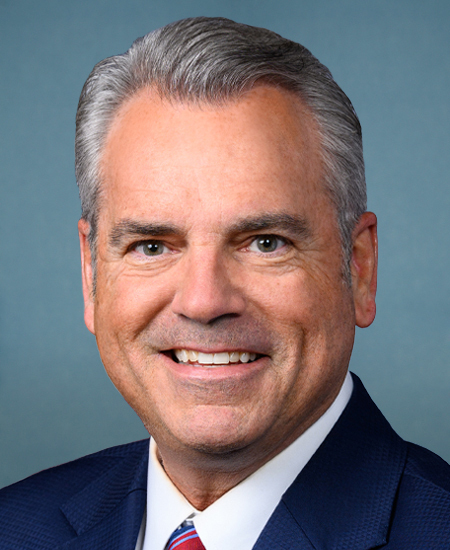
Rep. Mark Alford
Sponsored bills
Maddy summaryThis bill, HR 2102 (Major Richard Star Act), allows veterans with combat-related disabilities to receive both full military retired pay and veterans' disability compensation simultaneously, without the previous offset that reduced retired pay. It directly affects veterans already eligible for both benefits due to combat-related injuries, removing the requirement that their retired pay be reduced by the disability compensation amount. The key provision amends Title 10 and Title 38 to eliminate the offset rule (sections 5304 and 5305 of Title 38) for these veterans. The change applies to payments starting after the bill’s enactment date, effective for all qualifying veterans. This is a policy change to increase financial support for affected veterans, not a new benefit.
Maddy summaryHRES 285 is a symbolic House resolution condemning multiple recent attacks on Tesla vehicles and facilities across the U.S. It specifically references at least 80 incidents of vandalism or arson involving Tesla cars and 10+ attacks on dealerships or charging stations in 9 states between February and March 2025, including Molotov cocktails, gunfire, and hate speech. The resolution does not create new laws or policies but formally expresses the House’s condemnation of these acts as domestic terrorism. It directly addresses the targeted destruction of Tesla property but has no legal effect on preventing future incidents or altering Tesla’s operations.
Maddy summaryHR 1995, the Securing American Agriculture Act, requires the Secretary of Agriculture to annually assess U.S. dependency on critical agricultural inputs that could be exploited by China, such as fertilizers, feed, veterinary drugs, seeds, and equipment. The assessment must detail current domestic production, supply chain vulnerabilities, and recommend ways to reduce reliance on China, including legislative changes to encourage domestic production. It protects confidential business data by prohibiting the use of submitted information for purposes beyond aggregate reporting and ensuring no identifiable details are disclosed. The bill directly affects the Department of Agriculture, which must report these findings to Congress annually, without mandating new regulations or actions.
Maddy summaryThe SHOPP Act of 2025 amends the Gus Schumacher Nutrition Incentive Program to expand eligible food items for SNAP participants. It adds legumes (like beans and peas) to the list of qualifying foods and allows fresh frozen fruits and vegetables to count toward year-round incentives. This directly affects SNAP recipients shopping at participating farmers markets or retailers, making it easier to access more types of produce. The bill updates existing program language to replace "fruits and vegetables" with "fruits, vegetables, and legumes" and "fresh fruits and vegetables" with "fresh or fresh frozen fruits, vegetables, and legumes." These changes aim to increase access to a wider variety of nutritious foods through existing incentive programs.
Amplifying Processing of Livestock in the United States Act or the A–PLUS Act This bill directs the Department of Agriculture (USDA) to revise its regulations to allow certain packers to hold an ownership interest in, finance, or participate in the management or operation of a market agency selling livestock on a commission basis. The bill applies to packers that have a cumulative slaughter capacity of (1) less than 2,000 animals per day or 700,000 animals per year with respect to cattle or sheep, and (2) less than 10,000 animals per day or 3 million animals per year with respect to hogs. In addition, USDA must revise its regulations to include a disclosure requirement for a market agency that has an ownership interest in, finances, or participates in the management or operation of a packer. Specifically, the market agency must disclose the existence of such ownership interest, financial relationship, or participation.
Maddy summaryThe Farm to Fly Act of 2025 amends agricultural programs to include sustainable aviation fuel (SAF) as a qualifying biofuel, directly affecting U.S. farmers, agricultural producers, and the aviation industry by creating new market opportunities. It defines SAF with specific requirements - meeting ASTM standards, not derived from palm oil or petroleum, and achieving at least a 50% lifecycle greenhouse gas emissions reduction compared to jet fuel. The bill mandates the Secretary of Agriculture to lead a new collaboration initiative focusing on advancing SAF development through partnerships with farmers, rural economic support, and public-private partnerships. Additionally, it expands existing manufacturing assistance programs to include SAF production, aiming to strengthen domestic energy security and grow markets for agricultural feedstocks.
Maddy summaryThe Freedom from Unfair Gun Taxes Act of 2025 would prohibit states and local governments from imposing taxes on the sale of firearms, ammunition, or firearm parts during interstate or foreign commerce. This bill directly affects state tax policies and manufacturers or dealers selling these items across state lines. It explicitly states that the bill does not change the existing federal tax on firearms and ammunition that funds wildlife conservation programs. The key provision bans state-level taxes for these sales in interstate transactions while preserving current federal funding mechanisms.
Maddy summaryHR 2398, the Rural Veterinary Workforce Act, amends federal tax law to exempt certain student loan repayment or forgiveness assistance from income tax for veterinarians working in rural areas. It specifically expands existing tax exclusions to include programs under the National Agricultural Research, Extension, and Teaching Policy Act (7 U.S.C. 3151a) and similar state-level programs designed to increase rural veterinary access. This change directly affects veterinarians participating in qualifying loan repayment or forgiveness programs in states prioritizing rural veterinary services. The policy change modifies IRS tax treatment to reduce the financial burden on veterinarians serving underserved rural communities.
Maddy summaryHR 2248, the SIGN Pardons Act, requires the U.S. President to personally sign any pardon or reprieve granted under the Constitution. This bill directly affects the presidential pardon process by mandating a physical signature instead of allowing other forms of authentication. The key provision states that no pardon may be issued without the President's handwritten signature. This change applies to all pardons granted under Article II, Section 2, Clause 1 of the Constitution. The bill does not alter pardon eligibility or policy, only the procedural requirement for signing.