

Maddy summaryThe Homes Act of 2024 would establish a new Housing Development Authority within the Department of Housing and Urban Development to develop permanently affordable housing. The Authority would acquire properties and convey them to eligible entities (including community land trusts, tenant organizations, and public housing agencies) under strict requirements for permanent affordability, climate resilience, and community control. The bill would set rents at 25% of household income, limit annual rent increases to 3% or the Consumer Price Index, and require "just-cause" evictions with tenant protections. It would also create a tenant right to purchase their rental properties through a "first look" process and prioritize housing for underserved communities and families experiencing homelessness.
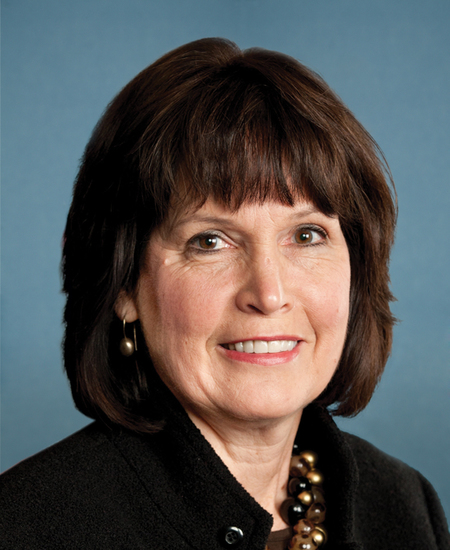
Rep. Betty McCollum
Sponsored bills
Maddy summaryThis bill directs the U.S. government to immediately restore funding to the United Nations Relief and Works Agency for Palestine Refugees (UNRWA), reversing a temporary funding pause. It repeals two appropriations acts that halted payments and requires the Secretary of State to resume UNRWA funding under existing authorities. The legislation specifically aims to support UNRWA’s critical humanitarian work - providing shelter, education, healthcare, and aid to Palestinian refugees across Gaza, the West Bank, Syria, Lebanon, and Jordan - during an acute famine risk in Gaza. It also mandates quarterly reports to Congress on UNRWA’s implementation of reforms from an independent review, ensuring accountability for its humanitarian mission.
Maddy summaryThis bill designates the U.S. Postal Service facility at 31143 State Highway 65 in Pengilly, Minnesota, as the "First Lieutenant Richard Arne Koski Post Office." It updates all official references to the location to reflect this new name in laws, documents, and records. The bill has no policy changes or direct impact beyond the naming of this specific post office.
Maddy summaryThis bill directs the Joint Committee on the Library to procure a statue of Benjamin Franklin and place it in the U.S. Capitol. The committee must secure the statue within two years of the bill's enactment and install it in a public-accessible location by January 1, 2026, for viewing during Capitol Visitor Center guided tours. It is a procedural measure with no policy changes or direct impact on constituents or legislation.
Maddy summaryHRES 1461 is a symbolic resolution designating September 2024 as "National Voting Rights Month" to raise awareness about voting access. It encourages all U.S. citizens to uphold voting rights, supports existing voting rights legislation like the Freedom to Vote Act, and recommends schools teach about voting history and current restrictions. The resolution specifically aims to highlight efforts to address historical and ongoing barriers affecting historically marginalized groups, including Black, Latino, and disabled voters. It does not create new laws but promotes educational initiatives and media campaigns about registration deadlines and election access.
Maddy summaryHRES 1448 is a non-binding House resolution stating that the House believes every person has the right to emergency health care, including abortion care, during medical emergencies. It specifically addresses concerns that abortion restrictions force medical providers to choose between treating patients in life-threatening situations or risking criminal charges. The resolution highlights that such restrictions disproportionately harm Black, Indigenous, people of color, immigrants, low-income individuals, and LGBTQI+ patients. It does not change existing laws but expresses congressional support for ensuring access to emergency care without legal barriers. The resolution was introduced by multiple House members and referred to the Energy and Commerce Committee.
Maddy summaryThe CREATE AI Act of 2023 establishes a National Artificial Intelligence Research Resource (NAIRR) to improve access to AI research tools, computational resources, data, and educational materials for researchers and students across the United States. The NAIRR will provide computational resources, curated datasets, educational tools, and access to AI testbeds, with special emphasis on supporting groups historically underrepresented in STEM fields. Governed by a Steering Subcommittee chaired by the Director of the Office of Science and Technology Policy and managed by a Program Management Office within the National Science Foundation, the NAIRR includes specific requirements for ethical AI development, privacy protections, and security measures. The resource will be accessible to researchers at U.S. institutions of higher education, nonprofits, government agencies, and certain businesses, with priority given to projects addressing privacy, ethics, civil rights, and AI safety.
Maddy summaryHRES 1432 designates September 10, 2024, as "National Firearm Suicide Prevention Day" to raise public awareness about firearm suicides and promote safe storage practices. The resolution encourages healthcare professionals to discuss safe firearm storage with patients and supports the day's goals of reducing firearm suicides through education. It directly affects the general public and healthcare providers by highlighting evidence that safe storage lowers suicide risk, referencing statistics like 54.6% of U.S. suicides in 2022 involving firearms. The bill is symbolic, with no new legal requirements, and aligns with existing awareness efforts like Firearm Suicide Prevention Day.
Maddy summaryHRES 1436 is a symbolic resolution (not a law) introduced in the U.S. House of Representatives. It recognizes suicide as a preventable public health crisis by citing statistics from the CDC, VA, and SAMHSA showing rising suicide rates across age groups, including veterans and adolescents. The resolution formally supports designating September as "National Suicide Prevention Month" and September 10, 2024, as "World Suicide Prevention Day." It does not create new policies, allocate funding, or directly affect any individuals - its purpose is solely to express congressional support for suicide prevention awareness and efforts.
Maddy summaryHRES 1422 is a resolution recognizing the 60th anniversary of the Wilderness Act (enacted in 1964), which established the National Wilderness Preservation System. The resolution commends advocates for the Act, acknowledges wilderness areas' role in protecting over 112 million acres of public lands, and highlights their benefits for recreation, clean water, wildlife habitat, and climate resilience. It specifically emphasizes the importance of including Tribal governments in wilderness designation and management. As a commemorative resolution, it does not create new laws or directly affect any group.