

Maddy summaryHRES 1555 is a symbolic House resolution condemning the spread of false claims and malicious rumors about disaster response efforts, which have led to credible threats against FEMA personnel and disrupted aid for survivors. It specifically references incidents after Hurricanes Helene and Milton, including a pause in North Carolina door-to-door assistance due to safety threats and antisemitic targeting of officials. The resolution formally condemns those spreading disinformation for political gain and commits Congress to supporting FEMA’s efforts to combat misinformation and promote accurate recovery information. As a non-binding resolution, it does not create new laws but expresses congressional support for protecting disaster response workers and ensuring survivors receive timely aid.
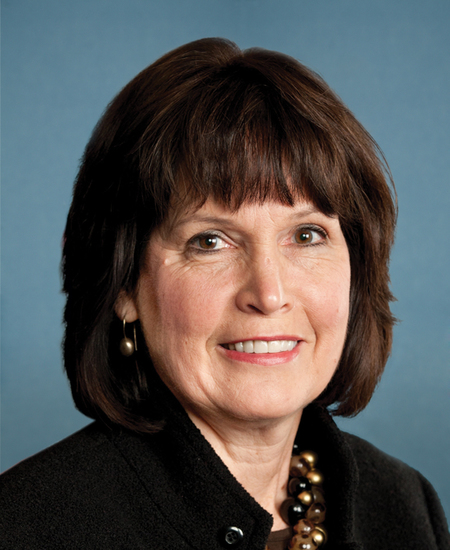
Rep. Betty McCollum
Sponsored bills
Maddy summaryHR 9950, the "Miracle on Ice Congressional Gold Medal Act," authorizes three gold medals to be awarded to the members of the 1980 U.S. Olympic men's ice hockey team for their historic victory over the Soviet Union during the Winter Olympics. The medals, designed by the Treasury Secretary, will be presented by Congress to honor the team's achievement, which revitalized American morale during the Cold War. One medal will be displayed at the Lake Placid Olympic Center, one at the USA Hockey Hall of Fame in Eveleth, Minnesota, and one at the U.S. Olympic Museum in Colorado Springs. The bill also permits the sale of bronze duplicates to cover production costs. This is a ceremonial honor, not a policy change, directly recognizing the team members and their legacy.
Maddy summaryThe CARE Act amends the Animal Welfare Act to explicitly include cold-blooded animals - such as reptiles, amphibians, cephalopods, and fish - under federal animal welfare protections. This change directly affects these animals used in research, testing, experimentation, or exhibition, expanding their legal definition as "animals" under federal law. The bill excludes common lab rodents (rats, mice), birds, horses, and farmed animals raised for food or fiber. Key provisions redefine "animal" to cover cold-blooded species in specified contexts, while maintaining existing exclusions for certain livestock and research animals. The law would require federal oversight for these animals' care in regulated settings, aligning their treatment with protections already applied to warm-blooded animals like dogs and cats.
Maddy summaryThis bill raises the federal minimum wage to $15 per hour initially, with future increases tied to a "stability wage" calculated using average hourly earnings and cost-of-living adjustments (CPI). It modifies income tax brackets so that tax rates apply to income levels adjusted based on this stability wage calculation. The bill eliminates special minimum wage certificates for workers with disabilities and changes how earned income is counted for means-tested benefits. These changes would affect most workers, taxpayers across income levels, and individuals receiving government benefits based on income. The bill's provisions would take effect three months after enactment.
Maddy summaryThis bill eliminates out-of-pocket costs for all FDA-approved contraceptives under TRICARE for military dependents (spouses and children) and extends full coverage to include counseling, insertion, removal, and follow-up care. It requires TRICARE Select, Prime, and pharmacy benefits to cover all contraceptive methods without cost-sharing, addressing current gaps where dependents face copays. The law also mandates family planning education for all service members and ensures sexual assault survivors can access emergency contraception without barriers at military medical facilities. This applies to all individuals with reproductive capacity, including transgender and non-binary dependents.
Maddy summaryHRES 1516 is a resolution passed by the U.S. House of Representatives to commend Big Brothers-Big Sisters of America on its 120th anniversary. It recognizes the organization’s work in providing youth mentorship that helps young people graduate from school and plan for their future. The resolution highlights how the organization, operating in over 5,000 communities nationwide, has supported millions of young people through long-term mentor relationships. As a symbolic gesture, it does not create new laws or policies but expresses congressional support for the organization’s mission.
Maddy summaryHR 1719, the Honoring Our Fallen Heroes Act of 2023, establishes a presumption that certain cancers diagnosed in public safety officers (like police and firefighters) are work-related if linked to their duties. It defines 22 specific cancers (including lung, mesothelioma, and WTC-related cancers) as "exposure-related," allowing officers or their families to receive benefits without proving direct work connection, provided they were diagnosed within 15 years of leaving active service. The bill also creates a process for adding new cancers to the list based on scientific evidence, requiring the Bureau to review petitions and make decisions within 180 days. This applies to deaths or disabilities occurring on or after January 1, 2023, directly affecting officers who developed covered cancers during service.
Maddy summaryHCONRES 130 is a symbolic concurrent resolution commending state and local governments that treat reproductive rights as human rights following the *Dobbs* decision. It recognizes efforts by cities like Austin, Texas, and Montgomery County, Maryland, to expand abortion access and condemn criminalization of pregnancy outcomes. The resolution affirms that reproductive rights are human rights, urges states to repeal restrictive laws, and references U.S. obligations under international human rights treaties. As a non-binding resolution, it does not create new laws or alter existing policies.
Maddy summaryHR 3433, the "Give Kids a Chance Act of 2024," requires pharmaceutical companies developing certain cancer drugs to conduct pediatric studies if the drugs target molecular pathways relevant to childhood cancers. It directly affects drug manufacturers submitting new applications for cancer treatments, particularly those combining previously approved adult cancer drugs or containing a single new active ingredient. The bill amends FDA regulations to mandate these pediatric investigations only when specific conditions are met, such as when a drug's molecular target is relevant to pediatric cancer growth. The FDA must issue implementing guidance within 12 months, and reports to Congress will track implementation and effectiveness starting 2 years after enactment.
Maddy summaryHRES 1468 is a non-binding resolution recognizing the significant pay disparity faced by disabled women in the U.S. workforce. It cites data showing disabled women earn, on average, 50 cents for every dollar earned by nondisabled men, with even starker gaps for disabled women of color (e.g., 44 cents for disabled Latinas). The resolution highlights systemic barriers like occupational segregation, the subminimum wage, and lack of support services contributing to these inequities. It does not create new laws or affect any group directly, but formally acknowledges these disparities and reaffirms the House’s commitment to addressing wage gaps. This is a symbolic recognition, not a policy change.