

Community Services Block Grant Improvement Act of 2025 This bill reauthorizes the Community Services Block Grant (CSBG) program through FY2032 and makes certain changes to the program and associated eligibility requirements. The CSBG program supports various antipoverty activities, primarily through formula-based allotments to states, tribes, and territories, the majority of which must be made available in grants to eligible local entities. Specifically, the bill permanently sets the measure of eligibility for services, assistance, or resources provided directly to individuals or families under the program at 200% of the poverty line. (Under current law, the eligibility measure is temporarily set at 200% of the poverty line, an increase from the previous measure of 125% of the poverty line.) The bill also makes certain changes to the permitted uses of funding, including by allowing CSBG funds to be used to facilitate low-income individuals’ and communities’ access to high-speed broadband, digital literacy training, technical support, and other services. States may also use certain funds allocated for training and technical assistance to assist eligible entities in responding to statewide and regional conditions that create economic insecurity, including emergency conditions. The bill also expands requirements for the plans that states must submit to the Department of Health and Human Services in order to receive CSBG funds (e.g., transparency assurances), and sets deadlines by which states must make funds available to eligible entities. Finally, the bill repeals a provision that allowed states to use CSBG funds to offset revenue losses associated with state charity tax credits.
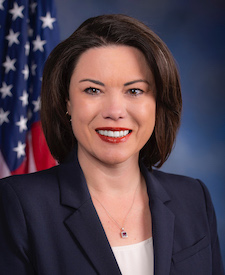
Rep. Angie Craig
Sponsored bills
Maddy summaryThis bill expands OSHA safety protections to cover public employees, including teachers, police, and sanitation workers, who were previously excluded from federal workplace safety regulations. It directly affects state and local government workers by amending the Occupational Safety and Health Act to explicitly include "the United States, a State, or a political subdivision of a State" under OSHA coverage. The key mechanism is a technical amendment to the law’s definition of covered employees, ensuring public service workers fall under the same safety standards as private-sector employees. The bill takes effect 90 days after enactment for most workplaces, with a 36-month delay for state/local governments without existing OSHA plans.
Maddy summaryHR 3171, the Reduction in Force Review Act, requires federal agencies to provide detailed justifications before implementing workforce reductions. It directly affects agencies conducting reductions in force under specific federal workforce rules (subchapter I of chapter 35), mandating they include five specific elements: the specific reasons for the reduction, its impact on employees and operations, alternatives considered and rejected, summaries of consultations with affected employees and their representatives, and how veterans will be impacted. The bill adds these requirements to the existing Congressional review process for agency workforce actions under Title 5 of the U.S. Code. This creates a standardized transparency framework for agency decisions affecting federal workers.
Maddy summaryThis bill creates a federal grant program to help cover medical costs for retired Federal working dogs (like police or military K9s). It authorizes $1 million annually (2026-2030) for eligible nonprofits with a two-year history of providing such care to dogs that have received official retirement letters and are now with their handlers. The grants allow these organizations to pay for veterinary expenses, directly supporting retired service dogs and their handlers. The program is administered through the Department of Homeland Security under existing grant authority.
Fentanyl Awareness for Children and Teens in Schools Act or the FACTS Act This bill establishes grant programs and requires strategies and studies to address the misuse of synthetic opioids (i.e., laboratory-derived substances such as fentanyl and its derivatives) among youth. The bill requires the Department of Health and Human Services (HHS) to award grants to partnerships between educational and health organizations for prevention, treatment, and recovery efforts related to the use of synthetic opioids by middle and high school-aged children. It also allows school-based health centers to use existing HHS grants to purchase naloxone to reverse the effects of opioid overdoses and to establish programs to address misuse of synthetic opioids. Also, the bill authorizes state educational agencies to use certain Department of Education (ED) grant funds to provide training to school personnel on addressing students’ misuse of synthetic opioids. State and local educational agencies must also address such misuse in their educational plans in order to qualify for certain ED grants. Finally, the bill (1) establishes an interagency taskforce to coordinate federal efforts to address synthetic opioid misuse among youth, (2) requires an evaluation of the State Unintentional Drug Overdose Reporting System’s effectiveness in identifying the specific synthetic opioids causing youth overdoses, (3) expands the data reported by the National Center for Education Statistics to include information about the use of synthetic opioids in schools, and (4) requires two recurring HHS surveys to include questions on youth exposure to synthetic opioids.
Assault Weapons Ban of 2025 This bill makes it a crime to knowingly import, sell, manufacture, transfer, or possess a semiautomatic assault weapon (SAW) or large capacity ammunition feeding device (LCAFD). The prohibition does not apply to a firearm that is (1) manually operated by bolt, pump, lever, or slide action, except for certain shotguns; (2) permanently inoperable; (3) an antique; (4) only capable of firing rimfire ammunition; or (5) a rifle or shotgun specifically identified by make and model. The bill also exempts from the prohibition the following, with respect to a SAW or LCAFD: importation, sale, manufacture, transfer, or possession related to certain law enforcement efforts, or authorized tests or experiments; importation, sale, transfer, or possession related to securing nuclear materials; and possession by a retired law enforcement officer. The bill permits continued possession, sale, or transfer of a grandfathered SAW, which must be securely stored. A licensed gun dealer must conduct a background check prior to the sale or transfer of a grandfathered SAW between private parties. The bill permits continued possession of, but prohibits sale or transfer of, a grandfathered LCAFD. Newly manufactured LCAFDs must display serial number identification. Newly manufactured SAWs and LCAFDs must display the date of manufacture. The bill also allows a state or local government to use Edward Byrne Memorial Justice Assistance Grant Program funds to compensate individuals who surrender a SAW or LCAFD under a buy-back program.
Maddy summaryThis bill expands access to employee ownership by modifying the Small Business Act to allow S corporations owned by employee stock ownership plans (ESOPs) to retain small business status, even when an ESOP owns over 49% of the company. It creates a new Treasury Department office to provide education and technical assistance for S corporations establishing ESOPs, and establishes a Labor Department Advocate for Employee Ownership to coordinate outreach and resolve disputes. These changes directly affect S corporations transitioning to ESOP ownership and their employees, who gain retirement benefits through ESOP accounts. The bill aims to increase employee ownership by removing eligibility barriers and improving support for businesses adopting this model.
Maddy summaryThe Equality Act (HR 15) amends federal civil rights laws to explicitly prohibit discrimination based on sexual orientation and gender identity in employment, housing, public accommodations, credit, and jury service. It expands existing protections under the Civil Rights Act of 1964 by adding sexual orientation and gender identity as protected characteristics under sex discrimination prohibitions. The bill clarifies that discrimination against LGBTQ people is a form of sex discrimination, consistent with the Supreme Court's Bostock decision, and adds specific definitions for gender identity and sexual orientation. This legislation directly affects businesses, employers, housing providers, financial institutions, and government entities that serve the public. The bill creates a more comprehensive legal framework to address discrimination that LGBTQ people face in multiple aspects of daily life.
Maddy summaryHR 3067, the Arctic Refuge Protection Act, repeals the existing oil and gas program for the Arctic National Wildlife Refuge (ANWR) and designates approximately 1.56 million acres of the refuge's Coastal Plain as wilderness. This directly affects federal management of the ANWR, halting potential oil drilling in the designated area. The bill requires the Secretary of the Interior to administer the newly designated wilderness area under the Wilderness Act, treating it as part of the existing wilderness within ANWR. The change prevents future oil and gas development on this specific portion of the refuge.
Maddy summaryThis bill requires most private health insurance plans to cover diagnostic and supplemental breast exams with no out-of-pocket costs (like deductibles or copays) for enrolled patients. It specifically covers exams used to evaluate abnormalities found in screenings (diagnostic) or for high-risk screening without abnormalities (supplemental), based on medical guidelines. Plans can still require prior authorization for these exams, and state laws offering stronger protections remain in effect. The rule takes effect for plan years starting January 1, 2026.