

Maddy summaryThe Tenants' Right to Organize Act gives tenants receiving housing assistance the right to form and operate tenant organizations without fear of retaliation. It requires public housing agencies and property owners to recognize these organizations, provide meeting spaces, and seriously consider tenant concerns. The bill prohibits adverse actions like lease termination, rent increases, or service reductions for participating in organizing activities. It applies to tenants in housing choice voucher programs and low-income housing tax credit properties, with enforcement through administrative complaints and potential legal action.
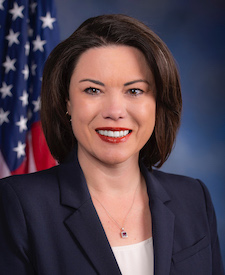
Rep. Angie Craig
Sponsored bills
Maddy summaryHR 3045, the West Bank Violence Prevention Act of 2025, imposes U.S. sanctions on foreign individuals and entities responsible for violence, displacement, or property destruction in the West Bank. It targets those directly involved in attacks on civilians, forced displacement, or property seizures, including settler leaders or officials of groups engaged in such activities. Key provisions require freezing assets of sanctioned individuals within U.S. jurisdiction and blocking their entry into the United States via visa restrictions. The law applies to foreign nationals meeting specific criteria outlined in the bill, not U.S. citizens or entities.
Maddy summaryThe TAKE IT DOWN Act makes it a crime to intentionally share intimate images or digital forgeries of people without their consent, with penalties of up to 2 years in prison for adults and 3 years for minors. It requires major online platforms to establish a 48-hour process for victims to request removal of such content, with platforms protected from liability when acting in good faith. The bill defines "digital forgery" as AI-generated content that appears authentic and applies to websites and apps primarily hosting user-generated content, excluding email services and broadband providers. The Federal Trade Commission will enforce these notice and takedown requirements. This legislation directly affects victims of nonconsensual intimate content, the platforms hosting such material, and individuals who distribute it.
Maddy summaryHR 2993, the ESOP Funding for SBA Position Act of 2025, creates a new position within the Small Business Administration (SBA) to assist small businesses in establishing Employee Stock Ownership Plans (ESOPs). This role provides guidance on ESOP setup - including tax treatment, regulatory compliance, and funding options - and coordinates with agencies like the Department of Labor to improve support. The SBA Administrator must report annually to Congress on the position’s activities, including the number of small businesses assisted and policy recommendations. The bill authorizes $500,000 for the first year to fund this position, with ongoing appropriations as needed.
Maddy summaryHR 3010, the "No Handouts for Drug Advertisements Act," prohibits pharmaceutical companies from deducting the costs of direct-to-consumer advertising for prescription drugs from their federal taxable income. Specifically, it amends the Internal Revenue Code to disallow tax deductions for advertising expenses related to covered drugs (prescription drugs and certain compounded drugs) when targeted directly at the general public through TV, radio, digital platforms, or billboards. This policy change directly affects pharmaceutical companies that run such advertising campaigns, requiring them to pay taxes on the full cost of these promotions. The bill does not apply to ads in medical journals or other professional publications. It takes effect for expenses incurred after enactment.
Maddy summaryHRES 340 is a ceremonial resolution recognizing April 2025 as "Community College Month" to celebrate the role of over 1,000 U.S. community colleges. It highlights these institutions' work in providing affordable higher education, workforce training, and economic support - serving 10.2 million students annually and contributing significantly to national economic growth (e.g., generating $898 billion in alumni income in 2020). The resolution emphasizes community colleges' accessibility (average $3,990 tuition for in-district students, 10-mile average student commute) and their role in workforce development across sectors like healthcare and manufacturing. As a non-binding recognition, it does not create new laws or funding.
Hot Foods Act of 2025 This bill expands the Supplemental Nutrition Assistance Program (SNAP) to permit the use of SNAP benefits to purchase hot foods or hot food products ready for immediate consumption.
Maddy summaryThis bill creates a new program within the Supplemental Nutrition Assistance Program (SNAP) to provide point-of-sale incentives for purchasing specific dairy products. It targets SNAP households by offering incentives at checkout for fluid milk, yogurt, and cheese made from cow’s milk (defined as "naturally nutrient-rich dairy" under the bill). The program will fund competitive grants to state/local governments and nonprofits to implement these incentives, with $10 million allocated annually for implementation and evaluation. It also transitions existing dairy incentive projects into this new framework and repeals the previous program after a one-year transition period.
Maddy summaryThe Fight Fentanyl Act increases annual funding for fentanyl-related law enforcement efforts to $333 million from 2025 through 2030. It requires the Office of National Drug Control Policy to report annually on how HIDTA (High Intensity Drug Trafficking Area) funds target fentanyl trafficking, including seizure data and threat assessments. The bill also mandates the Attorney General to prioritize fentanyl prosecutions by temporarily reassigning U.S. attorneys to these cases. These provisions directly affect federal, state, local, and tribal law enforcement agencies working on fentanyl interdiction and prosecution.
Maddy summaryThis bill increases the federal tax credit for rehabilitating historic buildings. It raises the standard credit rate from 20% to 30% for qualifying small projects (with a $3.75 million expenditure cap) and further increases the cap to $5 million for projects in rural areas. The bill also allows taxpayers to transfer all or part of this credit to another taxpayer, creating a new market for the credit. These changes apply to properties placed in service after the bill's enactment date. The bill directly affects developers and owners of historic properties seeking tax incentives for rehabilitation projects.