

Maddy summaryHR 3243, the Therapeutic Fraud Prevention Act of 2025, bans the provision of paid conversion therapy aimed at changing a person's sexual orientation or gender identity, and prohibits advertising such therapy as effective, safe, or without risk. It directly affects LGBTQ+ individuals and their families who might be targeted by these practices, as professionals have determined conversion therapy is ineffective and harmful. The law treats violations as deceptive acts under consumer protection laws, empowering the Federal Trade Commission and state attorneys general to enforce it through civil actions. It explicitly excludes legitimate gender transition support and non-discriminatory counseling from the ban.
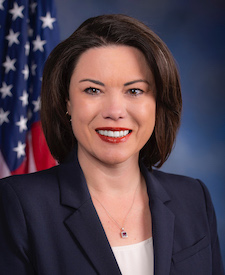
Rep. Angie Craig
Sponsored bills
Maddy summaryThe American Ownership and Resilience Act establishes a new framework for "ownership investment companies" that provide capital to support employee stock ownership plans (ESOPs) and worker-owned cooperatives. The bill creates a licensing system requiring ownership investment companies to meet capital requirements, use independent financial advisors and trustees for transactions, and maintain employee ownership interests. It establishes a facility to provide leverage to these companies with specific limits ($5 billion total annual limit, $100 million per Protégé OIC), and requires detailed reporting on the impact of these investments. The act aims to facilitate and protect employee ownership structures while ensuring transparency and accountability through strict regulatory requirements.
Maddy summaryThe Parity in Engineering Act (HR 3258) amends a federal highway law to remove Minnesota from a list of states eligible for a specific contracting process for engineering and design services. It changes the provision from applying to "West Virginia or Minnesota" to applying only to "West Virginia," directly affecting Minnesota's eligibility for this contracting method in federal highway projects. The bill makes a technical correction to the law without altering funding levels, program requirements, or creating new policies. This adjustment streamlines the eligibility criteria for federal highway engineering contracts.
Maddy summaryHR 3218, the Reproductive Data Privacy and Protection Act, requires law enforcement and government agencies to swear under oath that they will not use reproductive or sexual health information in investigations or legal proceedings. It amends federal wiretap laws (18 U.S.C. § 2518) and communication disclosure rules (18 U.S.C. § 2703) to mandate this protection. The bill defines "reproductive or sexual health information" broadly to include details about abortion, contraception, IVF, pregnancy, sexual health conditions, and related medical services. This directly affects law enforcement, courts, and service providers by legally restricting how sensitive health data can be used in investigations. The law aims to prevent government use of such data to target individuals seeking or providing reproductive care.
Maddy summaryThe HOME Act of 2025 prohibits landlords and sellers from charging "unconscionably excessive" rental or home sale prices during a federally declared affordable housing crisis. The Secretary of Housing and Urban Development (HUD) must determine crisis periods using metrics like mortgage rates, median home prices, and disaster declarations, with restrictions limiting crisis periods to 30 days (renewable). Violations are enforced by HUD and state attorneys general, with penalties funding affordable housing through the Housing Trust Fund. The law also requires HUD to monitor housing markets, investigate excessive investor purchases, and review anti-competitive practices in rental markets.
Maddy summaryHR 3184, the PFAS Alternatives Act, funds research to develop turnout gear (firefighter safety clothing) without harmful PFAS chemicals, directly affecting firefighters who wear this gear. It authorizes $25 million annually (2025-2029) for grants to eligible organizations to research and test PFAS-free gear, requiring partnerships with firefighting groups to translate findings into practice. The bill also allocates $2 million yearly (2027-2031) for training programs on safe gear use and decontamination. Its goal is to reduce firefighters' exposure to chemicals linked to occupational illnesses during operations.
Maddy summaryHRES 379 is a symbolic resolution recognizing the contributions of elementary and secondary school teachers to U.S. civic, cultural, and economic well-being. It specifically honors teachers during National Teacher Appreciation Week (May 5-9, 2025), urging students, parents, and officials to acknowledge their work. The resolution has no legal effect or policy changes - it simply expresses gratitude and promotes awareness of the teaching profession. It was introduced by Rep. Graves and co-sponsors and referred to the Education and Workforce Committee.
Maddy summaryHRES 380 is a symbolic resolution supporting the designation of May 5-9, 2025, as "Teacher Appreciation Week." It does not create new laws or funding but formally recognizes teachers' contributions to education. The resolution affirms teachers' role in shaping students' futures and calls for including teachers in education policymaking at all levels. It highlights teacher survey data showing broad support for policies like equitable school funding and culturally responsive teaching, though the resolution itself only expresses support for the week's designation. This is a non-binding gesture with no direct impact on affected individuals or policies.
Maddy summaryHR 3178, the Save Healthcare Workers Act, creates a new federal crime for assaulting hospital staff while they are performing their duties, with penalties including fines and up to 10 years in prison (up to 20 years for aggravated cases involving weapons or injuries). The bill directly affects hospital employees - including nurses, doctors, and support staff - across all covered facilities (such as emergency rooms, long-term care centers, and children’s hospitals) by criminalizing violence that disrupts patient care. It also establishes a $25 million annual grant program (2025-2034) to help hospitals implement safety measures like staff de-escalation training, security technology, and coordination with local law enforcement. These provisions aim to address workplace violence in healthcare settings, which the bill cites as a growing problem affecting service delivery and staff retention.
Maddy summaryThis resolution urges the Secretary of Health and Human Services (HHS) to withdraw a March 2025 Federal Register notice (90 Fed. Reg. 11029) that would have reduced public notice and comment periods for proposed regulations. It specifically asks HHS to restore the pre-February 27, 2025 process, which required public input on rulemaking. The resolution emphasizes that public participation in HHS rulemaking - impacting millions through health and human services regulations - is essential for fair policy. As a non-binding resolution, it does not change law but expresses congressional preference for maintaining transparency in the regulatory process.