

Maddy summaryHR 6597, the LET’S Protect Workers Act, increases civil penalties for employers violating key labor laws to strengthen worker protections. It raises fines for child labor violations to up to $700,000 per incident causing death or serious injury, and doubles penalties for repeated wage/hour violations (up to $50,000 per violation). The bill also significantly boosts OSHA penalties (e.g., up to $800,000 for serious violations), adds new retaliation penalties for mine safety violations (up to $200,000 for repeat offenses), and clarifies that recordkeeping violations continue until corrected. These changes apply to employers across sectors, including manufacturing, agriculture, and mining, under the Fair Labor Standards Act, Occupational Safety and Health Act, and Mine Safety Act.
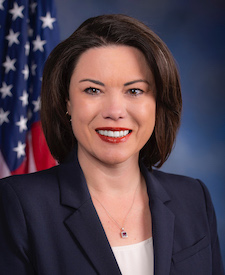
Rep. Angie Craig
Sponsored bills
Maddy summaryThis bill authorizes the placement of a memorial honoring women who supported the U.S. war effort during World War II (including those working as pilots, engineers, and in factories) on federal land in Washington, D.C. It specifies two locations: Area I on the National Mall map or the National Mall Reserve, as defined in existing law. The memorial was previously authorized by Section 702 of the 2023 Consolidated Appropriations Act (Public Law 117-328), and this bill clarifies its permitted locations.
Maddy summaryThis bill prohibits Department of Homeland Security (DHS) officers from arresting or detaining immigrants at immigration court facilities during hearings or while arriving/departing for hearings, except with a judicial warrant. It applies to all pending immigration cases, appeals, and motions to reopen, covering anyone whose removal order isn't final. Exceptions allow arrests only to prevent imminent threats to life, safety, or national security. The bill also requires DHS to report scheduled check-in arrests to the Inspector General and mandates annual oversight reports to Congress on compliance.
Maddy summaryThis bill recognizes the service of individuals who were members of the U.S. Cadet Nurse Corps between July 1, 1943, and December 31, 1948, by treating that service as active duty for specific burial-related benefits. It requires the Secretary of Defense to issue an honorable discharge to eligible individuals within one year of the bill's enactment, designating their discharge date. The bill allows for commemorative items like service medals or plaques but clarifies that recipients will not receive most VA benefits (only headstones/markers under specific chapters of law). It directly affects living cadet nurses from that era and their families for burial purposes.
Maddy summaryThis bill provides a one-time $200 monthly payment to eligible Social Security, SSI, railroad retirement, and veterans disability/pension beneficiaries during January-June 2026. It directly affects individuals receiving these specific benefits who reside in U.S. states, territories, or the District of Columbia, with payments delivered through existing benefit channels. Key provisions include treating these payments as non-income for tax and program eligibility purposes, prohibiting double payments for multiple benefits, and ensuring payments cannot be offset or assigned. The payments expire by July 2026, and the bill includes specific administrative funding for implementation.
Skinny Labels, Big Savings Act This bill provides a statutory safe harbor from patent infringement claims for generic or biosimilar manufacturers that seek or obtain approval for skinny labels of their drugs. Under current law, the Food and Drug Administration (FDA) may approve generic and biosimilar drugs through a process known as skinny labeling, which allows a generic manufacturer to seek approval only for approved uses of the drug that are no longer protected by patents. However, in GlaxoSmithKline LLC v. Teva Pharmaceuticals USA, Inc. , a court held that a generic manufacturer may sometimes be liable for patent infringement when it markets skinny label generics. The bill specifically lists the following as actions that are not considered infringement of a method of use claim in a patent under the Federal Food, Drug, and Cosmetic Act: submitting or seeking approval of a skinny label for a generic or biosimilar drug; promoting or commercially marketing a drug with skinny labeling approved by the FDA; or describing a drug product approved by the FDA as a generic of, or therapeutically equivalent to, the branded drug. The bill also applies the safe harbor to similar actions under the Public Health Service Act.
Right to Read Act of 2025 This bill expands access to school libraries and literacy skills support for elementary and secondary school students. It also outlines certain constitutional rights and liability protections related to school libraries. Specifically, the bill reauthorizes through FY2030 (1) the Comprehensive Literacy State Development Program, which provides grants to ensure high-quality instruction and effective strategies in reading and writing for children through 12th grade; and (2) the Innovative Approaches to Literacy Program, which provides grants to support the development of literacy skills in low-income communities. Additionally, the bill allows Supporting Effective Instruction State Grants to be used to assist local educational agencies (LEAs) and schools in recruiting, hiring, and retaining state-certified school librarians. Further, the bill authorizes states and LEAs to use Student Support and Academic Enrichment grants for programs and activities that promote the development of digital literacy and information literacy skills. The Department of Education (ED) must direct the National Center for Education Statistics to biennially collect data on school libraries. ED must require an assurance from each state and LEA receiving certain funds confirming that it will (1) protect the First Amendment rights of students in school libraries, and (2) provide equal protection in the conduct of school libraries in compliance with the requirements of the Fourteenth Amendment and nondiscrimination laws. The bill also provides liability protection to teachers, school librarians, school leaders, paraprofessionals, and other staff for actions that conform with state or local policies regarding the right to read.
Maddy summaryThis bill amends the SUPPORT for Patients and Communities Act to expand substance abuse and suicide prevention services for children, adolescents, and young adults (up to age 25). It requires eligible providers - like pediatric specialists, emergency departments, and children’s hospitals - to offer parents or guardians counseling on preventing overdose/suicide and provide supplies to reduce access to lethal means (e.g., safe storage containers). The bill allocates at least $2 million annually in grants to fund these prevention programs through eligible entities, with funding authorized for fiscal years 2026-2030. It directly affects young people at risk of substance misuse or self-harm and their caregivers.
Maddy summaryThe Digital Skills for Today's Workforce Act establishes a new grant program to expand digital workplace skills training for workers, particularly those with barriers to employment such as low educational attainment, low earnings, or limited English proficiency. The program provides funding to states to award subgrants to eligible entities like community colleges and workforce organizations for training through classroom instruction, apprenticeships, and work-based learning. States must prioritize serving individuals with employment barriers and report on outcomes related to digital skills development. The bill aims to create "digitally resilient" systems and individuals who can adapt to changing technology demands in the workforce. This program is funded through appropriations for fiscal years 2026 through 2030.
Maddy summaryThe Hire Student Veterans Act expands the Work Opportunity Tax Credit to include veterans enrolled in school using educational benefits from VA or military programs (such as the GI Bill). Employers hiring these veterans can claim a tax credit, making it easier to recruit students using benefits under specific VA or military education programs. The bill modifies the minimum employment requirement for these veterans, excluding them from standard work duration rules that apply to other credit-eligible hires. These changes take effect for veterans hired after the bill becomes law.