

Maddy summaryHR 6358, the Veteran Education Empowerment Act, creates a federal grant program to help colleges establish or improve dedicated Student Veteran Centers. These centers provide veterans, active-duty service members, and their families with lounge space, benefits counseling, academic support, and mental health services. Institutions must serve significant numbers of veterans and have sustainability plans to qualify for grants, with funding capped at $500,000 per institution over four years. The bill directly affects colleges serving veterans and aims to address challenges like isolation and transition difficulties through centralized campus support.
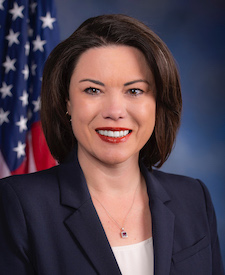
Rep. Angie Craig
Sponsored bills
Give Kids a Chance Act of 2025 This bill expands the Food and Drug Administration’s (FDA’s) authority with respect to research on rare pediatric diseases, including by permitting the FDA to take enforcement action against drug sponsors that fail to satisfy pediatric study requirements and by reauthorizing programs that support pediatric research. Specifically, the bill modifies requirements relating to molecularly targeted pediatric cancer investigations to permit research on new drugs in combination with active ingredients that have already been approved, provided certain conditions are met; permits the FDA to take enforcement action against drug sponsors that fail to comply with pediatric study requirements, if such sponsors demonstrated a lack of due diligence in satisfying the requirement; renews the FDA’s authority to award priority review vouchers to sponsors of new products intended to treat rare pediatric diseases through September 30, 2029; and reauthorizes through FY2027 certain funding for the National Institutes of Health to support priority pediatric research. The bill also provides statutory authority for the FDA’s interpretation of the orphan drug exclusivity period. The bill specifies, consistent with FDA regulations, that the seven-year market exclusivity period for drugs for rare diseases or conditions (i.e., orphan drugs) prohibits the approval of the same drug for the same approved use or indication with respect to the disease or condition. (In Catalyst Pharmaceuticals, Inc. v. Becerra , a court rejected the FDA’s interpretation and held that orphan drug exclusivity extends to all uses or indications for the disease or condition.)
Maddy summaryThis bill prohibits federal funding for White House construction or renovations during any government shutdown (funding gap), except for projects directly related to health or safety. It directly affects White House maintenance and development projects by blocking non-essential work when Congress fails to pass a budget. The key provision bans all non-essential spending on White House grounds during budget lapses, with explicit health/safety exceptions. The bill aims to prevent new projects from starting during shutdowns without altering existing contracts or ongoing work.
Maddy summaryHR 5563, the DRIVE-SAFE Act, creates a structured apprenticeship program for commercial drivers under age 21. It requires employers to provide a two-phase training program: a 120-hour probationary period focused on basic driving skills (like traffic navigation and safety awareness), followed by a 280-hour period covering advanced tasks (such as pre-trip inspections and load management). During both phases, apprentices must operate vehicles equipped with automatic transmissions, collision mitigation systems, and video capture, and must be accompanied by an experienced driver (26+ years old with no recent accidents or violations). The bill does not change existing commercial driver’s license requirements and mandates employers to maintain records and provide remediation for preventable accidents or violations during training.
Maddy summaryThis bill establishes a federal program to help low-income households pay for drinking water and wastewater services. It provides $500 million annually (2026-2030) in grants to states and tribes that already administer energy assistance programs, allowing them to cover past-due bills or other costs for households meeting specific income criteria (e.g., receiving certain federal benefits or earning ≤150% of the poverty level). The program prohibits using these funds to replace existing assistance and requires technical help to streamline eligibility. It directly affects low-income households in participating states and tribes, particularly those facing water affordability challenges.
Maddy summaryHR 6318, the No GOUGE Act, prohibits large businesses from excessively raising prices on goods affected by tariffs or planned tariffs (e.g., imports subject to new tariffs) for five years after the tariff takes effect. It specifically targets companies with over $100 million in U.S. revenue, banning price hikes that exceed the actual cost of the tariff plus legitimate operational expenses (excluding executive pay or stock buybacks). The Federal Trade Commission (FTC) enforces this by presuming violations if large firms (over $1 billion revenue) raise prices beyond pre-tariff averages during "tariff shock" periods, though companies can rebut this by proving costs were genuinely tied to the tariff. The law aims to prevent price gouging by ensuring tariff costs - not profit motives - drive price changes for consumers.
Maddy summaryThe CARE for Moms Act aims to reduce maternal mortality in the United States by expanding access to comprehensive care for pregnant and postpartum individuals. It directly affects women, particularly Black women who face disproportionately higher maternal mortality rates, as well as rural and underserved communities. Key provisions include funding State-based perinatal quality collaboratives ($35 million annually), requiring 12-month Medicaid coverage for postpartum individuals, mandating oral health services during pregnancy, supporting doula services through $50 million in grants, and creating regional centers to address implicit bias in healthcare. The bill also establishes rural mobile health units for obstetric care and requires hospitals to notify authorities 90 days before closing obstetric units. These changes aim to address systemic issues contributing to the U.S. maternal mortality crisis, which has the highest rate among developed nations.
Maddy summaryHRES 906 would change House rules to require a 60% vote of members present and voting to censure, disapprove, or remove any House member, delegate, or resident commissioner from committee assignments. Currently, a simple majority (50%+1) could trigger these actions, but this bill raises the threshold to a supermajority. The change applies directly to all voting members of the House and affects disciplinary procedures for members. This is a procedural rule change that makes it harder to take formal disciplinary actions against House members.
Maddy summaryThis bill expands Medicare coverage to include genetic counseling services provided by licensed or certified genetic counselors, effective January 1, 2027. It defines "covered genetic counseling services" as those furnished by qualified counselors under state law or certification, with payments set at 80% of the lesser of the actual charge or 85% of the physician fee schedule. Medicare beneficiaries seeking genetic counseling will gain access to these services through covered providers, while preventing balance billing for these specific services. The bill does not restrict physicians from billing for similar services under existing Medicare rules.
Maddy summaryHR 6255, the Affordable Insulin Now Act, requires health insurance plans (including employer-sponsored and individual plans) to cover specific insulin products starting in 2026. It caps out-of-pocket costs for these insulin products at $35 per 30-day supply or 25% of the negotiated price, whichever is lower, with no deductibles applied. The bill defines "selected insulin products" to include at least one of each dosage form (like vials or pumps) and type (such as rapid-acting or long-acting) available from the plan. This directly affects people with diabetes who rely on insulin, ensuring more predictable and affordable access to essential medications under their health coverage.