

Maddy summaryHR 6731, the "Restore Trust in Government Act," requires Members of Congress, the President/Vice President, and their spouses or dependent children to divest certain financial investments during federal service. It defines "covered investments" broadly (including stocks, commodities, and derivatives) but excludes Treasury bonds, municipal bonds, family farm interests, and some Alaska Native Settlement stock. Covered individuals must sell holdings within 90-180 days of taking office or enacting the law, with limited exceptions for qualified blind trusts or spouses’ occupational trading. Violations incur a 10% fee on the investment value and require returning profits, paid to the Treasury. Ethics offices enforce these rules, publish penalty details, and issue divestiture certificates.
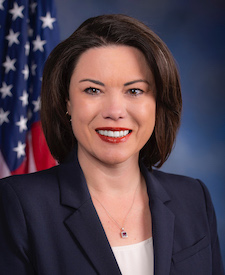
Rep. Angie Craig
Sponsored bills
Maddy summaryThe Protect America's Workforce Act cancels an executive order issued on March 27, 2025, that excluded certain groups from federal labor-management relations programs, making it legally unenforceable. It also ensures that all collective bargaining agreements between federal agencies and labor unions, which were active as of March 26, 2025, remain fully effective until their agreed terms expire. This directly affects federal agencies, labor unions, and the employees covered by these agreements. The bill prevents federal funds from being used to implement the canceled executive order while preserving existing labor agreements.
Maddy summaryThis bill exempts multiemployer pension plans from automatic enrollment requirements under the Internal Revenue Code. Specifically, it amends Section 414A(c)(3) to explicitly exclude multiemployer plans (defined under Section 414(f)) from rules requiring automatic enrollment in retirement plans. This change directly affects workers enrolled in union-sponsored multiemployer pension plans, allowing these plans to avoid automatic enrollment obligations. The amendment applies to taxable years beginning after December 31, 2024.
Miracle on Ice Congressional Gold Medal Act This act provides for the award of Congressional Gold Medals to the members of the 1980 U.S. Olympic men's ice hockey team in recognition of the team's achievement at the 1980 Winter Olympic Games.
Maddy summaryThe Opportunities for Success Act of 2025 amends the Higher Education Act to increase funding for work-based learning programs, authorizing $1.5 billion in 2027 and rising to $2.5 billion annually by 2031. The bill requires institutions to allocate at least 7% of work-study funds to compensate students in work-based learning positions and at least 3% to students with "exceptional need" during periods of nonenrollment. It defines "work-based learning" to include internships, fellowships, and apprenticeships, and establishes new metrics for determining which institutions qualify as "improved institutions" for funding allocation. The legislation also mandates new surveys to evaluate program effectiveness and requires institutions to prioritize students with Federal Pell Grants and exceptional need.
Maddy summaryHR 6672 creates a federal loan repayment program for mental health professionals working in designated shortage areas. It allows eligible individuals (such as psychologists, social workers, or counselors with qualifying student loans) to have up to $250,000 in federal education debt repaid over six years in exchange for full-time service in a shortage area. The program covers loans including federal student loans for mental health degrees and Direct Stafford/PLUS loans, with payments structured as 1/6 of the debt per year for the first five years and the remainder in the sixth year. The bill authorizes $25 million annually from 2026 to 2035 to fund this initiative, targeting areas with critical mental health provider shortages.
Maddy summaryHR 6259, the "No Fentanyl on Social Media Act," requires the Federal Trade Commission (FTC) to produce a detailed report within one year of enactment. The report must examine how minors access fentanyl (including pressed pills) through social media platforms, covering sellers' methods, health risks, platform design impacts, and current measures by platforms, law enforcement, and medical professionals. It specifically asks for recommendations to reduce this access and mandates consultation with stakeholders like parents and medical experts. The bill does not ban fentanyl sales or create new penalties; it solely focuses on gathering information to inform future policy.
Maddy summaryThis concurrent resolution (HCONRES 65) is a symbolic congressional commendment of state and local governments that have affirmed reproductive rights as human rights. It recognizes efforts by jurisdictions like Carrboro, North Carolina; Austin, Texas; and Fulton County, Georgia, which passed resolutions or proclamations declaring abortion access a human right and condemning criminalization of pregnancy outcomes. The resolution urges states to repeal restrictive abortion laws and protect access to reproductive care, but it does not create new legal requirements or fund programs. As a procedural resolution, it has no binding effect on federal or state law.
Maddy summaryThis bill increases federal student loan limits for graduate and professional students. Starting July 1, 2026, it sets a $50,000 annual limit and a $200,000 total aggregate limit (beyond undergraduate borrowing) for unsubsidized Federal Direct Stafford loans. These changes directly affect graduate and professional students pursuing advanced degrees who rely on federal loans for education costs. The provisions aim to provide higher borrowing capacity for these students' educational expenses under the Higher Education Act.
Maddy summaryHR 6589, the Ranked Choice Voting Act, would require all states to implement ranked choice voting for elections of U.S. Senators and Representatives, including primaries and general elections. Under this system, voters would rank candidates in order of preference, with ballots tabulated by eliminating the least preferred candidate in successive rounds until a candidate achieves a majority. The bill prohibits separate runoff elections for these offices and provides federal funding to states to cover implementation costs, with payments due by June 1, 2026. The law would apply to federal elections held on or after January 1, 2030, and would not affect state or local elections.