

Maddy summaryThis bill requires Medicare Advantage plans to implement electronic prior authorization systems by 2027 and publish detailed data on their approval and denial rates for medical services by 2026. It directly affects Medicare Advantage plans (private insurers offering Medicare coverage) and their enrollees (seniors 65+), mandating transparency about prior authorization decisions, processing times, and appeal outcomes. Key provisions include requiring plans to report annual statistics on request approvals/denials, average processing times, and use of technology, with this data published publicly by the Centers for Medicare & Medicaid Services. The bill also sets timelines for plan responses to prior authorization requests and mandates reports to Congress on implementation and impacts.
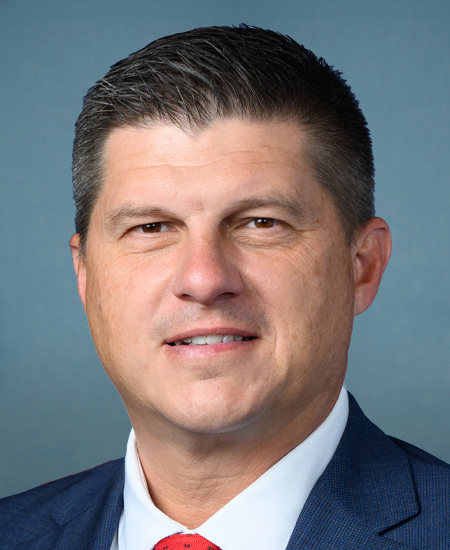
Rep. Brad Finstad
Sponsored bills
Maddy summary# Summary of Tariff Suspensions and Reductions Document This document is a section of U.S. tariff legislation that adds new duty suspensions and reductions to the Harmonized Tariff Schedule of the United States. It contains 120 new tariff items (numbered 9902.19.01 through 9902.20.24) that provide temporary duty-free or reduced-duty status for various goods. Key features of the document: 1. **Content**: The list includes chemical compounds, food ingredients, and specialty materials (such as shelled pine nuts, licorice extract, refined carrageenan, various chemicals like neodymium metal, tungsten concentrate, and numerous organic compounds). 2. **Tariff Treatment**: Most entries are listed as "Free" (meaning duty-free), with a few having small duty rates (e.g., 0.7%, 1.8%, 2.3%, 2.9%, 4.3%). 3. **Effective Period**: All listed suspensions and reductions are effective "On or before 12/31/2025." 4. **Purpose**: These tariff suspensions are intended to support specific industries, reduce costs for manufacturers, or provide temporary relief for certain imported goods. 5. **Technical Details**: Each entry includes the chemical name, CAS number, Harmonized Tariff Schedule code, duty rate, and a brief description of the product. This document represents a legislative amendment to the Harmonized Tariff Schedule, specifically adding new subchapter II of chapter 99 to provide temporary duty relief for these specific items.
Maddy summaryThe Essential Caregivers Act of 2024 requires nursing homes and similar facilities to allow residents to designate essential caregivers who provide emotional support or assistance with daily activities. During emergencies when regular visitation is restricted, facilities must permit at least one essential caregiver access to residents daily and cannot deny access without following specific procedures. Facilities may deny access for a maximum of 7 days during emergencies (or 14 days with state approval), and must provide a written explanation and appeal process if access is denied. The bill establishes a 48-hour appeal process for residents and caregivers to challenge denials, with facilities required to prove violations during appeals. This law applies to Medicare skilled nursing facilities, Medicaid nursing facilities, intermediate care facilities, and certain inpatient rehabilitation facilities.
Maddy summaryThe Responsible Use of Seafloor Resources Act of 2024 directs the President to coordinate federal agencies in supporting U.S. development of seafloor nodule collection and domestic processing for critical minerals used in defense and clean energy. It mandates annual reports analyzing the environmental, social, and economic impacts of seafloor minerals compared to land-based mining, including job creation and ecosystem effects. The reports will assess how U.S. sourcing aligns with security goals and international standards, while tracking benefits like supply chain diversification and reduced reliance on foreign sources.
Maddy summary# Summary of Proposed Legislation This document outlines a comprehensive U.S. legislative proposal with several key components: 1. **Research Restrictions**: - Requires certification from Federal research grant recipients that they are not Chinese citizens or participants in Chinese talent programs - Prohibits employment of Chinese nationals in federally funded research - Requires institutions receiving Federal assistance to agree not to knowingly employ individuals participating in Chinese talent programs 2. **Foreign Gifts and Contracts Disclosure**: - Mandates disclosure of foreign gifts/contracts over $50,000 to universities - Requires public reporting of restricted/conditional gifts/contracts - Creates a searchable public database of foreign gifts to universities - Requires institutions to maintain policies regarding foreign gifts to faculty and staff 3. **Investment Restrictions**: - Restricts tax-exempt organizations from holding investments in "disqualified Chinese companies" (defined as corporations incorporated in China or with significant Chinese government ownership) - Requires annual reporting on such investments - Allows limited waivers with public disclosure 4. **Taiwan Policy**: - Prohibits U.S. government from recognizing PRC claims to sovereignty over Taiwan without Taiwan's consent - Requires U.S. government to treat Taiwan's democratically elected government as the legitimate representative of the people of Taiwan - Requires a strategy to protect U.S. businesses from Chinese coercion efforts 5. **Additional Provisions**: - Requires participants in Chinese talent programs to register as agents of the Chinese government - Amends economic espionage laws to include education and research - Mandates disclosure of certain funds received by visa holders The legislation represents a significant effort to limit Chinese influence in U.S. academic institutions, research, and business sectors while establishing a more robust policy framework regarding Taiwan.
Maddy summaryThis bill clarifies that Medicare must cover fully implanted active middle ear hearing devices as prosthetics, not as hearing aids. It requires the Centers for Medicare & Medicaid Services (CMS) to update its rules within 60 days of the bill's enactment to remove these devices from Medicare's hearing aid coverage exclusion. This directly affects Medicare beneficiaries who rely on these specific implanted devices for hearing. The change means these devices will now be covered under Medicare's prosthetic benefits, not excluded under hearing aid rules, without altering existing coverage for other hearing aids.
Maddy summaryThis bill requires heads of Executive agencies who serve on the National Security Council (like the Secretary of Defense or Homeland Security) to notify key government officials within 24 hours if they become unable to perform their duties due to illness. If they fail to meet this deadline, they must submit a detailed report within 30 days explaining the delay, listing acting officials and resources used, and documenting the incapacity period. It directly affects top national security agency leaders and ensures transparency during leadership gaps. The law aims to prevent confusion about who is temporarily in charge during medical emergencies involving critical national security roles.
Maddy summaryThe Maximum Pressure Act (HR 6114) is a legislative proposal that would maintain and expand U.S. sanctions against Iran. The bill would codify existing sanctions, require Iran to meet 12 specific conditions before sanctions could be lifted (including ending support for terrorism, releasing hostages, and ending nuclear enrichment), and expand sanctions on Iran's Revolutionary Guard Corps and missile programs. It also establishes new reporting requirements for the U.S. government to monitor Iran's activities and the impact of sanctions. The legislation would require congressional review before any sanctions could be lifted or modified, preventing the executive branch from unilaterally easing restrictions.
Maddy summaryHR 5840, the Transportation Security Screening Modernization Act of 2024, simplifies the process for transportation workers to obtain multiple TSA security credentials. It requires the TSA to allow individuals to apply for and renew programs like the TWIC (Transportation Worker Identification Credential) and HAZMAT Endorsement through a single enrollment at any TSA center, with a combined fee lower than separate applications. The bill mandates coordinated expiration dates for all credentials and ensures state-issued commercial driver's licenses reflect the correct HAZMAT endorsement validity. These changes aim to reduce duplication and costs for workers needing multiple security clearances. The TSA must implement these changes within two years and publish details online.
Maddy summaryThis bill, HR 5796, prohibits the Department of Health and Human Services from implementing a proposed rule requiring minimum staffing levels in nursing homes. It creates an advisory panel of 15 members - including rural nursing home staff and experts - to study workforce shortages and report on access barriers for seniors, especially in rural areas. The panel must submit an initial report within 60 days, analyzing staffing challenges and recommending solutions to strengthen the nursing home workforce. These provisions directly aim to prevent nursing home closures (like the 129 that occurred in 2022) that threaten rural seniors’ access to care.