

Maddy summaryThis bill requires heads of Executive agencies who serve on the National Security Council (like the Secretary of Defense or Homeland Security) to notify key government officials within 24 hours if they become unable to perform their duties due to illness. If they fail to meet this deadline, they must submit a detailed report within 30 days explaining the delay, listing acting officials and resources used, and documenting the incapacity period. It directly affects top national security agency leaders and ensures transparency during leadership gaps. The law aims to prevent confusion about who is temporarily in charge during medical emergencies involving critical national security roles.
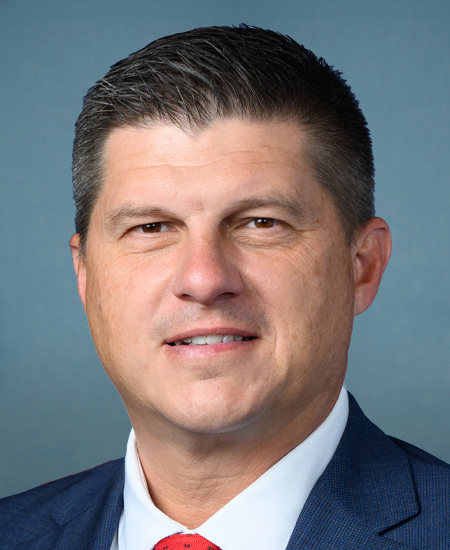
Rep. Brad Finstad
Sponsored bills
Maddy summaryThe Maximum Pressure Act (HR 6114) is a legislative proposal that would maintain and expand U.S. sanctions against Iran. The bill would codify existing sanctions, require Iran to meet 12 specific conditions before sanctions could be lifted (including ending support for terrorism, releasing hostages, and ending nuclear enrichment), and expand sanctions on Iran's Revolutionary Guard Corps and missile programs. It also establishes new reporting requirements for the U.S. government to monitor Iran's activities and the impact of sanctions. The legislation would require congressional review before any sanctions could be lifted or modified, preventing the executive branch from unilaterally easing restrictions.
Maddy summaryHR 5840, the Transportation Security Screening Modernization Act of 2024, simplifies the process for transportation workers to obtain multiple TSA security credentials. It requires the TSA to allow individuals to apply for and renew programs like the TWIC (Transportation Worker Identification Credential) and HAZMAT Endorsement through a single enrollment at any TSA center, with a combined fee lower than separate applications. The bill mandates coordinated expiration dates for all credentials and ensures state-issued commercial driver's licenses reflect the correct HAZMAT endorsement validity. These changes aim to reduce duplication and costs for workers needing multiple security clearances. The TSA must implement these changes within two years and publish details online.
Maddy summaryThis bill, HR 5796, prohibits the Department of Health and Human Services from implementing a proposed rule requiring minimum staffing levels in nursing homes. It creates an advisory panel of 15 members - including rural nursing home staff and experts - to study workforce shortages and report on access barriers for seniors, especially in rural areas. The panel must submit an initial report within 60 days, analyzing staffing challenges and recommending solutions to strengthen the nursing home workforce. These provisions directly aim to prevent nursing home closures (like the 129 that occurred in 2022) that threaten rural seniors’ access to care.
Maddy summaryThis bill establishes an Agricultural Trade Enforcement Task Force to address foreign trade barriers harming U.S. agricultural exports, specifically targeting India's WTO-violating price support programs for rice, wheat, and other commodities. The Task Force, led by the U.S. Trade Representative and Agriculture Department, must identify systemic trade barriers, develop enforcement strategies, and file a WTO dispute against India within 60 days of consultations if needed. It requires quarterly reports to Congress on progress, including a specific plan to challenge India's subsidies that exceed WTO limits (e.g., rice supports at 93.9% of production value). The bill directly affects U.S. farmers, ranchers, and exporters who face market access barriers due to these foreign subsidies.
Maddy summaryThe DRA of 2023 adjusts Medicare payment rates for specific durable medical equipment (DME) items that were part of the 2021 competitive bidding program but for which no supplier contracts were finalized. It directly affects DME suppliers and Medicare beneficiaries by establishing a new 2024 payment formula: 90% of the adjusted payment amount plus 10% of the unadjusted fee schedule for eligible items. The bill also extends a temporary transition rule for non-rural areas through December 31, 2024, while delaying a regulatory change until 2025. These provisions aim to stabilize payments for DME items that did not transition to standard pricing under prior rules.
Maddy summaryHR 5107, the Pandemic Unemployment Fraud Recoupment Act, extends the statute of limitations for enforcing fraud related to pandemic unemployment benefits from 3 years to 10 years across multiple programs, including Pandemic Unemployment Assistance, Federal Pandemic Unemployment Compensation, and Lost Wages Assistance. It requires states to recover overpayments from individuals who knowingly received benefits they weren’t entitled to, through deductions from future unemployment benefits, while maintaining existing due process protections like hearings before repayment. States may waive repayment if the overpayment wasn’t the individual’s fault or if repayment would be unfair. The bill applies directly to individuals who received pandemic-era unemployment benefits through fraudulent means, ensuring states have a longer timeframe to address these cases under established fraud procedures.
Maddy summaryThis bill expands Medicare coverage to include home infusion treatment for people with Alpha-1 Antitrypsin Deficiency Disorder, a genetic condition causing lung and liver damage. It specifically covers "augmentation therapy" (a standard treatment using Alpha-1 Proteinase Inhibitor) when administered in a patient's home by qualified providers. Medicare will pay 80% of the cost for intravenous kits and up to 2 hours of nursing care during these home infusions, starting January 1, 2025. The change directly affects Medicare beneficiaries with this condition who require home-based treatment and their qualified home infusion providers.
Maddy summaryThe Leveling the Playing Field 2.0 Act (HR 3882) updates U.S. trade law to better address international trade practices that disadvantage American businesses. It establishes special rules for handling multiple investigations of the same merchandise (called "successive investigations"), requiring the Commerce Department to consider previous injury determinations when making new findings. The bill also creates mechanisms to address market distortions from foreign government subsidies, including currency undervaluation, and strengthens procedures to prevent duty evasion through certification requirements for importers. These changes primarily affect foreign exporters of goods subject to U.S. antidumping and countervailing duty investigations, as well as U.S. importers of those goods.
Maddy summaryThis bill simplifies regulations for rural health clinics (RHCs) by reducing administrative burdens. It allows RHCs to contract with physician assistants and nurse practitioners (instead of requiring direct employment), updates the definition of "rural" to exclude areas with 50,000+ residents, and removes outdated lab service requirements by requiring only "prompt access" to clinical labs. These changes directly affect RHCs, enabling them to more flexibly staff and operate while complying with state practice laws. The amendments take effect January 1, 2024, applying to services provided on or after that date.