Metastatic Breast Cancer Access to Care Act This bill expedites payment of Social Security Disability Insurance (SSDI) benefits and eligibility for Medicare coverage for those with metastatic breast cancer (i.e., breast cancer that has spread to other sites in the body). Specifically, the bill eliminates the 5-month waiting period for SSDI benefits and the subsequent 24-month waiting period for Medicare coverage for individuals with metastatic breast cancer. Under current law, individuals generally must wait 5 months after the onset of disability to begin receiving SSDI benefits and an additional 24 months to become eligible for Medicare.
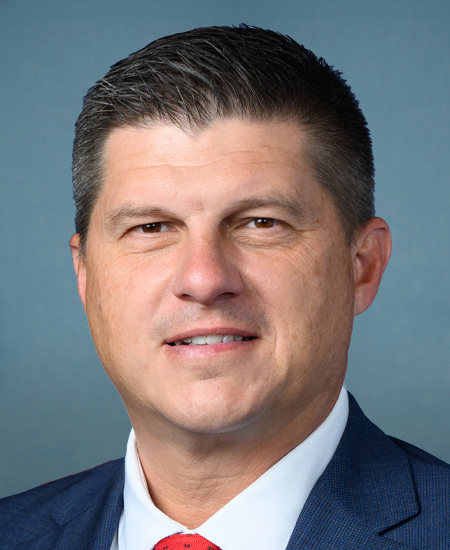
Rep. Brad Finstad
Sponsored bills
Maddy summaryHR 2083, the Veterans First Act of 2025, redirects $2 billion from unobligated USAID funds to the Department of Veterans Affairs. This funding provides grants to states for constructing, remodeling, or modifying state-run nursing homes and domiciliary facilities that care for veterans. The bill directly affects veterans receiving care in these state facilities and the states operating them. Key provisions include permanently rescinding $2 billion from USAID and appropriating it specifically for physical infrastructure improvements at veteran care facilities under federal authorization.
Maddy summaryHR 2039, the Protecting the Right to Keep and Bear Arms Act of 2025, prevents the President and Health Secretary from using emergency declarations (under the National Emergencies Act or Public Health Service Act) to implement gun control measures. It amends disaster relief law to explicitly prohibit future rules that would ban firearm possession, sales, or accessories during emergencies. The bill directly affects federal agencies and future emergency declarations, blocking them from being used as a tool for gun regulation. It does not change existing gun laws but restricts how emergency powers can be applied to firearms policy.
Maddy summaryThis is a non-binding resolution (HRES 206), not a legislative bill. It expresses the House's support for preserving the "stepped-up basis" tax provision (Section 1014 of the Internal Revenue Code), which allows heirs to reset the tax cost basis of inherited assets like farmland or business equipment to their current market value. The resolution cites that 98% of farms and 19% of businesses are family-owned, noting that eliminating this provision could increase taxes for 66% of midsized farms. It specifically urges opposition to new taxes on family farms and small businesses but does not change any tax law or policy.
Farm Credit Administration Independent Authority Act This bill specifies that the Farm Credit Administration (FCA) is the sole regulator of the Farm Credit System (FCS) and establishes reporting requirements for FCS institutions (i.e., lenders). Specifically, the bill states that the FCA is the sole and independent regulator of the FCS and exempts entities that are supervised by the FCA from the Equal Credit Opportunity Act (ECOA). As background, the bill addresses a rule issued by the Consumer Financial Protection Bureau (CFPB) that implements provisions of the ECOA by requiring covered financial institutions, including FCS institutions, to collect and report to the CFPB data on credit applications for small businesses, including the principal owner's race, sex, and ethnicity. This 2023 rule has been challenged in court. The bill also requires FCS institutions to (1) request that loan applicants and borrowers that are small farmers disclose information identifying their race, sex, and ethnicity; and (2) annually report the collected information to the FCA. The FCA must make the collected information available to the public on annual basis. If an FCS institution customer does not voluntarily report the requested information, the FCA may not require the institution to use other means to deduce the information. In addition, the bill specifies that FCS institutions shall not be required to comply with the bill's requirements if financial institutions are not required to comply with the CFPB rule due to a court invalidating the rule or a repeal of the rule.

Maddy summaryHR 1921, the Hearing Device Coverage Clarification Act, requires Medicare to clarify that fully implanted active middle ear hearing devices are prosthetics - not excluded hearing aids - ensuring they qualify for coverage under Medicare's prosthetic benefit. This change directly affects Medicare beneficiaries, particularly seniors and individuals with hearing impairments who rely on these implanted devices. The bill mandates the Centers for Medicare & Medicaid Services (CMS) to issue this clarification within 60 days of enactment, using the existing federal definition of "prosthetic" from the Code of Federal Regulations. This policy adjustment removes an administrative barrier, allowing Medicare to cover these devices without requiring separate policy changes.
Maddy summaryThis bill amends the Clean Air Act to update the definition of fossil fuel, explicitly including "fuel for ocean-going vessels" alongside home heating oil and jet fuel. It directly affects the shipping industry by requiring the Environmental Protection Agency (EPA) to issue regulations within one year of enactment to implement this updated definition. The key mechanism is changing the statutory definition to ensure ocean vessel fuels are covered under existing fossil fuel regulations, potentially influencing future clean fuel standards for ships. The EPA must also submit a report to Congress on implementation within one year of finalizing these regulations.
Maddy summaryHR 1851 increases the minimum required fighter aircraft inventory for the Air Force and its reserve components to 1,900 total and 1,200 for the reserve by October 2030, up from current levels (Section 2). The bill allows temporary reductions below these totals for recapitalization, but only for up to two years and with a floor of 1,800 aircraft, requiring congressional notification (Section 2). It mandates quarterly reports to Congress detailing new aircraft acquisitions, assignments, retirements, and recapitalization plans for both active and Air National Guard units (Section 3). The bill specifically protects 25 existing Air National Guard fighter squadrons from fleet reductions until 2030 and requires new aircraft to be assigned to service-retained units at a 3:1 ratio with legacy aircraft retirements (Sections 5, 6).
Maddy summaryThis bill adds a new tax provision (Section 139J) to the Internal Revenue Code, excluding interest income from certain rural and agricultural loans from taxable income for qualifying lenders. It directly affects banks, insurance companies, and farm credit entities that provide loans secured by rural or agricultural property (including qualifying single-family homes in rural areas), while excluding loans to foreign adversary entities (like those linked to China, Russia, or Iran). The law requires lenders to report on how this tax exclusion impacts loan interest rates, with a Treasury report due to Congress within five years. The policy change aims to reduce lenders' tax burden on these specific loans, potentially lowering costs for borrowers in rural communities.
Maddy summaryHRES 153 is a ceremonial resolution expressing condolences to the families and loved ones of the 67 victims who died in two aviation incidents: American Eagle Flight 5342 and U.S. Army flight PAT 25, which crashed near Washington, D.C.'s Reagan National Airport on January 29, 2025. It specifically honors the victims - many connected to Wichita, Kansas (known as the "Air Capital of the World") - and extends sympathies to affected communities including Wichita, Kansas, and the National Capital Region. The resolution also commends first responders who aided in the recovery efforts. As a non-binding expression of sympathy with no policy changes, it does not affect laws or regulations.