

Federal Firearms Licensee Protection Act of 2025 This bill modifies criminal penalties for an offense involving the theft of a firearm from a licensed importer, manufacturer, or dealer, or from their business premises. Specifically, the bill does the following: increases from 10 to 20 years the maximum prison term, and creates a 3- or 5-year mandatory minimum prison term for an offense that occurs during the commission of a burglary or robbery. An attempt to commit an offense is subject to the same penalties as a substantive offense.
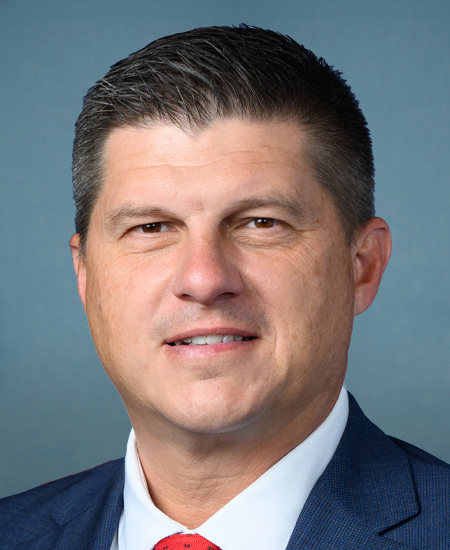
Rep. Brad Finstad
Sponsored bills
Maddy summaryHR 620, the FARM Act, expands the Committee on Foreign Investment in the United States (CFIUS) to review foreign investments in U.S. agriculture. It requires CFIUS to assess transactions where foreign entities gain control of U.S. agricultural businesses (including those using agricultural products defined under 7 U.S.C. 451) and adds agricultural supply chains to the list of critical infrastructure and critical technologies. The bill mandates annual reports from the Secretary of Agriculture and the Comptroller General to Congress, detailing foreign investments in U.S. agriculture, potential threats to supply chains, and espionage risks targeting agricultural research or data. This directly affects foreign investors seeking to acquire U.S. agricultural assets and reshapes CFIUS review processes for the sector.
Maddy summaryHR 575, the Increased TSP Access Act of 2025, amends conservation program rules to expand access to third-party providers (TSPs) like agricultural retailers, engineers, and certified crop advisors. It creates new pathways for state agencies and professional organizations to certify TSPs (within 180 days of enactment), requires the USDA to review certifications within 10 business days, and sets payment rates equivalent to direct government services. The bill directly affects agricultural producers who use conservation programs and TSPs seeking certification, while mandating annual transparency reports on certification numbers, funding, and program effectiveness. Key changes include streamlined certification for existing specialists (e.g., certified crop advisors) and rules preventing double-counting of payments from other federal programs.
Maddy summaryHR 1707, the Grown in America Act of 2025, creates a new tax credit for agricultural businesses that use predominantly domestically produced inputs. The credit equals 25% of a business's domestic agricultural input costs (capped at $100 million annually), but only if the business meets a 3-year average threshold for domestic sourcing (starting at 50% in 2026 and rising to 85% after 2033). It directly affects food and agricultural producers who source inputs like crops or fish raised in the U.S. for products sold domestically without further processing. The bill defines "domestic agricultural input costs" as expenses for U.S.-produced commodities used in U.S.-made food products, excluding certain commodities listed by the Secretary of Agriculture.
Maddy summaryHR 1659, the Truck Parking Safety Improvement Act, creates a federal grant program to address commercial truck parking shortages on highways. It authorizes $151 million annually (2025-2029) for states, local governments, tribes, and other eligible entities to build or improve public parking facilities for commercial motor vehicles. Projects must be on or near highways, include safety features, and provide free, publicly accessible parking - prohibiting fees for drivers. The bill also requires annual reports to Congress evaluating parking availability and project effectiveness.
Maddy summaryHR 1651 would nullify a specific Environmental Protection Agency (EPA) rule finalized on May 9, 2024. This rule established emissions standards for greenhouse gases from new, modified, and reconstructed fossil fuel power plants, set guidelines for existing plants, and repealed the previous "Affordable Clean Energy Rule." The bill would make this EPA rule unenforceable, directly affecting fossil fuel power plants by removing these federal emissions requirements. It does not create new regulations but cancels an existing EPA rule.
Maddy summaryHRES 166 is a non-binding House resolution expressing U.S. support for the Iranian people's desire for a democratic, secular, and nonnuclear republic. It condemns the Iranian regime's terrorism, regional proxy wars, internal suppression of ethnic and religious minorities, and human rights abuses - including executions and repression of women-led protests. The resolution calls for holding the regime accountable through sanctions, supports the Ten-Point Plan for Iran’s democratic transition, and urges protection for Iranian political refugees in Albania. It does not create new laws but affirms U.S. policy alignment with Iranian protesters' demands.
Maddy summaryThis bill awards a Congressional Gold Medal to the 761st Tank Battalion (known as the "Black Panthers"), the first predominantly Black armored unit in World War II's European Theater. It recognizes their combat service from 1944-1946, including key roles in the Battle of the Bulge and breaking the Siegfried Line, despite facing racial prejudice during and after the war. The medal will be displayed at the National Museum of African American History and Culture, with bronze duplicates available for sale to cover costs. The bill commemorates the battalion's 130,000 enemy casualties inflicted, 50% casualty rate, and their 1978 Presidential Unit Citation. It does not create new laws or affect current policies.
Maddy summaryHR 1582, the Volunteer Driver Tax Appreciation Act of 2025, increases the mileage reimbursement rate for volunteers driving for qualifying organizations. It amends IRS Code section 170 to set a minimum rate of 14 cents per mile for volunteer driving, with the Secretary of the Treasury allowed to set a higher rate for transportation of persons or property on behalf of tax-exempt organizations (like charities or religious groups). This directly affects volunteers who drive for these organizations, allowing them to deduct higher mileage costs on their taxes. The change applies to taxable years beginning after December 31, 2024.
Maddy summaryThis bill requires the U.S. Department of Agriculture (USDA) to join the Committee on Foreign Investment in the United States (CFIUS) for reviews of certain transactions involving foreign adversaries. It specifically targets acquisitions of U.S. agricultural land, biotechnology, or agriculture-related infrastructure (like transportation, storage, or processing) by entities from China, North Korea, Russia, or Iran. The USDA must notify CFIUS about reportable transactions, prompting the committee to determine if a full review is needed. The provisions expire for any country removed from the official list of foreign adversaries in federal regulations.