Maddy summaryThis bill amends an existing agricultural loan program to expand funding eligibility. It allows agricultural producers to use loan funds specifically for constructing or upgrading propane storage facilities used in farming operations. The change directly affects farmers who need propane storage infrastructure for agricultural production, as defined by current federal regulations. The key provision modifies how loan funds can be allocated under the existing program, adding this new purpose without creating a new program.
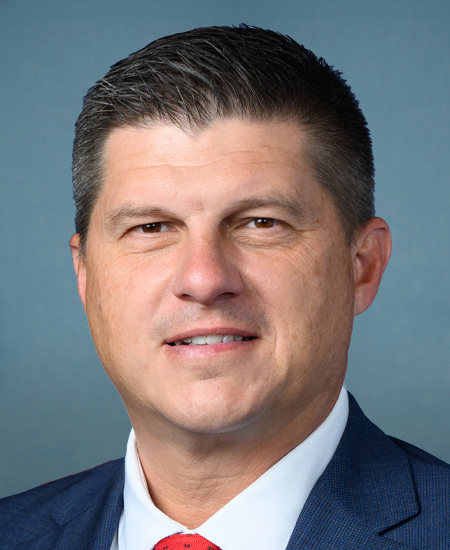
Rep. Brad Finstad
Sponsored bills
Investing in Rural America Act of 2025 This bill allows Farm Credit System (FCS) institutions to make and participate in loans and commitments (and extend other technical and financial assistance) for essential community facility projects as part of the Department of Agriculture's Community Facilities Direct Loan & Grant Program. This program provides funding to develop essential community facilities in rural areas. The FCS financing and technical assistance may be provided in order to make capital available to develop, build, maintain, improve, or provide related equipment or other support for essential community facilities in rural communities (e.g., certain facilities that provide healthcare, community support, public safety, educational, or utility services). Under the bill, the financing provided by an FCS institution may not exceed 15% of the total of all outstanding loans of the institution. Further, an FCS institution must (1) offer at least one non-FCS lending institution an interest in the financing under reasonable terms and conditions acceptable to the borrower, and (2) report the offer to the Farm Credit Administration (FCA). The FCA must submit an annual report to Congress on the activities undertaken by FCS institutions under this bill, including through the partnerships between FCS institutions and other lending institutions. The FCA must post the report on the administration's website.

Maddy summaryHRES 227 is a non-binding resolution expressing the House of Representatives' support for designating March 18, 2025, as "National Agriculture Day" to honor agriculture's role as a vital U.S. industry. It does not create new laws, allocate funds, or impose requirements on any group. The resolution serves as a symbolic gesture to highlight agriculture's economic impact and contributions to the nation. As a procedural resolution, it has no direct policy effect beyond raising awareness.
Maddy summaryThe Innovative FEED Act of 2025 establishes a new regulatory category for "zootechnical animal food substances" - additives in animal feed that affect digestive byproducts, reduce foodborne pathogens, or alter an animal's gut microbiome without providing nutrition. These substances would be regulated as food additives (not drugs) under the Federal Food, Drug, and Cosmetic Act, requiring manufacturers to submit specific safety and efficacy data for approval. The bill mandates labeling stating "Not for use in the diagnosis, cure, mitigation, treatment, or prevention of disease in animals" and allows optional claims about intended effects on animal body function. It explicitly excludes existing drugs, hormones, ionophores, and other substances from this category, ensuring no mandatory use of these additives.
Maddy summaryHR 2188 (COST Act) requires two studies to inform federal fleet decisions. The Comptroller General must analyze the costs of replacing gasoline-powered federal vehicles with electric or E85 flex-fuel vehicles, including necessary infrastructure. The Energy Secretary must compare lifecycle greenhouse gas emissions of conventional gasoline, E85 flex-fuel, and electric vehicles using established models. Both studies must be completed within one year of enactment, providing data for future federal vehicle fleet policies without changing existing regulations.
Maddy summaryThis bill delays two Medicare billing deadlines for ground ambulance services from 2025 to 2028. It amends the Social Security Act to extend the timeline for implementing specific billing rules under Section 1834(l). The change directly affects Medicare ambulance providers by postponing compliance deadlines for billing requirements. No new services or funding are created - only a technical extension of existing timelines.
Maddy summaryHR 2220, the PARA-EMT Act of 2025, creates a federal grant program to address the shortage of emergency medical technicians (EMTs) and paramedics. It authorizes $50 million annually (2026-2030) for grants to EMS agencies to fund recruitment, training, and retention programs - prioritizing youth, rural areas, and veterans with military EMS training. A separate $20 million annually supports state grants to help veterans transition to civilian EMT roles by covering certification costs and licensing fees. The bill also mandates a federal study on projected EMS workforce needs through 2034 to inform future policy. It directly affects EMS agencies, training programs, and veterans seeking civilian EMT careers.
Maddy summaryHR 2197, the "No 340B Savings for Transgender Care Act," prohibits covered entities participating in the federal 340B drug pricing program from using savings from discounted drug purchases to pay for specific transgender healthcare services. The bill amends the Public Health Service Act to ban using 340B savings for sex reassignment surgeries or hormone treatments provided "for the purpose of gender alteration" of transgender individuals. This directly affects hospitals and clinics enrolled in the 340B program, restricting how they allocate funds saved through the program’s discounted drug pricing. The key provision is a targeted restriction on fund usage, not a ban on providing the medical services themselves. The bill focuses on reallocating program savings away from these specific care types.
Maddy summaryHR 2200 requires the Coast Guard to retain enlisted members who have completed 18-20 years of service but are otherwise scheduled for separation or discharge. It directly affects Regular Coast Guard enlisted members and Reserve members serving in active status with 18-19 years of service (or 19-20 years) who face involuntary separation or denied reenlistment. The bill mandates retention until the member reaches 20 years of service or for up to two years (for 18-19 years) or one year (for 19-20 years) after their scheduled separation date, whichever comes first. This applies to members not separated for physical disability or cause, ensuring they can complete their service to qualify for retirement benefits.
Maddy summaryHR 2125, the SOS Act of 2025, establishes a 15-member National Commission on the Maritime Industrial Base (the "SOS Commission") to study the state of the U.S. maritime industry. The Commission will investigate shipyard conditions, military shipbuilding needs, workforce adequacy, and regulatory challenges, with a focus on national defense and job preservation. It must submit a report with policy recommendations to the President and Congress within one year of its first meeting. The bill does not enact new policies but creates a mechanism for evaluating the maritime sector to inform future decisions.