

Maddy summaryThis bill prevents the U.S. government from rejoining the 2015 Iran nuclear deal (Joint Comprehensive Plan of Action) or similar agreements until the President certifies to Congress that UN nuclear inspectors have full access to all Iranian nuclear sites and completed their verification report. It directly affects the executive branch's ability to negotiate or rejoin nuclear agreements with Iran. The key provision requires specific certification about inspector access and report completion before any U.S. re-engagement with Iran on nuclear matters. This is a procedural bill focused on setting conditions for future executive action, not creating new programs or altering existing policy.
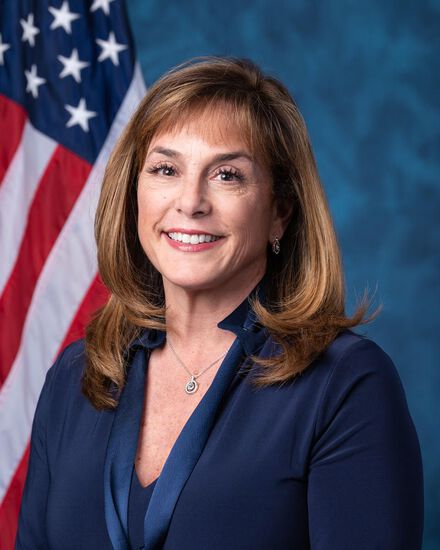
Rep. Lisa C. McClain
Sponsored bills
Maddy summaryHR 5110, the Protecting Hunting Heritage and Education Act, amends the Elementary and Secondary Education Act of 1965 to clarify that federal education funds cannot be used for certain weapons - but this restriction does not apply to archery, hunting, or other shooting sports training programs. The bill directly affects schools and educational programs seeking to use federal funds for these specific activities, such as archery clubs or hunting safety education. It adds an explicit exception to the existing prohibition, allowing funds to support "educational instruction or enrichment activities" in these sports under authorized programs. This change removes ambiguity about funding eligibility for such educational initiatives in K-12 schools.
Maddy summaryThis resolution supports designating September 2023 as "National Recovery Month" to raise awareness about substance use disorder recovery. It cites pandemic-related challenges like increased overdoses (over 110,000 fatal drug/alcohol overdoses in 2022) and barriers to treatment. The resolution makes no policy changes but symbolically acknowledges recovery efforts, stigma reduction, and peer support communities. It is a non-binding congressional statement, not a law affecting specific groups or programs.
Maddy summaryHRES 739 is a House resolution disapproving of a September 11, 2023, sanctions waiver that would release $6 billion in Iranian assets held in South Korea. The resolution states this waiver weakens U.S. policy by allowing Iran access to funds that could support its nuclear program and terrorism, and criticizes the delayed notification to Congress. It specifically condemns the administration's nonenforcement of mandatory sanctions and the release of assets without proper congressional review. The resolution demands the administration submit any Iran nuclear agreement to Congress before further sanctions relief. This is a procedural disapproval, not a law altering sanctions.
Maddy summaryThis bill would grant federal recognition to the Grand River Bands of Ottawa Indians of Michigan, a tribe that has been awaiting formal recognition since filing a petition in 2000. The legislation affirms the tribe's status as a federally recognized tribe, making it eligible for all federal services and benefits (like healthcare, education, and housing programs) without requiring reservation land or specific residence locations. It also directs the Secretary of the Interior to acquire land in specific Michigan counties (Muskegon, Newaygo, Oceana) for the tribe in trust status, and requires the tribe to establish a membership roll within 18 months. The bill addresses decades of delayed recognition, ensuring the tribe gains access to resources and rights it has been denied since its petition was filed.
Maddy summaryHR 5452, the Honoring National Recovery Month Act, directs the U.S. Department of Health and Human Services to coordinate annual National Recovery Month activities. The bill authorizes $1 million yearly (2024-2028) for the Assistant Secretary for Mental Health and Substance Use to develop toolkits, websites, and public communications that celebrate individuals in recovery, educate the public about treatment options, and combat stigma related to substance use disorders and mental illness. It requires HHS to create and distribute best practices for community engagement and to partner with national organizations to carry out these activities. The bill does not create new laws or alter existing programs but formally supports the observance through designated funding and specific communication mechanisms.
Maddy summaryHR 5418, the Honoring National Recovery Month Act, authorizes the Department of Health and Human Services to conduct specific activities celebrating National Recovery Month. The bill requires the Assistant Secretary for Mental Health and Substance Use to develop toolkits, public service announcements, websites, and community engagement best practices to educate the public, combat stigma around substance use disorders and mental illness, and recognize individuals in recovery. It authorizes $1 million annually for fiscal years 2024 through 2028 to fund these activities. The bill directly affects HHS agencies and organizations coordinating National Recovery Month events, but does not create new benefits or regulations for the public.
Maddy summaryHR 3152, the "Fight CRIME Act," aims to maintain international restrictions on Iran's missile-related activities by requiring diplomatic efforts to extend these restrictions before they expire in October 2023. The bill mandates annual reports detailing U.S. diplomatic strategies, potential impacts of expiration, and measures to deter missile technology transfers to Iran. It establishes sanctions against foreign individuals or entities that knowingly support Iran's missile or drone programs, including asset freezes and visa restrictions. These sanctions apply regardless of whether UN restrictions remain in effect after their expiration, directly affecting foreign entities involved in these activities.
Maddy summaryHR 5419, the Direct Seller and Real Estate Agent Harmonization Act, amends the Fair Labor Standards Act to exclude direct sellers (like door-to-door sales representatives) and qualified real estate agents from the federal definition of "employee." This change means these workers would no longer be automatically covered by federal minimum wage and overtime protections under the Fair Labor Standards Act. The bill directly affects individuals working in these specific roles by altering their legal classification under labor law. The key provision is a new definition inserted into existing law, aligning labor classification with existing tax code definitions for these professions.
Voter Registration Efficiency Act This bill requires a state motor vehicle authority to require each individual applying for a motor vehicle driver's license in the state to (1) indicate whether the individual resides in another state or resided in another state before applying for the license (and, if so, identify the state involved); and (2) indicate whether the individual intends for the new state to serve as the individual's residence for federal voter registration purposes. If an individual indicates an intention for the new state to serve as the individual's residence for federal voter registration purposes, the state motor vehicle authority must notify the motor vehicle authority of the former state of residence. The motor vehicle authority of the former state of residence must then notify the chief state election official that the individual no longer intends for the state to serve as the individual's residence for federal voter registration purposes.