

Maddy summaryThis bill requires infant formula manufacturers to immediately notify federal health officials within 24 hours if they know a product may lack required nutrients, is unsafe, or contains pathogens like bacteria. It mandates that the Director of the Office of Critical Foods contact manufacturers within 72 hours of receiving such a notification to discuss fixes, and confirms corrective actions within 90 days. Manufacturers must halt distribution of unsafe formula immediately upon health risk determination. The bill directly affects infant formula producers by imposing strict timing requirements for safety notifications and responses, with annual congressional reports tracking response times. It modifies existing food safety law (21 U.S.C. 350a) to accelerate action on potential infant formula risks.
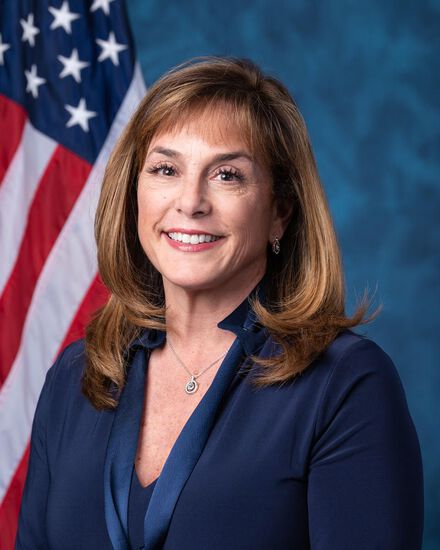
Rep. Lisa C. McClain
Sponsored bills
Maddy summaryThis non-binding House resolution (HRES 648) reaffirms the U.S. commitment to Kosovo as a close partner, stating it remains U.S. policy to support Kosovo's recognition as a sovereign, independent, democratic state within its recognized borders. It highlights existing U.S.-Kosovo cooperation on security, economic development (including a $202 million energy compact), and Kosovo's role in accepting Afghan refugees. The resolution emphasizes shared democratic values and U.S. support for Kosovo's integration into international institutions like the UN and NATO. As a procedural resolution, it does not create new laws but formally expresses congressional support for ongoing U.S. policy toward Kosovo.
Maddy summaryThis bill amends the Workforce Innovation and Opportunity Act to require states receiving federal workforce development funds to prioritize programs based on evidence of effectiveness. Specifically, states must describe in their plans how they will give highest priority to "high-evidence" programs (proven through multiple rigorous studies), followed by "moderate-evidence" programs, and then "low-evidence" programs. The bill defines these evidence tiers clearly, requiring states to fund interventions shown to produce positive results in well-conducted studies or credible research. This directly affects state workforce agencies managing federal grants under WIOA.
Maddy summaryHR 5020 prohibits the U.S. Department of Health and Human Services (HHS) from funding or conducting animal testing research in China, Iran, North Korea, Russia, or other countries designated as "of concern" after consultation with the State and Defense Departments. It blocks federal grants, contracts, or support for such research conducted by foreign entities or facilities owned by these countries. HHS must submit detailed reports to Congress within 60 days when adding new countries to the list, explaining its reasoning.
Maddy summaryThe ACES Act of 2023 requires ByteDance (TikTok's Chinese parent company) to divest all U.S. assets related to TikTok - including user data collected in the United States - within 90 days of enactment, with possible 30-day extensions. It mandates weekly compliance reports to CFIUS, a final data destruction certification, and prohibits U.S. app stores or internet services from supporting TikTok operations after a 45-day grace period. The bill directly affects ByteDance and TikTok, forcing separation of U.S. operations from Chinese ownership to address national security concerns. CFIUS oversees verification, including facility inspections and audits, to ensure full compliance with the divestment requirements.
Maddy summaryThis bill designates the Department of Veterans Affairs clinic in Indian River, Michigan, as the "Pfc. Justin T. Paton Department of Veterans Affairs Clinic" for all official references. It does not change the clinic's services, operations, or eligibility for veterans. The bill simply updates the facility's name to honor Pfc. Justin T. Paton, a veteran, in recognition of his service.
Maddy summaryHR 3933, the TAP Promotion Act, requires standardized presentations about Veterans Affairs (VA) benefits during military transition counseling for service members separating from the armed forces. These presentations must be approved by the VA, delivered by authorized veterans service organizations (VSOs), and include information on how VSOs assist with VA claims - without encouraging membership in specific organizations. The bill mandates a one-hour limit per presentation and requires the VA to submit annual reports to Congress detailing which VSOs presented, attendance numbers, and recommendations for improvement. This policy directly affects service members preparing for civilian life and the VSOs providing these transition resources.
Maddy summaryHR 1176, the Taiwan International Solidarity Act, amends the TAIPEI Act of 2019 to clarify that UN Resolution 2758 does not address Taiwan's representation or sovereignty in international organizations. The bill directs U.S. representatives in international bodies to resist China's efforts to distort policies regarding Taiwan and encourages U.S. allies to oppose China's attempts to undermine Taiwan's diplomatic relationships. It also requires the U.S. government to report on China's initiatives promoting its "One China" position. These changes aim to strengthen Taiwan's international engagement through U.S. advocacy and policy coordination.
Maddy summaryThis bill directs the U.S. Treasury to mint commemorative coins marking the Marine Corps' 250th anniversary in 2025. It authorizes three coin types: $5 gold coins (max 50,000), $1 silver coins (max 400,000), and half-dollar coins (max 750,000), with surcharges of $35, $10, and $5 respectively. The surcharge proceeds will fund the Marine Corps Heritage Center's educational programs, with no net cost to taxpayers as the Treasury must recover all minting costs through the surcharges. The coins can only be issued during 2025, and the Treasury must ensure all costs are covered before distributing funds to the Heritage Foundation.
Maddy summaryHR 4157, the "Not Just a Number Act," requires the Department of Veterans Affairs (VA) to produce annual reports on veteran suicide rates and their connection to VA healthcare and benefits. The reports must break down suicide rates by age, gender, and race, and examine how engagement with VA services (like Vet Centers, healthcare enrollment, benefits claims, and housing loans) correlates with suicide trends. The bill also mandates a VA toolkit for state/local coroners to improve veteran suicide death reporting, and a study on creating a dedicated VA suicide prevention office. These measures aim to standardize data collection and identify effective prevention strategies, directly affecting VA operations, congressional oversight, and veteran care systems.