

Maddy summaryHR 1082 establishes new safety standards for human cell and tissue products used in medical treatments. It imposes civil penalties of up to $20,000 per violation (with a maximum $10 million total) for tissue providers who fail to comply with FDA regulations, and requires the FDA to publish educational materials, inspection data, and response times for tissue-related inquiries on its website. The bill also mandates annual public reports on tissue establishment registrations, inspections, and Tissue Reference Group activity, while directing the FDA to host workshops for stakeholders. These measures directly affect tissue providers, the FDA, healthcare professionals, and patients by increasing transparency and accountability in the regulation of these medical products.
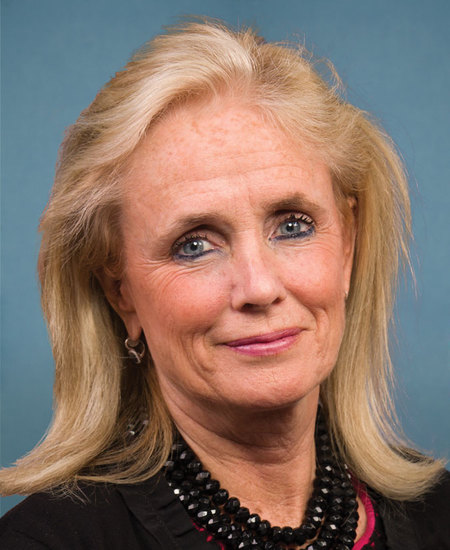
Rep. Debbie Dingell
Sponsored bills
Maddy summaryHR 4084, the Access to Birth Control Act, requires pharmacies that stock contraception to provide it without delay when requested by a customer. If a requested method is out of stock, pharmacies must immediately offer referrals to nearby pharmacies or expedite an order. The bill prohibits pharmacists from intimidating customers, misrepresenting availability, breaching confidentiality, or refusing to fill valid prescriptions for contraception. It directly affects pharmacies nationwide, addressing reported refusals to provide birth control - particularly after the *Dobbs* decision - and ensures access to FDA-approved contraceptive methods without cost-sharing barriers.
Maddy summaryHR 4083, the Marshall “Major” Taylor Congressional Gold Medal Act, authorizes the posthumous presentation of a Congressional Gold Medal to honor cyclist Marshall Walter "Major" Taylor (1878-1932), recognizing his pioneering achievements as a Black athlete who broke racial barriers in professional cycling during the late 19th and early 20th centuries. The bill directs the Secretary of the Treasury to strike the medal with his name and image, to be presented to Taylor’s great-granddaughter, Karen Donovan. It also permits the sale of bronze duplicates to cover costs, classifying all medals as national commemorative items under U.S. law. This is a ceremonial bill with no policy changes, solely focused on commemorating Taylor’s legacy.
Maddy summaryThe MONARCH Act of 2025 establishes the Western Monarch Butterfly Rescue Fund to address the critical decline of western monarch butterflies, which have dropped 99% over 30 years and reached a low of 1,914 in 2020. It authorizes $12.5 million annually for fiscal years 2026-2030 to fund grants for conservation projects led by eligible entities like local governments, tribal agencies, nonprofits, and research institutions within the butterflies' range (California, Arizona, Nevada, Washington, Oregon, Idaho, and Utah). Projects must focus on restoring milkweed, nectar plants, and habitat while coordinating with wildlife authorities and avoiding conflicts with food safety practices. Recipients must report project progress to the Secretary of the Interior and make reports publicly available, with annual updates to Congress on conservation efforts and outcomes.
Maddy summaryHR 4040, the SALONS Stories Act, increases federal grants for states that require cosmetologists and barbers to complete free domestic violence prevention training as part of their licensing process. This training, provided by anti-domestic violence nonprofits, teaches professionals to recognize signs of abuse, respond appropriately, and refer clients to support resources. States with such laws can receive up to a 10% grant increase under the Omnibus Crime Control Act, with funding capped at $5 million annually from 2026-2032. The bill directly affects states implementing this training mandate, beauty industry professionals, and domestic violence survivors seeking help during salon services.
Maddy summaryThis bill establishes 12-month continuous enrollment for Medicaid and CHIP (Children's Health Insurance Program) beneficiaries, meaning individuals enrolled in these programs will not need to renew coverage annually. It removes the previous age limit of 19 for Medicaid coverage and updates language to refer to "individuals" instead of "children" in enrollment rules. The changes directly affect current and future Medicaid and CHIP recipients who would otherwise face annual renewal requirements. The policy takes effect one year after the bill's enactment, providing more stable health coverage for low-income families and children.
Maddy summaryHR 4029 increases federal Medicaid funding for home and community-based services (HCBS) by raising the Federal Medical Assistance Percentage (FMAP) by 10 points for eligible states during 2026-2027, capping at 95%. It directly affects states that submit approved applications and their Medicaid beneficiaries receiving HCBS, requiring funds to boost pay for home health workers (including hazard pay and paid leave), reduce waiting lists, and support family caregivers. States must use funds to supplement, not replace, existing state spending, improve worker retention, and expand services for those on waiting lists or relocated from homes to institutions. All states must report outcomes by December 2029, including service access metrics and workforce improvements.
Maddy summaryHCONRES 37 is a non-binding congressional resolution urging the President to establish a U.S. Commission on Truth, Racial Healing, and Transformation. The resolution does not create the commission itself but calls for its formation to acknowledge historical racial injustices (like discriminatory housing policies, the Chinese Exclusion Act, and forced Native American boarding schools) and catalyze efforts to eliminate racial inequities. The commission would focus on dismantling the "belief in a hierarchy of human value" and advancing racial healing, complementing ongoing efforts like H.R. 40 (the reparations study bill). It directly affects federal leadership (via the President) and aims to guide national policy, though it has no legal force.
Maddy summaryHRES 509 is a symbolic resolution expressing the U.S. House of Representatives' support for designating June 2025 as "Black Music Month." It does not create new laws or directly affect any individuals or entities; instead, it urges the public to recognize and celebrate Black music's cultural impact through voluntary actions like promoting artists and spreading awareness. The resolution highlights Black music's historical influence across genres - from spirituals to hip-hop - and calls for honoring its legacy in education, media, and community initiatives. It follows a tradition started by President Carter in 1979 but has no legal force.
Maddy summaryThis bill requires colleges receiving federal work-study funds to notify eligible students about potential eligibility for the SNAP food assistance program. It specifically targets students participating in federal work-study or receiving Pell Grants, mandating that institutions send email notifications with state-specific SNAP eligibility details and a document confirming their work-study status to overcome a key ineligibility barrier. The notifications, developed jointly by the Education and Agriculture Departments, include application contacts and guidance for schools on identifying eligible students. The policy change directly enables more college students to access nutrition assistance by clarifying their SNAP eligibility through institutional outreach.