

Maddy summaryThe CONNECT for Health Act of 2025 expands Medicare telehealth coverage by removing geographic restrictions that limited where patients could receive care, expanding the types of health care providers who can offer telehealth services, and eliminating the requirement for an in-person visit before receiving telemental health services. The bill includes specific provisions to support telehealth use for Native American health facilities, rural health clinics, and Federally Qualified Health Centers. It requires the Centers for Medicare & Medicaid Services to collect and publish data on telehealth usage and impacts, and to develop resources to improve accessibility for people with disabilities and limited English proficiency. Program integrity measures are added to monitor telehealth billing practices and prevent fraud while maintaining coverage for telehealth services during public health emergencies.
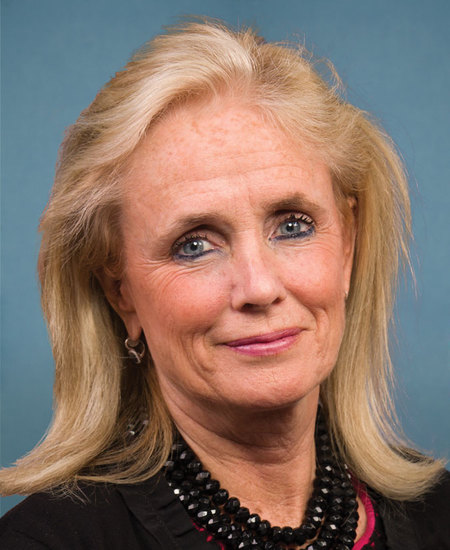
Rep. Debbie Dingell
Sponsored bills
Maddy summaryHR 4192, the Military PFAS Transparency Act of 2025, requires the Department of Defense to publicly report on its cleanup efforts for PFAS (toxic chemicals used in firefighting foam) at military installations. It mandates annual reports to Congress detailing site-specific funding, progress, and delays in PFAS remediation, plus a public online dashboard showing site-by-site spending, timelines, and community contact points. The bill also requires a remediation acceleration strategy prioritizing sites based on health risks and environmental impact. This directly affects military installations with PFAS contamination and the surrounding communities relying on affected water sources. The law focuses solely on increasing transparency and accountability in existing cleanup efforts, not on new funding or policy changes.
Maddy summaryThis bill expands legal protections for domestic violence and stalking survivors by broadening key definitions. It adds current and former dating partners to the definition of "intimate partner" and includes children of dating partners in domestic violence protections. The bill also creates a new federal definition for "misdemeanor crime of stalking," requiring a course of harassment causing fear for specific people (including intimate partners, family, or shared-residence individuals) or their pets/service animals. Convictions under this new definition would trigger firearm restrictions, with specific safeguards for due process in court proceedings. These changes directly affect survivors in dating relationships and their children, strengthening federal protections for vulnerable individuals.
Maddy summaryThis bill makes the Environmental Protection Agency's existing April 2024 rule on PFAS limits in drinking water legally binding. It codifies the EPA's "PFAS National Primary Drinking Water Regulation" (89 Fed. Reg. 32532), which sets enforceable limits for specific PFAS chemicals in public water systems. The rule directly affects municipal water providers and communities relying on public water sources by requiring them to meet these new contaminant standards. The bill does not create new standards but formally adopts the EPA's previously issued rule into law.
Maddy summaryThis bill establishes two grant programs to address technological abuse against victims of domestic violence, dating violence, sexual assault, and stalking. It authorizes a 5-year pilot program (with up to 15 grants of $2 million each) for partnerships between tech-focused schools, tech companies, and domestic violence centers to provide victims with new devices and combat tech abuse. A separate $20 million grant program funds nonprofits and schools to develop training materials for service providers on preventing and responding to technological abuse. The bill directly affects victims experiencing tech-based stalking or monitoring and the organizations that support them, focusing on practical resources and education rather than new legal requirements.
Maddy summaryHR 4120, the *Supporting the Mental Health of Educators and Staff Act of 2025*, provides federal funding to improve mental health support for school staff. It allocates $35 million annually (2026-2028) for grants to schools, colleges, and state agencies to create or expand proven programs - like peer support networks, suicide prevention training, and telehealth access - to address mental health and substance use concerns among educators. The bill also authorizes $10 million for a national awareness campaign to reduce stigma and encourage staff to seek care. It requires annual reporting on program outcomes and a federal review of mental health barriers, but does not directly affect students or parents.
Maddy summaryThe Women's Health Protection Act of 2025 would protect access to abortion services across the United States by prohibiting states from imposing restrictions that are more burdensome than those on comparable medical procedures. The bill directly affects people seeking abortion care and health care providers by banning restrictions such as mandatory in-person visits, requirements for specific tests, limitations on telemedicine, and rules based on a patient's reason for seeking abortion. It prohibits state laws that single out abortion for unnecessary restrictions while allowing post-viability abortions when necessary to protect a patient's life or health. The bill preempts conflicting state laws and provides enforcement mechanisms through private lawsuits and actions by the Attorney General.
Maddy summaryThis bill creates federal funding for community-based violence intervention programs in high-violence areas, targeting communities with 35+ homicides annually or 20+ homicides with rates double the national average. It establishes grants for community organizations to implement trauma-informed violence interruption strategies, hospital-based programs for injured patients, and job training for "opportunity youth" (16-25 year olds not in school or work). The legislation authorizes $300 million in 2026, increasing to $700 million annually through 2033, with requirements for evidence-based approaches that reduce violence without contributing to mass incarceration. It creates a National Community Violence Response Center to coordinate data collection, research, and best practices for these programs. The focus is on prevention through economic opportunity, trauma care, and community-driven interventions rather than traditional law enforcement approaches.
Maddy summaryThe Caring for Survivors Act of 2025 increases monthly dependency and indemnity compensation for surviving spouses of veterans. It changes the calculation method from a fixed $1,154 to 55% of a specific veteran compensation rate, effective six months after enactment. The bill also reduces the required continuous disability rating period for survivors from 10 years to 5 years, and provides a proportional payment for cases where the rating period is shorter than 10 years. Surviving spouses of veterans who died before January 1, 1993, receive the greater of their current benefit or the new calculation. This directly affects surviving spouses eligible for benefits under Title 38, U.S. Code, particularly those with veterans who died prior to 1993.
Maddy summaryThis bill prohibits transplant centers and healthcare providers from denying organ transplants or related services solely based on a patient's disability. It requires covered entities to make reasonable modifications to policies (like considering a patient's support network or using communication aids) and to avoid denying care due to lack of auxiliary aids. The law applies to all transplant stages - including evaluation, listing, and post-transplant care - and explicitly states it complements, rather than replaces, existing disability rights laws like the ADA. It allows medical considerations only if a physician determines a disability is medically significant to the transplant, after individual evaluation.