

Maddy summaryHR 3211, the Immersive Technology for the American Workforce Act of 2023, provides federal grants to rural community colleges and career training centers to develop workforce programs using virtual reality, augmented reality, and similar immersive technologies. These programs target workers in rural areas facing job shortages or needing reskilling for in-demand sectors like manufacturing, healthcare, and clean energy. Grants require programs to be accessible for people with disabilities and align with local workforce plans to address specific job gaps or retrain workers from declining industries. The bill mandates competitive grants for up to five years, with reports tracking outcomes like participant demographics and employer alignment.
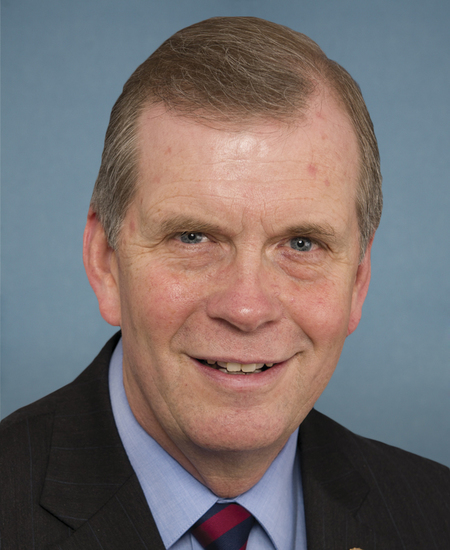
Rep. Tim Walberg
Sponsored bills
Maddy summaryHR 3238, the Affordable Housing Credit Improvement Act of 2023, updates the Low-Income Housing Tax Credit (LIHTC) program to increase the availability of affordable housing across the United States. The bill makes several key changes including increasing state funding formulas, modifying tenant eligibility rules to better serve vulnerable populations (such as domestic violence victims and students), and expanding credit eligibility for projects in rural and Native American communities. Specific provisions raise the credit for properties serving extremely low-income households, clarify rules around tenant income increases, and require housing providers to protect victims of domestic violence. The bill also updates terminology from "low-income" to "affordable" throughout the tax code and enhances program transparency through data sharing requirements. These changes aim to make the LIHTC program more effective at creating and preserving affordable housing units for low-income households nationwide.
Direct Capital Access Act of 2023 or the DCA Act of 2023 This bill increases the number of daily round-trip flights allowed at Ronald Reagan Washington National Airport (DCA). Specifically, this bill adds 56 new slots at DCA to allow for 28 additional daily round-trip flights. (Airlines flying to and from DCA are subject to slot and perimeter rules set by federal law and regulation. The slot rules determine the total number of flight slots that can be handled in a given time period. In addition, a statutory perimeter rule limits nonstop flights to a 1,250-mile radius unless they are granted an exemption in law.) Current law limits DCA to a maximum of 67 hourly slots for flights both within- and beyond-perimeter; a round-trip flight serving DCA requires two slots (or a slot pair). Of those slots, 40 daily slots are exempt from the perimeter rule. Under the bill's slot increase, operations at DCA may not increase by more than eight flights per hour.
This resolution expresses U.S. support for Israel and its efforts to defend its right to existence. The resolution also declares that the United States and international community must prevent Iran from acquiring or building nuclear weapons.
Maddy summaryThis bill prohibits financial institutions (like banks and credit card processors) from using special transaction codes that separately identify firearm or ammunition sellers. It directly affects gun retailers and the financial services they use, ensuring these businesses are treated the same as other merchants for payment processing. The key provision amends the Truth in Lending Act to ban covered entities from categorizing firearm transactions differently, requiring uniform handling of all business types. This changes how payment systems classify transactions but does not alter gun ownership laws.
This joint resolution nullifies a Department of Labor final rule entitled Adverse Effect Wage Rate Methodology for the Temporary Employment of H-2A Nonimmigrants in Non-Range Occupations in the United States and published on February 28, 2023. This rule makes changes to the methodology used to set adverse effect wage rates for H-2A workers (temporary agricultural workers), including by using Bureau of Labor Statistics wage surveys in certain instances. (Generally, the minimum wage for an H-2A worker is the highest of the adverse effect wage rate, the applicable minimum wage, the prevailing wage for that occupation in that area, or any agreed-upon collective bargaining wage.)
Maddy summaryHR 2826, the Save Local Business Act, clarifies when multiple businesses can be held jointly responsible for labor laws. It amends the National Labor Relations Act and Fair Labor Standards Act to state that a business is only a joint employer if it directly controls key employment terms like hiring, pay, schedules, or discipline for another business's workers. This directly affects franchisors, contractors, and similar business models that might previously have been deemed joint employers under broader interpretations. The bill aims to limit joint employer liability to cases where one business has clear, day-to-day control over essential worker conditions.
Maddy summaryHR 734, the Protection of Women and Girls in Sports Act of 2023, amends Title IX to prohibit federally funded schools and athletic programs from allowing individuals assigned male at birth to participate in women's or girls' sports teams. The bill defines "sex" for this purpose as "reproductive biology and genetics at birth," making it a violation of federal law to permit such participation in designated women's or girls' programs. It allows males to train with women's teams only if no female is deprived of a roster spot, competition opportunity, scholarship, or other benefit tied to the team. This law directly affects public and private schools receiving federal financial assistance that operate athletic programs.
Maddy summaryHR 2743 prohibits large financial institutions (over $100 billion in assets) from denying banking services to lawful businesses based on subjective political reasons, industry type, or reputational concerns. It requires these institutions to use objective, risk-based assessments for service decisions and provide written justifications for denials. The law applies to banks, credit unions, and payment networks, with civil penalties for violations including fines up to $10,000 per incident. It specifically ensures businesses operating legally under federal law receive fair access to financial services without discrimination. The bill mandates that denials be based on documented risk factors, not political bias or category-based exclusion.
Maddy summaryHR 2712, the Work Not Woke Act, prohibits federal agencies, contractors, and grant recipients from using workplace training that promotes specific "divisive concepts," such as claiming inherent superiority of a race or sex, blaming individuals for historical actions, or suggesting meritocracy is racist. It directly affects federal contractors (requiring contract clauses banning such training), federal agencies (mandating review of diversity training), and grant recipients (requiring certification against using federal funds for prohibited training). Key mechanisms include a Department of Labor hotline for complaints, mandatory contract provisions for contractors, and a ban on using federal funds for three executive orders focused on racial equity. The law permits diversity efforts that do not promote the banned concepts and requires agencies to certify compliance with its provisions.