

Maddy summaryThis bill updates the definition of an "accredited investor" under securities law to include specific professional certifications, designations, or credentials that demonstrate financial expertise. It requires the Securities and Exchange Commission (SEC) to periodically review and adjust the list of accepted credentials - starting within 18 months of enactment and every 5 years thereafter - to ensure they measure financial sophistication effectively. The SEC must add credentials substantially similar to those already recognized and adjust the list as needed for investor protection. This directly affects individuals seeking accredited investor status for private securities investments and the SEC, which gains a formalized process to maintain the credential list.
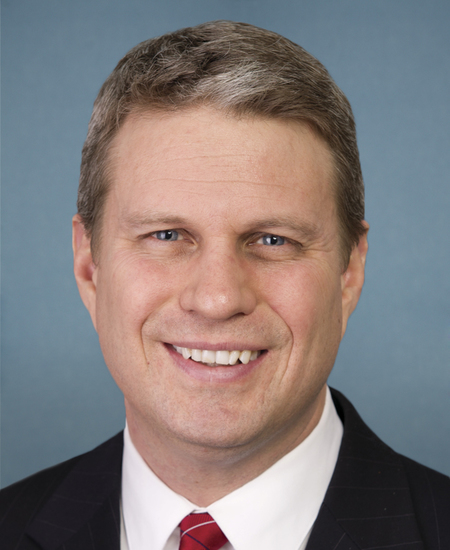
Rep. Bill Huizenga
Sponsored bills
Maddy summaryHR 3812, the Financial Stability Oversight Council Improvement Act of 2023, amends the process for the Financial Stability Oversight Council (FSOC) to regulate large nonbank financial companies. It requires the FSOC to first determine that alternative actions - such as new regulatory standards, company plans, or agency measures - are impractical or insufficient before voting on regulatory actions against these companies. This change directly affects the FSOC’s decision-making and U.S. nonbank financial firms potentially subject to oversight. The key provision mandates consultation with the company and its primary regulator before the Council proceeds with a formal determination. The bill focuses on procedural clarity in financial stability oversight without creating new regulatory requirements.
Maddy summaryHR 3792 extends U.S. security funding for Israel through 2028 (Section 3) and expands energy cooperation to include advanced nuclear technologies and carbon capture (Section 5). It requires annual reports on regional security partnerships involving Israel (Section 6) and ensures countries in the Abraham Accords can access U.S. development programs (Section 8). The bill also mandates reports on diplomatic efforts against ICC investigations targeting the U.S. and Israel (Section 10) and encourages people-to-people programs to strengthen the Abraham Accords (Sections 7, 9). These provisions directly affect Israel’s diplomatic engagement, security partnerships, and economic cooperation in the Middle East.
Maddy summaryThis bill creates a new tax credit for expenses related to "qualified access technology for the blind" under the Internal Revenue Code. It allows taxpayers to claim a credit of up to $2,000 per year (adjusted for inflation) for costs paid for hardware, software, or IT that converts visual information into formats usable by blind individuals, covering the taxpayer, their spouse, or a dependent who is blind. The credit is limited to $2,000 over any three consecutive tax years per blind individual and expires after 2028. It directly affects blind individuals and their families who purchase qualifying assistive technology. The credit cannot be claimed for expenses already covered by other tax deductions or credits.
Maddy summaryHR 3165, the Military Housing Transparency and Accountability Act, requires the military to create a new database tracking complaints about housing units occupied by service members and their families who do not own their housing. It mandates an annual report to Congress summarizing all complaints, categorized into specific types like mold or lead hazards (physiological), security issues (psychological), safety risks, and maintenance problems (timeliness and quality). This directly affects military members and their dependents living in government-provided housing. The bill aims to improve transparency by making complaint data publicly available and requiring the military to report on actions taken to resolve issues.
Maddy summaryThis bill requires that AM radio receivers be included as standard equipment in all new motor vehicles (such as cars and trucks) sold in the United States, with a rule to be issued by the Department of Transportation within one year. The rule must ensure AM radio is easily accessible on the dashboard and allows manufacturers to use digital AM radio technology instead of traditional AM. During the one-year period between the bill's enactment and the rule's effective date, manufacturers must clearly label vehicles without AM radio. The bill also directs a study to evaluate whether an alternative system could deliver emergency alerts as reliably as AM radio across the country, especially during crises.
Maddy summaryHRES 363 is a resolution expressing support for recognizing National Police Week, an annual observance established by law to honor law enforcement officers who have died in the line of duty. The resolution acknowledges 556 officers killed in the line of duty during 2022 and calls for ensuring law enforcement officers have necessary equipment, training, and resources to protect both themselves and the public. It encourages the American public to observe National Police Week by honoring law enforcement personnel and recognizing their essential mission in serving communities across the United States. This resolution does not create new law but formally expresses congressional support for an existing observance.
Maddy summaryThe Farm Operations Support Act maintains the minimum wage rate for H-2A agricultural workers at the level established in each state on December 1, 2022, through December 31, 2023. This directly affects agricultural employers who hire temporary foreign workers under the H-2A visa program and the workers themselves, by preventing the standard annual adjustment to the wage rate. The bill provides one-year stability in labor costs for employers without altering the underlying wage requirements.
Maddy summaryHR 3238, the Affordable Housing Credit Improvement Act of 2023, updates the Low-Income Housing Tax Credit (LIHTC) program to increase the availability of affordable housing across the United States. The bill makes several key changes including increasing state funding formulas, modifying tenant eligibility rules to better serve vulnerable populations (such as domestic violence victims and students), and expanding credit eligibility for projects in rural and Native American communities. Specific provisions raise the credit for properties serving extremely low-income households, clarify rules around tenant income increases, and require housing providers to protect victims of domestic violence. The bill also updates terminology from "low-income" to "affordable" throughout the tax code and enhances program transparency through data sharing requirements. These changes aim to make the LIHTC program more effective at creating and preserving affordable housing units for low-income households nationwide.
Direct Capital Access Act of 2023 or the DCA Act of 2023 This bill increases the number of daily round-trip flights allowed at Ronald Reagan Washington National Airport (DCA). Specifically, this bill adds 56 new slots at DCA to allow for 28 additional daily round-trip flights. (Airlines flying to and from DCA are subject to slot and perimeter rules set by federal law and regulation. The slot rules determine the total number of flight slots that can be handled in a given time period. In addition, a statutory perimeter rule limits nonstop flights to a 1,250-mile radius unless they are granted an exemption in law.) Current law limits DCA to a maximum of 67 hourly slots for flights both within- and beyond-perimeter; a round-trip flight serving DCA requires two slots (or a slot pair). Of those slots, 40 daily slots are exempt from the perimeter rule. Under the bill's slot increase, operations at DCA may not increase by more than eight flights per hour.